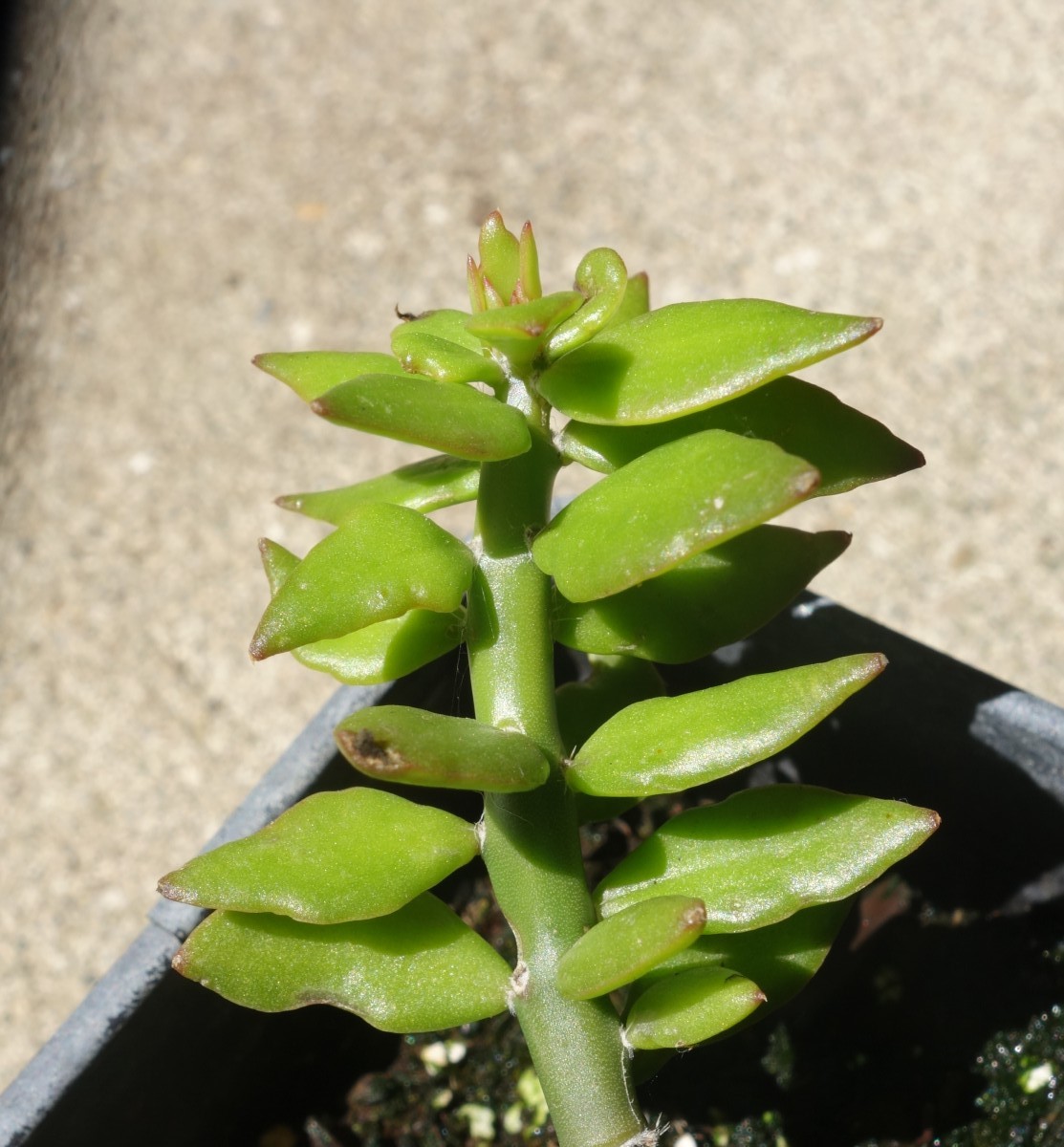
An unexpected cactus

PereskiopsisspathulataCrazy plant of the day is this: Pereskiopsis spathulata! Which, I’ll admit, looks like a fairly generic succulent, but the cool thing is this is actually a cactus. A cactus with leaves. Most cactus have of course lost their leaves to increase their ability to survive in extremely dry conditions and rely on their stem for photosynthesis,  but the genus Pereskiopsis is a bit of living evolutionary history with photosynthetic leaves still intact.

Joseph Tychonievich
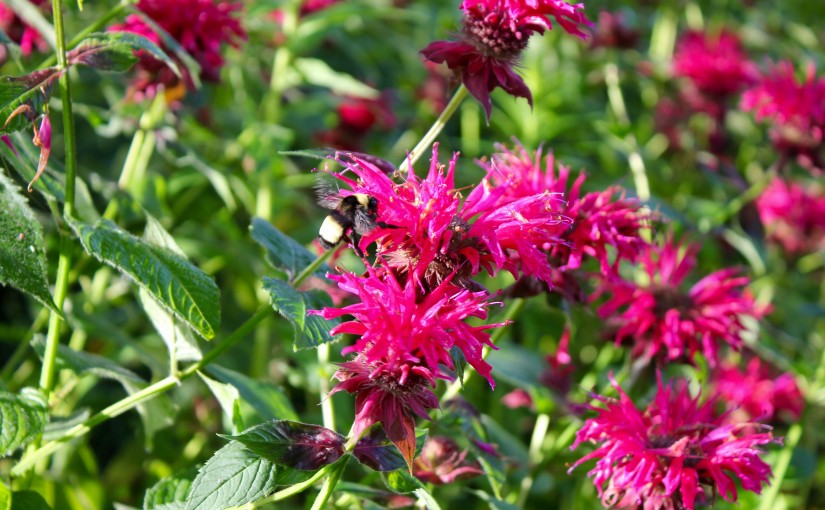
 

Perennial Monday: Monarda ‘Raspberry Wine’

It’s been a great summer for perennials here in the mountains of SW Virginia – plenty of rain, warm days, cooler nights. We’ve been enjoying this wonderful bee balm in our home garden for the last few weeks. ‘Raspberry Wine’ is tall (up to 5′), vigorous, and a bit ramble-y; not for the carefully-curated border, but great where it can take up some space. For those who fear Monarda’s tendency to spread, know that is shallow-rooted and very, very easy to pull up.… Continue reading this article “Perennial Monday: Monarda ‘Raspberry Wine’”

An Open Letter to Consumer Reports

Dear Consumer Reports,

A good friend of mine, Linda Chalker-Scott, recently reviewed some of your recommendations on weed control and found them wanting. I concur with Linda’s assessments, but I feel the need to take her critiques a bit further because:

#1 The article that Linda reviewed made a recommendation which is not only questionable in terms of its efficacy, but also its safety.

#2 You recently published another article on a very similar topic which is misleading.… Continue reading this article “An Open Letter to Consumer Reports”

Can Permaculture and Good Science Coexist

Several years ago I posted a four-part discussion about permaculture and my concerns with the blend of philosophy, science and pseudoscience that it contains. (Here are links to Parts 12, 3 and 4.) So I was pleased to be part of an Extension tour group that visited an established permaculture farm in the San Juan Islands earlier this spring. This gave me an opportunity to see whether there was any perceptible shift in the permaculture community towards practices based on applied plant and soil sciences.… Continue reading this article “Can Permaculture and Good Science Coexist”

Back on the High Line again

Earlier this week I was in New York City and got to visit the High Line for the first time.  For those who aren’t familiar, the High Line is an urban park that was created along an abandoned elevated rail line on the Westside of Manhattan.  Linda posted about the High Line a couple of years ago.  Her visit was in late winter so my visit provided an opportunity to explore the park during the height of the growing season.… Continue reading this article “Back on the High Line again”

When Size Does Matter: Dwarf Conifers for the Home Landscape

I just returned from another great “Addicted Confer Syndrome” conference. In reality, ACS stands for the American Conifer Society. The meeting I attended was the Central Region chapter of the ACS held in Green Bay, Wisconsin. You might be thinking that only white spruce and tamarack are the only conifers that can be grown this far north, but you would be wrong. There are many outstanding conifers that can grow up here and throughout the U.S.… Continue reading this article “When Size Does Matter: Dwarf Conifers for the Home Landscape”

Jumping genes!

This spring, I noticed this striped flower in a stand of feral Hesperis matronis
hesperistransposonStripey flowers! And like almost all striped flower variants, almost certainly caused by transposons, aka jumping genes.

To understand transposons, you can think of genes as instructions. So when making a flower, a plant may be following a gene that says:

MAKE PURPLE PIGMENT

And so it does, and the flower is purple.

You can think of a transposon as a gene that says:

COPY ME!Continue reading this article “Jumping genes!”

Extension….Again

About 6 months ago I wrote a little article about what I perceived to be the most significant problem within extension, which is that extension personnel, and specifically tenured and tenure track faculty, simply don’t receive recognition or credit for accomplishing their job. In this essay I’m going to give a specific example of this problem.
Normally, when someone does what they are assigned to do, they are rewarded, or at least an acknowledgement is made that they are performing satisfactorily.… Continue reading this article “Extension….Again”

Are Soaker Hoses Safe?

By Cynthia Lee Riskin

With drought predicted for the west, southwest, and south through June 2015 (National Weather Service March 2015), many conscientious vegetable gardeners will try to conserve water by using soaker-hoses, those bumpy black hoses that weep water onto the soil through tiny pores.

Brussel sprouts and red lettuce
Soaker hoses are made from fine-crumb rubber, usually recycled from vehicle tires. Research strongly establishes that tire particles leach heavy metals, carcinogens, and mutagenics, among other toxins. Yet soaker hoses have not been studied for potentially increasing the toxicity of edible plants.… Continue reading this article “Are Soaker Hoses Safe?”

Nature’s Poisons

It’s more than a little bit intimidating to be a part of the Garden Professors team, since I have no advanced degrees, and my undergraduate degree is in Mathematics, with no formal training in Botany, Horticulture or Plant Science at all.

I am, however, an avid and active hobby gardener; I read a lot; and I have a life-long love of learning and sharing what I’ve learned with others, which led to a nine-year stint as a county Extension Educator, implementing a county wide mosquito management program for West Nile, with additional responsibilities for pesticide education and consumer horticulture.… Continue reading this article “Nature’s Poisons”