Tips for garden writers from a science writer

Much as I am itching to continue the current discussion on cultivars of native plants, I’ve got to wait until next week (my seminar schedule has me hammered – doing my third one this week tomorrow).  So instead I thought I’d throw out some suggestions for those nonscientists who blog and/or write about all things planted.

First of all, I do enjoy reading blogs, articles and books by nonscientists who venture into plant and soil sciences. … Continue reading this article “Tips for garden writers from a science writer”
Cake and Cultivars

I was working on something entirely different, but thought better of it. I’d like to continue Bert’s (now Dr. Mister Smartypants) really intriguing discussion.

Because when I read it, I felt a pang of…guilt? Confusion?

I’d describe my usual perspective on the “native” topic as ultra-liberal, highly plant-introduction-centric. New plant? Gimme!!! (“Native” shall appear in this post surrounded by quotes throughout, as a safety measure.)

Commenter Wes perceptively noted “part of the gardening public is becoming so enamored with the concept
of natives that I think they are grasping at straws to to assuage their
belief in ecological principal.… Continue reading this article “Cake and Cultivars”

Can cultivars be considered native plants?

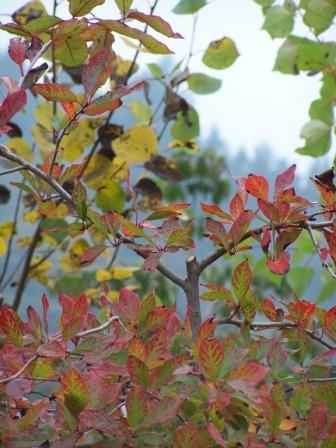
One of the questions that arise in discussing native plants is the question of whether ornamental cultivars (e.g., ‘October golory’ red maple) can or should be considered ‘native’.  In short, my answer is ‘No.’

Here’s my rationale on this.  First, when we think about natives we need to put political boundaries out of minds and think about ecosystems. Political boundaries – a ‘Michigan native’ or ‘an Oregon native’ – are meaningless in a biological context.  What’s important is what ecosystem the plant occurs in naturally. … Continue reading this article “Can cultivars be considered native plants?”

Mystery tongue identified

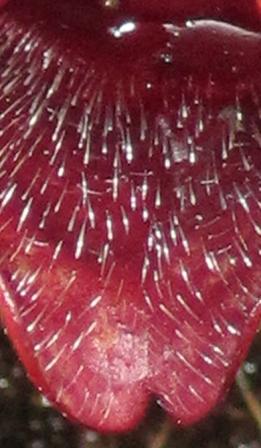
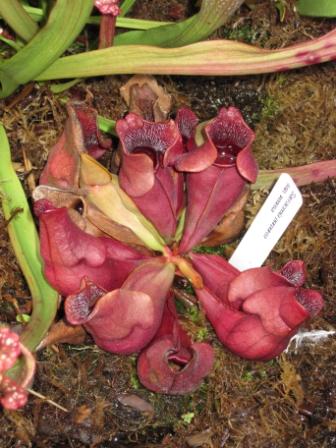
A few brave souls dared to take on Friday’s puzzle.  Here’s a more revealing photo; the "tongue" is actually the top of a pitcher plant: 

Kudos to Hap for correctly identifying the genus (Sarracenia) of this carnivorous plant.  This particular one is S. purpurea, which is distinctive in that it has dark red, open pitchers rather than hooded ones.  You can easily see the downward slanting hairs in the throat of the pitchers.  These hairs, as Diana pointed out, keep trapped insects from climbing back out of the pitcher. … Continue reading this article “Mystery tongue identified”

Cat tongue?

Well, maybe it’s not a cat tongue (no way my cats would put up with this), but what is it?  Name both the plant and the function of this tissue for full credit!

Answer and more photos on Monday – have a great weekend!

The New Evidence Against Glyphosate

This past week Susan over at Garden Rant asked me about a paper which she had recently read which “proved” that Round-up caused birth defects.  This study was interesting because it took embryos of chickens, exposed them to glyphosate (the active ingredient in Round-up) and then looked at the problems which the embryos had.  Indeed, there were problems at concentrations of glyphosate much lower than what you’d see in normal agricultural applications.  This is similar to other studies which “prove” how toxic glyphosate is which have been conducted over the years where various types of cells have been removed from human bodies, exposed to glyphosate, and then the resulting cellular damage has been taken as an indication that this herbicide is incredibly dangerous to us.… Continue reading this article “The New Evidence Against Glyphosate”

Off with their heads!

About a year ago I posted my thoughts about the nursery production practice of heading young trees (“whips”) to stimulate lateral branching or columnar form or whatever.  (You can find this original column here.)  A healthy discussion ensued, much of which revolved around the need for appropriate follow-up pruning to ensure the development of a stable crown structure of headed trees.

Fast forward to last month, where a column I wrote for NPM (Nursery Production and Management) magazine hit the web. … Continue reading this article “Off with their heads!”

Animal, Vegetable, Irritable

I’m a big Barbara Kingsolver fan. Just finished “Prodigal Summer” – her tall, lanky, introverted, 40-something forest ranger-heroine encounters handsome, mysterious, much younger guy in the woods; sparks fly, etc.  Rowr!  Ahem.

I really enjoyed “Animal, Vegetable, Miracle” when it came out a couple of years ago. It was the perfect dead-of-winter read as she captured flawlessly the itch to grow things, the scent of thawing soil, the joys of mud, the overwhelming greenness of spring, the mess of canning tomatoes.Continue reading this article “Animal, Vegetable, Irritable”

Turf trickery

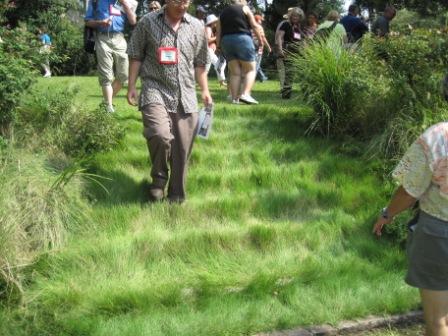
Now I feel a little guilty.  You tried to answer Friday’s puzzle so seriously, and I was taking liberties with photography:

I think this is the coolest garden stairway I’ve seen yet.  The buffalgrass tolerates moderate foot traffic, and it lends a fluid look to the otherwise hard edges of the steps.  And you can’t tell from looking, but it both felt and sounded silky.  Best of all, it doesn’t require mowing.  (This is the Rolston/Cohn garden, part of the garden tour put on by the GWA in Dallas last week.)

Dallas mystery turf

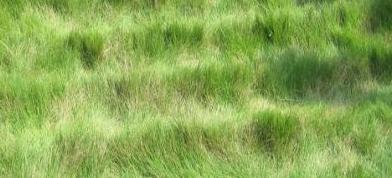
During my trip to Dallas last week, I saw several low-water lawns, including this one using buffalograss (Bouteloua dactyloides):

The question is – why does have this wave structure?

Another revealing picture and answer on Monday!