The Pop-n-Drop method of planting shrubs

One of the planting practices that severely vexes me is the Pop-n-Drop (TM) method, where plants are popped out of the container and dropped into a hole roughly the same size.  When I’m lucky enough to find such installations in progress, I try to take as many photos as possible for later comparisons.  Here’s one such landscape that was installed in this manner:
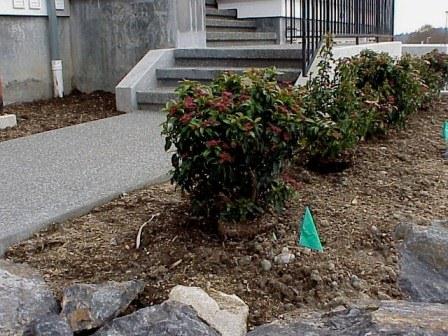

A row of Pop-n-Drops in 2002

And here’s the same landscape 10 years later:


Two rows of Pop-n-Drops in 2012

Some of the shrubs survived, some did not, and certainly none of them are thriving.  … Continue reading this article “The Pop-n-Drop method of planting shrubs”
Foiled again!

A while back I was talking smack with Sandy G. in the comment section of some post – about how I was going to have a ripe tomato before the end of May.  I’ve been coddling a plant of ‘Orange Blossom’  since about March – it’s been planted and dug up twice, spending frosty snaps in the greenhouse. But 90% of its life has been in the soil on the South side of our house – so I think this is a legit garden tomato.… Continue reading this article “Foiled again!”

A Horticultural Tour of Washington DC

My wife and I were in Washington DC a few weeks back for a wedding.  I’ve been to DC a handful of times and it is one of my all-time favorite places to visit.  I love history so the memorials, monuments and Smithsonian museums are all high on my list.  But DC has a lot to offer plant geeks as well.  In honor of Memorial Day and the unofficial start of summer vacation season, here are my top three DC Horticultural Highlights.… Continue reading this article “A Horticultural Tour of Washington DC”

Stuck in the 1950s

Today I’m going to throw up a post that’s a little link-heavy, but I encourage you to follow these links because they show how prevalent the technology is that I discuss.  And a trip to the garden center will quickly show how infrequently this technology is used.

It’s frustrating.

Why the heck do we still buy plants grown in containers using 1950s technology?  I was reading Bert’s post this week about how to treat container grown trees before planting and also considering a somewhat similar experiment which I conducted about a year ago (stats are in and support my points in that article), and I couldn’t help asking, why do we put ourselves through it?… Continue reading this article “Stuck in the 1950s”

Podcast: Subarctic Gardening

Earlier this spring I spoke to the Alaska Master Gardeners at their annual meeting in Anchorage.  I’d not been to Alaska before this, so I was on a steep learning curve most of the time.  It was fantastic.

In any case, I thought it would be fun to do a podcast on gardens and landscapes at high latitudes.  And if you’ve ever wondered what, exactly, you can grow at 51N latitude, you’ll find out

Pest Alert: Red Lily Leaf Beetle

One of the things this blog can do is alert gardeners to the presence of new problems.  This is one such instance.

WSU produces Pest Alerts, and recently the Red lily leaf beetle has been found in the Seattle area.  The state is monitoring the spread of this nonnative pest, so those of you living in Washington please read this and pass it on to your gardening friends.  New Englanders have been dealing with this pest for a while, but any of you outside this region may want to keep your eyes peeled.… Continue reading this article “Pest Alert: Red Lily Leaf Beetle”

Research in real time

It’s been a busy spring around the Cregg lab.  In many ways, it feels more like mid-summer than mid-May.  One of the items my students and I have been with is installation of the Social Media Designed Tree Transplant Study (SoMeDedTreeS).  As loyal Garden Professor blog readers will recall, we conducted a Survey Monkey poll last fall to help develop a study plan to investigate tree transplanting practices of container-grown trees.  Based on the results of the survey we designed a study to look the effects of root-ball manipulation and post-transplant fertilization on 96 planetrees.… Continue reading this article “Research in real time”

Truth in advertising, finally.

*drum roll*

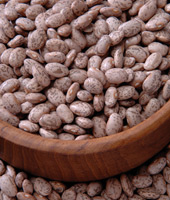
Ladies and gentlemen, the latest effort in pinto bean breeding from Seminis Vegetable Seeds:

"beans, beans, good for your heart..."

‘Windbreaker’

Windbreaker is an upright, short-vine pinto bean that has produced consistently good yields, especially for the Red River Valley production area. Windbreaker ripens quickly and uniformly with reduced seed weathering. Try Windbreaker in narrow rows for direct harvest.
Relative Days to Maturity: 94-98
Plant Type: Indeterminate, short vine
Color: Brown flecks on buff
Seeds/LB: 1,076
Disease Resistance: BCMV, R (R)

How Much Would You Pay?

OK, here’s a question for you.  How much would you pay for an online course taught by professors (perhaps garden professors?) about plants and gardening including things like fertilizers, pest control, etc.?

Hour long lectures once a week (through Skype or something similar) with an additional 1/2 hour built in for questions?  12 weeks of lectures.  No college credit.

I haven’t talked to the other garden professors about it — this is purely a hypothetical question for now. … Continue reading this article “How Much Would You Pay?”

Podcast – Better living through chemistry

One of the coolest things about plants is their unlimited ability to manufacture some of the most amazing biochemicals.  This week’s podcast will brief you on some of these phytochemicals in the news – they’re good for you as well as for plants!  We’ll also explore whether natural organic compounds are really all that much safer than synthetic chemicals.  (You can probably already guess the answer to that one.)

Enjoy!