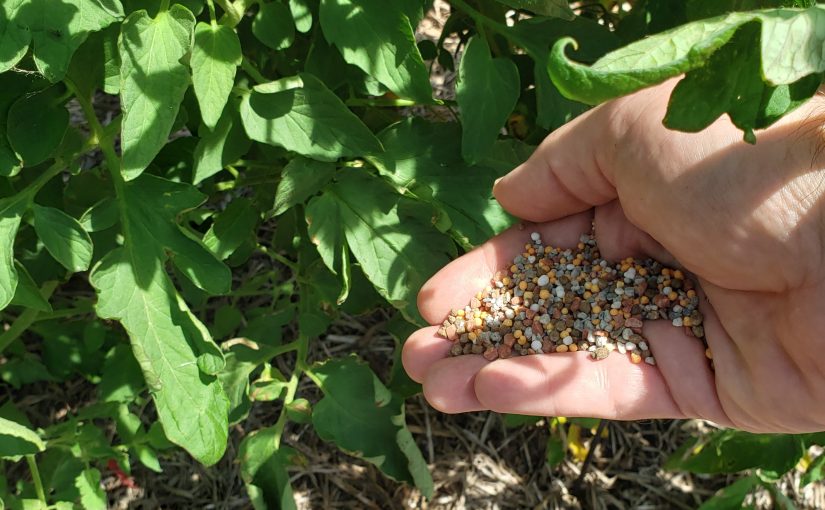
You see a bright shiny package at the garden center saying that it can help you have the most bountiful garden ever, the greenest lawn in the neighborhood, your plants will have miraculous growth, or it will supply every element on earth to make sure that your plants are living their best life. It’s got what plants crave….It’s got electrolytes! You reach out to grab that package and ……. Woah! Pump the brakes! Do you know if your plants even need to be fertilized? … Continue reading this article “To Fertilize, or Not to Fertilize, that is the question”
Tag: soil
Urban Gardening Considerations
Along with the trends of buying local food, buying organic, etc., there seems to be an increasing interest in the ultimate local food source – a garden. This includes in urban areas. Urban gardening is a great way to save money on food, a great source for fresh vegetables – especially in “food deserts”, and an easy way to introduce kids to where the food on their plate comes from. However, there are a couple potential obstacles you should consider first before starting your urban garden.… Continue reading this article “Urban Gardening Considerations”
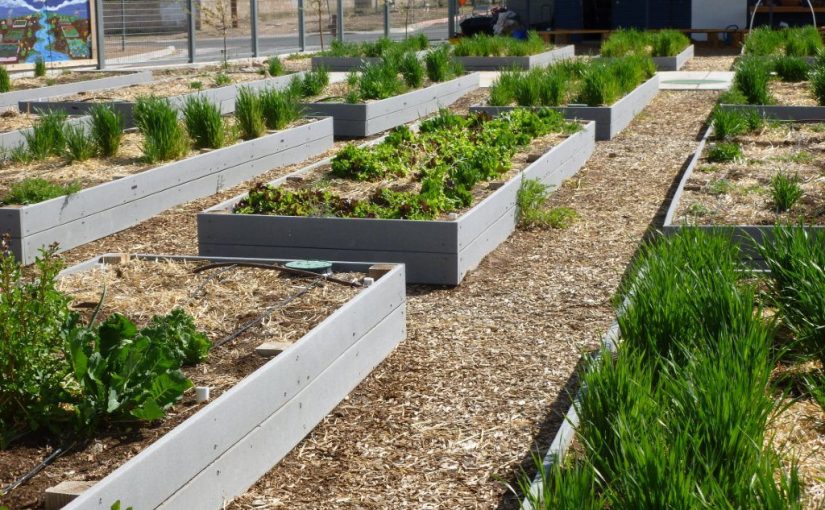
A Raised Bed Rebuttal: In defense of a common garden practice and soil health
One of the things I miss (and sometimes don’t miss) after my move from West Virginia to Nebraska is writing my weekly garden column for the Charleston Gazette-Mail newspaper. It was a great way to always keep thinking about new things to talk about and a great way to connect with the public.
After I left, the newspaper replaced me with a team of 4-5 local gardeners who would take turns writing about their different gardening insights and experiences. … Continue reading this article “A Raised Bed Rebuttal: In defense of a common garden practice and soil health”
Are Soaker Hoses Safe?
By Cynthia Lee Riskin
With drought predicted for the west, southwest, and south through June 2015 (National Weather Service March 2015), many conscientious vegetable gardeners will try to conserve water by using soaker-hoses, those bumpy black hoses that weep water onto the soil through tiny pores.

Soaker hoses are made from fine-crumb rubber, usually recycled from vehicle tires. Research strongly establishes that tire particles leach heavy metals, carcinogens, and mutagenics, among other toxins. Yet soaker hoses have not been studied for potentially increasing the toxicity of edible plants.… Continue reading this article “Are Soaker Hoses Safe?”
Prepping Your Garden for The Next Growing Season
William H. McCaleb, Blog Contributor
Program Assistant for Agriculture and Natural Resources, Halifax County, VA. and Master Gardener
For gardeners in the eastern U.S., last year was a better than normal gardening season. Better than normal yield, better than normal precipitation, and in our case in Virginia cooler than normal which yielded excellent spring cool season crops as well as early summer crops.
But all good things must come to an end; that being the result of several heavy frosts. … Continue reading this article “Prepping Your Garden for The Next Growing Season”
Let’s get (soil) physical…
We’ve had quite a bit of discussion this past week on the FaceBook page regarding Kelly Norris’s article in Fine Gardening on dealing with clay soils. While Kelly’s article mainly addressed selecting plants for heavy soils, there was a side-bar on cultural approaches to dealing with clays; including the standard advice to avoid adding sand to clays. This advice has been around for years. The first time I recall hearing it was from Dr. Carl Whitcomb when I took his Arboriculture class nearly 30 years ago (Fall 1984 to be exact). … Continue reading this article “Let’s get (soil) physical…”
Container planting: intuition vs. reality
I’m just starting to think about getting my containers planted for the summer and happened to get an email on the topic from a blog reader. John was frustrated with a local columnist’s advice on using gravel in the bottom of the containers for drainage. When challenged, the columnist refuted John’s accurate comments with “logical thinking.” (You can find the posting and comments here.)
Here’s part of the post: “I like to cover the hole with a layer of gravel to improve drainage.… Continue reading this article “Container planting: intuition vs. reality”
It’s raining, it’s pouring, it’s a good time for a site assessment…
April is turning out to be a soggy month for most of Michigan and our surrounding states. While most homeowners are inclined to hunker down indoors and keep an eye on their sump pumps on these dark, dreary days; our current run of wet weather is a good opportunity to take a stroll around your property and make some notes. In particular, note any areas where water is accumulating.
Poor drainage is one of the most common sites factors that limit landscape tree and shrub survival and growth. … Continue reading this article “It’s raining, it’s pouring, it’s a good time for a site assessment…”
The invisible, insidious presence of heavy metals
I spent the last two weeks in Spain, combining business with pleasure. It’s interesting when something that starts out as part of the pleasure ends up being business instead.
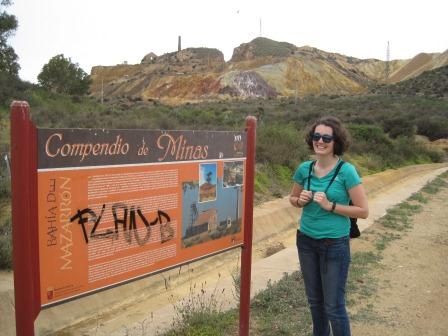
Charlotte translated this sign for me – it’s historical information. Note the brightly colored mine tailings in the background.
My daughter is teaching English in Mazarrón, a small town in the province of Murcia. The climate there is very similar to southern California, though drier and not as warm: it’s pretty much a scrubland ecosystem.… Continue reading this article “The invisible, insidious presence of heavy metals”
An unwanted bonus in your urban chickens
Longtime reader Ray Eckhart sent me a NYT story on urban chicken eggs and lead contamination. As I’ve mentioned before on this blog, urban gardeners should have their soils tested for lead, arsenic, and other commonly found heavy metals before they plant edibles. Chickens that are allowed to peck and scratch in metal-contaminated soils will pass that unwanted load on to you via their eggs.
So test your soils! It costs a bit of money, but then you know exactly what’s lurking in there. … Continue reading this article “An unwanted bonus in your urban chickens”