My cucurbits won’t stop having sex.

Not really a botanically-correct statement, but you know what I mean. John Porter’s previous blog post did a great job of explaining cucurbit reproduction (loved the Pucchini). Though I was surprised to learn “not getting any fruit” is actually a problem. Can’t say I’ve had an issue with that, ever. We have a really vibrant bee population and they’ve been super busy.

I love growing squash of all sorts, despite not being a terribly gifted vegetable garder.… Continue reading this article “My cucurbits won’t stop having sex.”
The search for bogus info and products continues!

The Garden Professors, led by our warrior princess Dr. Linda Chalker-Scott, continue to ferret out bad advice, bogus information, and worthless products foisted upon the unsuspecting gardener.

I’m assisting in the hunt as well.  See my survey link below.  Looking specifically for :

1) Gardening-related blogs and vlogs (video blogs) that are out there – could be anywhere on the spectrum of misinformation: spewing pseudoscience or just plain malarkey.  Or some of the content is o.k., … Continue reading this article “The search for bogus info and products continues!”

You, too, can be up to your pits in perennials!

(posted by Holly Scoggins)
The Perennial Plant Association (PPA) is a unique group of folks – comprised of plant breeders, educators, propagators, promoters, garden writers, growers, retailers, gardeners, and landscape designers – all under one umbrella. The PPA is probably one of the most vertically-integrated plant organizations out there. If it has anything to do with a perennial plant, there’s a good chance one of our members is involved.

The marvelous/legendary PPA Symposium has been held in all parts of the country.… Continue reading this article “You, too, can be up to your pits in perennials!”

When spring is delayed

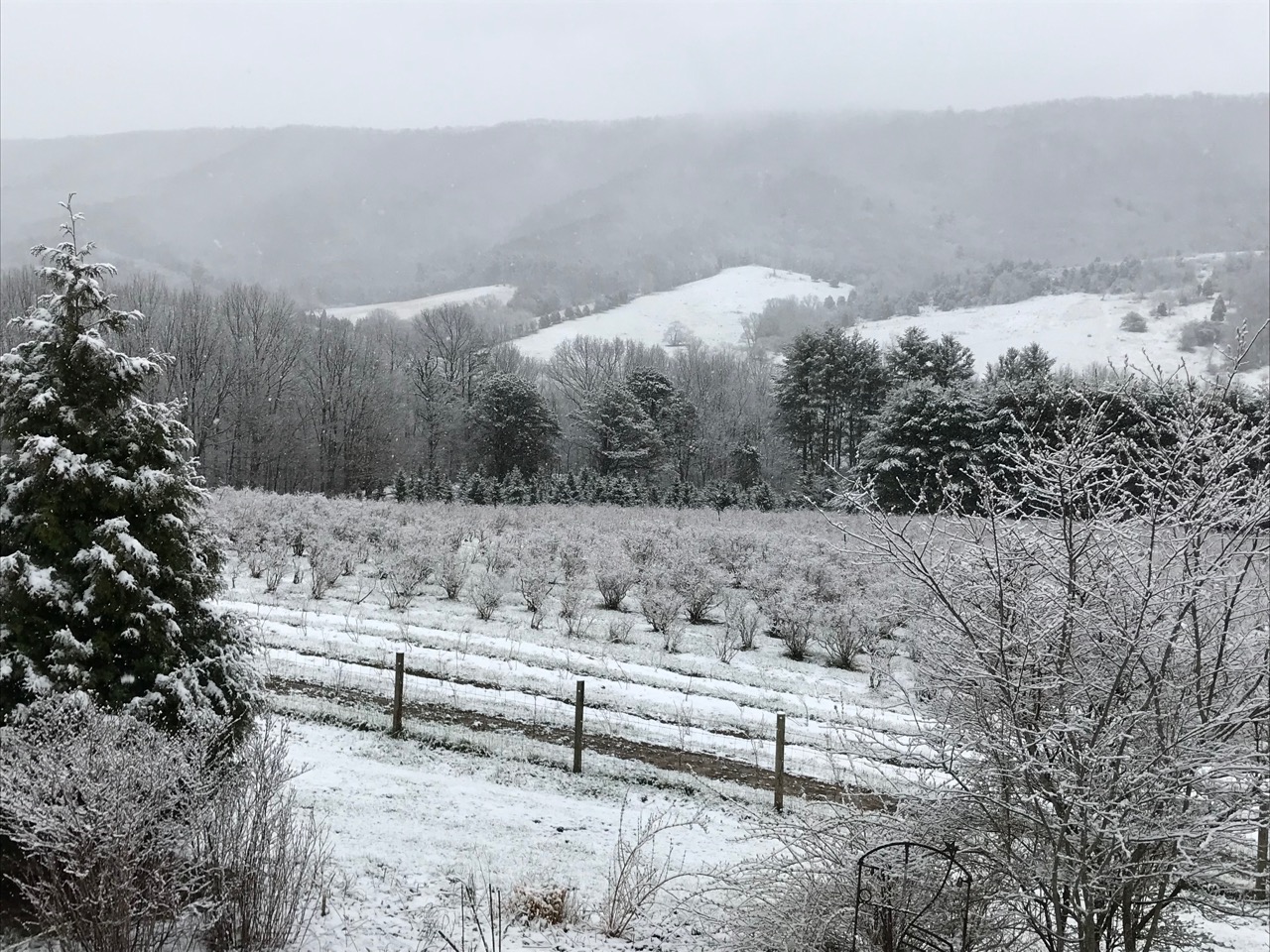
Enjoying our first day above 55 F in quite a while here in mountains of Southwest Virginia. We’ve had far-below-average temperature and three significant snow events over the past four weeks.

Saturday, April 7, 2018 at our farm (Newport, VA).  Not making me want to garden.

For much of the Mid-Atlantic, Northeast, and Midwest, spring has been very slow to arrive. The jet stream has been riding mighty low, and is taking another dive next week.… Continue reading this article “When spring is delayed”

Howdy and Previous Post Revisited 1.0

Greetings all, and good to be back in the saddle for the Garden Professors.  It’s been a while since I’ve filled you in on my own personal gardening struggles (lots) and triumphs (few) as well as topics I think you’d be interested in.  I’ve always appreciated the kind comments and good questions our readers pose, in response to my off-kilter posts and horrific punctuation.

I’m sure there is one BURNING question that long-time readers have:

“So how’s your Puya doing?”… Continue reading this article “Howdy and Previous Post Revisited 1.0”

Tree of Heck

We have about 3000 sq ft of mixed border surrounding (in multiple layers) our 1500 sq ft home.  We take care of everything ourselves, in our spare time (ha!!).  Thus, our maintenance schedule BARELY includes cutting back perennials and ornamental grasses Feb-March, plus any pruning needed for woodies…then some fits of weeding throughout the growing season.

Most of this stuff has been in the ground for five to eight years, and we have a high tolerance for nature taking its course. … Continue reading this article “Tree of Heck”

Allium Fever

Ornamental onions are hot patooties.  From big, bold, purple globes to small pink half-moons, there is no end to ornamental onion-y goodness out there with 30+ species and cultivars in the trade.  There’s no substitute for ornamental onions in regards to architectural drama – the perfect geometric foil to wispy grasses, floral spikes, and umpteen daisy-thingies.  The seed heads from the sturdier species will persist and add interest to autumn and winter perennialscapes (not sure if that’s a word).… Continue reading this article “Allium Fever”

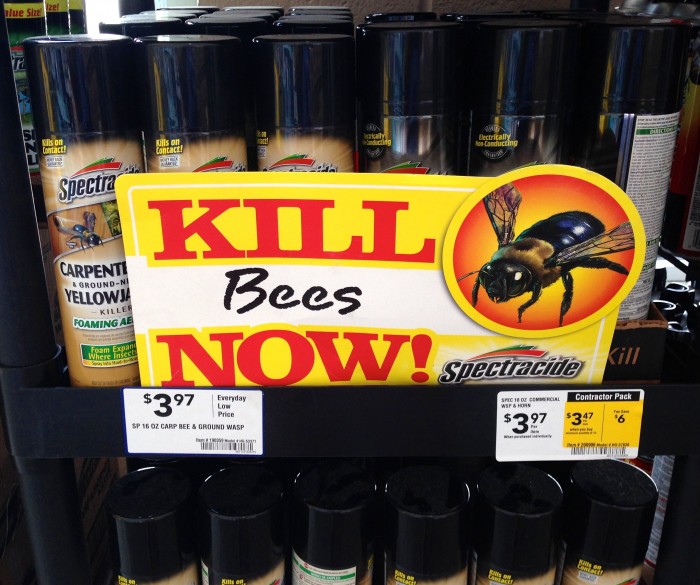
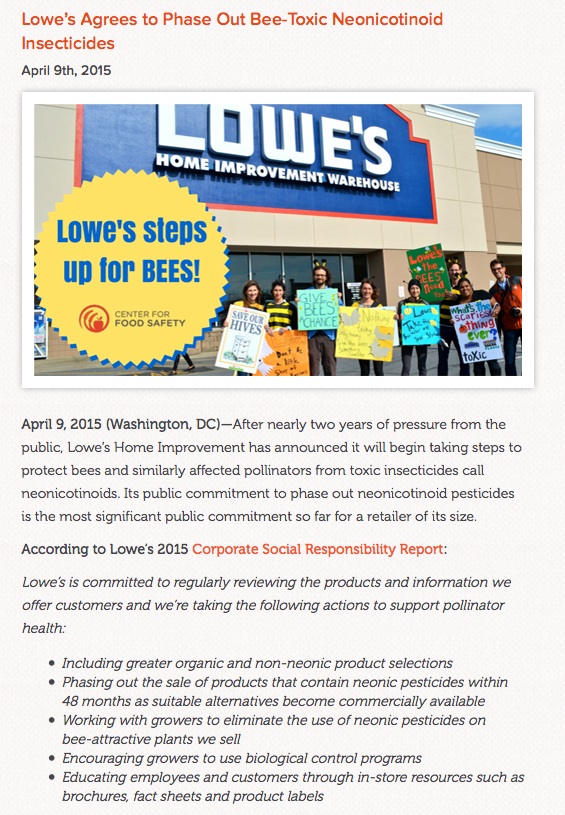
Dear big box store: please make up your mind.

Report from the Center for Food Safety, April, 2015:

bigboxneonics

My photo from July, 2015:

spectracide

Yes,  sometimes folks want or need to kill bees, wasps, etc. But given the current hullabaloo, this particular sales display was too ironic for words.


The Handy Dandy Dibber

A dibber, also called a dibbler (the garden tool, not the small nocturnal marsupial),  has many uses in the garden and greenhouse.  It also offers the opportunity to announce your intentions of dibbing (or dibbling). I’m a huge fan.

For example: just planted the last of my fall bulb purchases.  One of packs remaining was Allium unifolium, left over from installing our Allium field trials. (28 species and cultivars – woo! Beats doing research on soybeans or something.) … Continue reading this article “The Handy Dandy Dibber”

Trash or Treasure?

You’ve probably heard certain plants dismissed as “trashy” –  but what does that mean?  We have a delightful Magnolia macrophyla in our campus garden – with huge foliage, creamy blooms, the native factor, etc., it draws all kind of attention. So I’d hesitate to call it trashy. But the autumn leaf drop clutters the ground with leaves the size of a sheet of legal paper.  They aren’t rake-able, or really mow-able, have to gather by hand into “sheaves”. … Continue reading this article “Trash or Treasure?”