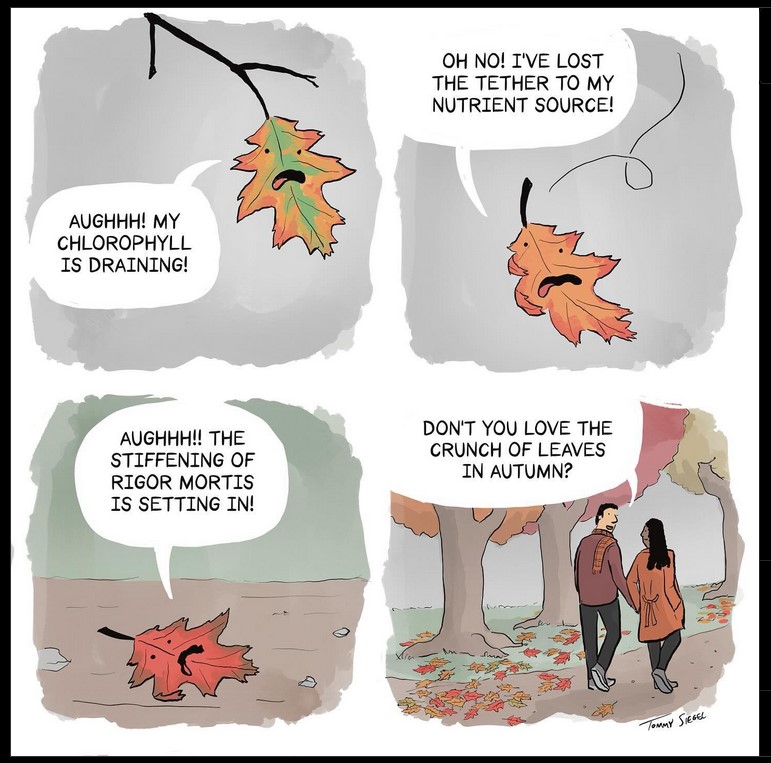
Existential dread – the botanical version. (Thanks to Tommy Siegel’s creative talents)
While the onset of autumnal leaf color change reminds us that winter is coming, there are many other reasons why leaves turn red. Knowing why and how leaves turn red is key in accurate diagnosis.
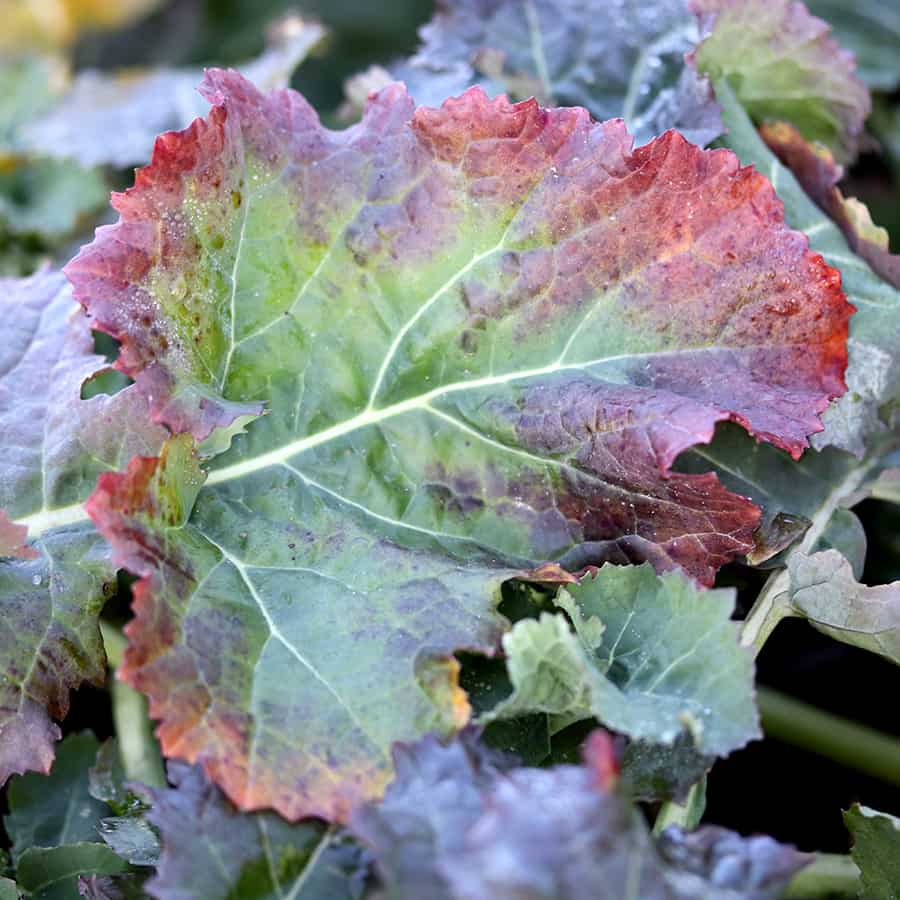
Once near-freezing temperatures occur, leaves seem to turn red overnight.
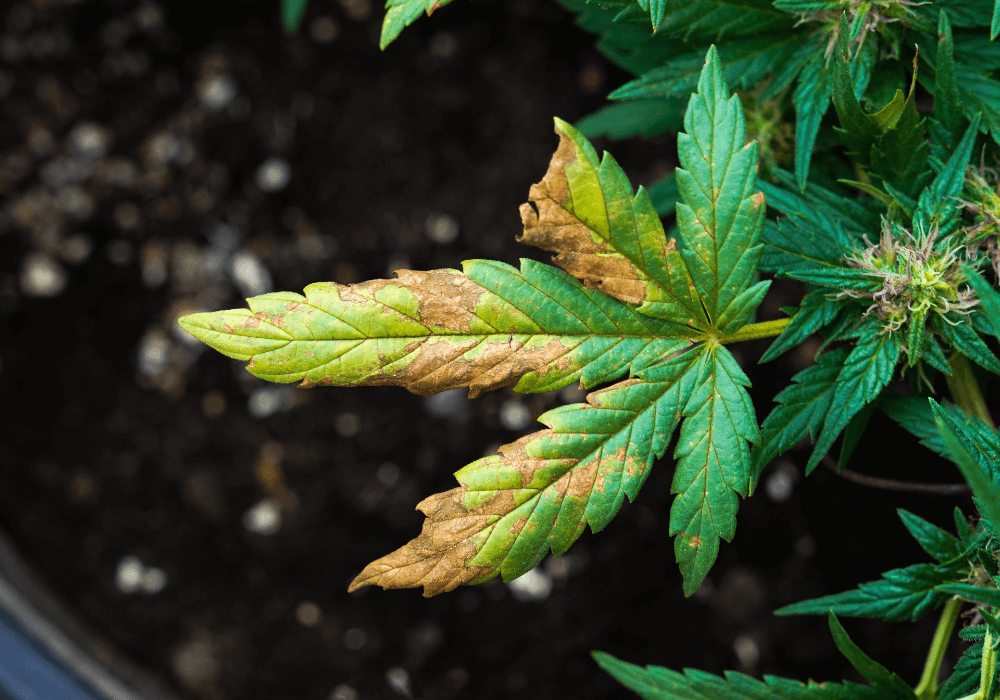
These are examples of leaf reddening misdiagnosed as phosphorus deficiency:
For those of us in the Southeastern United States, this past week has been a whirlwind of preparation for Hurricane Helene, followed by the terrifying storm itself and now, for some people, months of clean-up and houses, yards, and gardens that may never be the same. My post this week (I did not get to it last week because of the impending storm) will be about how to prepare for an extreme weather event, including where to find accurate and timely information on weather forecasts and how to prepare your house and garden for the extreme weather you may suffer.… Continue reading this article “Getting ready for an extreme weather event”
I often feel slightly nauseous after a day of debunking misinformation online, in emails, and in person. Others who selflessly give their time and energy to the same efforts probably feel the same. An antidote counteracts poison; in a very real sense, those of us who guide gardeners through the six circles of horticultural hell are routinely exposed to the mind-numbing dregs of lazy thinking.
Early in August, Hurricane Debby made landfall in the Big Bend of Florida’s Gulf Coast, crossed into Georgia east of Valdosta, and moved leisurely northeast. The remains of Debby crossed the coast, briefly moved over the Atlantic Ocean before turning northwest and making another landfall northeast of Charleston then headed north into New England. While the winds decreased quickly once Debby made landfall, it dropped huge amounts of rain along its path. The highest official rainfall amounts topped 12 inches, but I heard of some unofficial measurements of 20 inches in a few isolated locations.… Continue reading this article “How would your garden handle a 12-inch rainfall?”
A polycultural landscape mixing vineyards and annual crops with woody hedgerows and trees in Charente, France. Photo courtesy of JLPC through Wikimedia.
As gardeners, we often assign human characteristics to our plants as a way of feeling more connected to them. We talk about their preferences and dislikes for certain environmental conditions and even for each other. The idea that plants have feelings has caused many to believe that plants are sentient and capable of making deliberate choices.… Continue reading this article “Weeding out the Pseudoscience in Companion Planting”
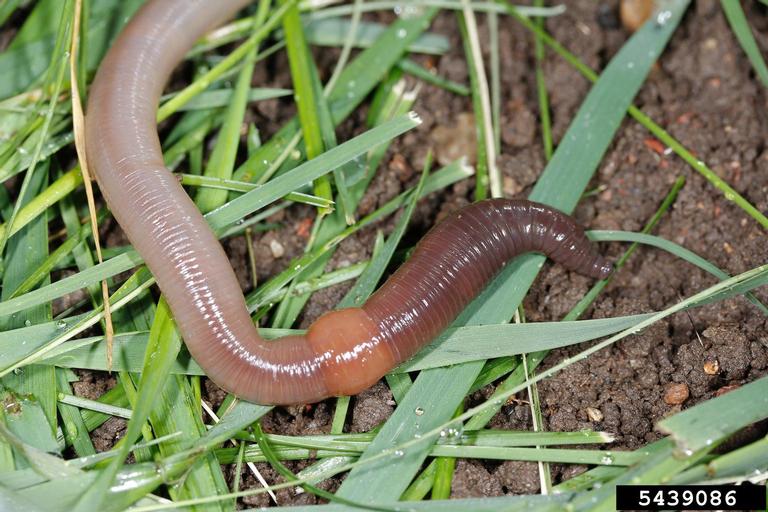
Earthworms have held a secure place in the hearts of many gardeners for quite some time. Charles Darwin himself was endlessly fascinated by these organisms (publishing an entire book about them in 1881) writing: “it may be doubted whether there are any other animals which have played so important a part in the history of the world…”.
We have a guest writer for this week’s GP blog post, Teresa Watkins! She’s a professional landscaper and garden consultant in Florida (her bio is at the end of the column). As a professional she has seen “landscaper results” that will astound, scare, shock, or otherwise perturb you to no end. She has graciously shared photos and input for this blog post.
In my blog post last month, I mentioned the likelihood of having a very active Atlantic tropical season, especially because the ocean surface temperatures are so warm. But despite an early start to the season with the first three named storms (including Beryl, the earliest ever category 5 storm in the Atlantic Ocean), it’s been quiet for the last few weeks. The ocean temperatures continue to be very warm. What is preventing the development of tropical storms in such a warm environment?… Continue reading this article “Dust in the wind”
My social media administrator (aka cat herder extraordinaire) reminded me recently that I’d written a post on xylem function and promised to follow up the next month with a post on how phloem works. Well, that was about 18 months ago. Guess I better keep my promise.
Do read the
linked post if you don’t remember why “xylem sucks.” In contrast to xylem,
functional phloem is an interconnected series of living cells with cell
membranes. The presence of a membrane means the plant can regulate what goes in
and out of the phloem, and the direction of phloem flow is determined by the
relative concentrations of dissolved substances in the water – most importantly
sugars derived from photosynthesis.… Continue reading this article “The nitty gritty on movement of chemicals in plants, part 2”