As some of you know, my background is somewhat different from most faculty members in Horticulture in that my roots (no pun intended) are deepest in forestry. I’m sometimes asked to compare and contrast various aspects of horticulture and forestry. There are certainly differences – some of which I’ll get into in later posts – but there are also a lot of similarities. One of the truisms that seems to pervade both fields goes something like this: “When all else fails, blame the nursery”. … Continue reading this article “The other side of nurseries”
What’s in YOUR soil? (with apologies to Capitol One)
Urban environments are always challenging for landscape plants just because they are anything but “natural.” Temperatures are higher, water is often less available, and compacted soils have all the nourishing qualities of concrete. The single most important thing you can do to ensure long-term success of landscape trees and shrubs is to get their roots well established in the soil.
I’m going to leave the topic of soil amendments to another day (but you can find my myth columns about them at http://www.theinformedgardener.com… Continue reading this article “What’s in YOUR soil? (with apologies to Capitol One)”
What I Learned This Summer (part 2): Pot Recycling, a Photo Essay
A big “score” at a great garden center or nursery results in guilt. Not about the money I spent, but the giant pile of pots and tags left in the wake of the planting frenzy. I plan to provide a more thorough review/discussion on this topic in the future – but for now, I want to share what I learned in a visit to the Missouri Botanical Garden’s (MOBOT) recycling center in St. Louis (part of the Perennial Plant Association’s annual conference). … Continue reading this article “What I Learned This Summer (part 2): Pot Recycling, a Photo Essay”
The Pile Of Ash On My Floor
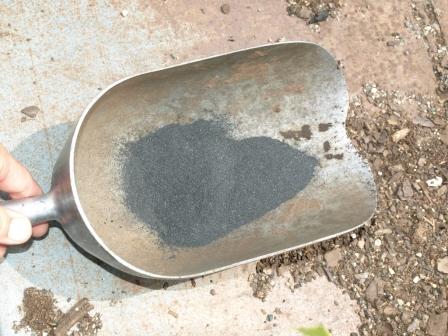
Part of the problem with being a professor is that companies assume that I have a bottomless supply of funds to test their products and that it is, in fact, my duty to do so. And of course they assume that this testing will ultimately find their product useful.
The truth is that I do love to test things, but I don’t have the funds to do the comprehensive tests that these companies usually want, at least not without them helping out at least a little – and most of them don’t want to spend money on tests! … Continue reading this article “The Pile Of Ash On My Floor”
Bad roots and deceptive marketing
I guess today’s blog should be entitled “The Cranky Garden Professor.” Really, I’m not always cranky, and when I am I go outside to do something constructive in my garden. Last weekend I finally tackled a 5-gallon container of lavender that I’d bought several weeks ago. I had intended to wait until fall to transplant it, but I was watering it every day to keep it from wilting. I figured I might have better luck getting it into the soil where a good mulching would help keep the soil moist without daily watering.… Continue reading this article “Bad roots and deceptive marketing”
Evaluating ‘Scientific’ Claims
Whenever I give talks to landscapers or gardening groups some of the most common questions that come up deal with various products promoted to provide ‘miracle’ results in the garden. These are usually various soil amendments; fertilizer additives, bio-stimulants, mycorrhizae, and the like. My initial reaction to these inquiries is, “What does your current basic plant maintenance look like?” Are you mulching? Irrigating when needed? Fertilizing if needed? Pruning properly? Have you matched the tree to the site conditions?… Continue reading this article “Evaluating ‘Scientific’ Claims”
Mulch Volcanoes
After Linda’s post yesterday I just had to add my own 2 cents about gator bags. I use ’em and I like ’em. But, that said, I never allow gator bags to sit against trees for an extended period of time (Maybe 6 weeks when the tree first goes in). That’s just asking for trouble! But looking at those bags got me thinking about a project which we’re finishing up this year. Volcano mulching. Believe me, it sounds a lot cooler than it is. … Continue reading this article “Mulch Volcanoes”
Organic food study creates uproar
I’ve already done my blog for the day, but am hoping this story might fuel another discussion. There are some very good reasons for buying/eating organic food, but nutritional superiority does not appear to be one of them. http://seattletimes.nwsource.com/html/localnews/2009599887_organicstudy05m.html
Long term problems with Tree Gators?
So, Bert, you (and others) have done research on Tree Gator-type products and found them useful in providing water to newly planted trees and shrubs. For those of you that haven’t seen supplemental irrigation products, they are heavy-duty plastic bags that zip up to create a sleeve around tree trunks and drip water from their perforated bottoms (Figure 1). The City of Seattle uses them routinely, but I’ve seen a number of trees fail in spite of the additional irrigation. … Continue reading this article “Long term problems with Tree Gators?”
Introducing Bert Cregg
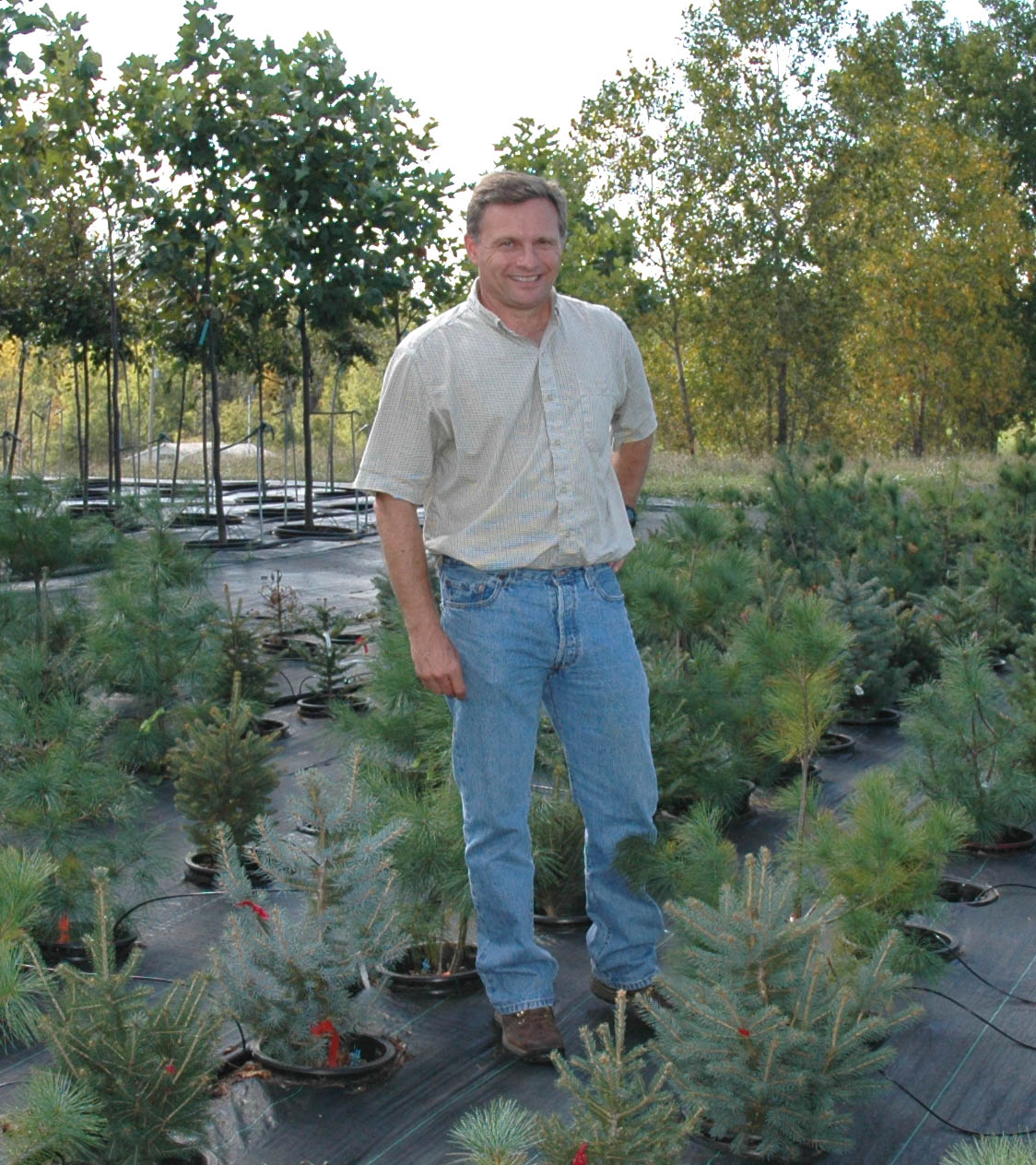
Welcome to the Garden Professors. I am currently an Associate Professor and Extension Specialist in the Department of Horticulture and Department of Forestry at Michigan State University. I am also about the last person I thought would be doing a blog. I have often wondered who has time to read blogs, let alone write one. But I was intrigued when Jeff Gillman invited me to participate in this one. I have a lot of respect for Jeff and for Linda Chalker-Scott. … Continue reading this article “Introducing Bert Cregg”