Let the sun shine!

Facebook

This time of year, I frequently notice the change of the sun’s daily position over time, since my family room faces east. This is especially true as most of my trees on that side of the house are deciduous—as the leaves fall, I get a better look at where sunrise is actually occurring and how it is changing day by day. Sun angle and the amount of sunlight that reaches different parts of your garden can have a big impact on what kinds of plants you can grow and how your garden appears. This impact changes daily as well as seasonally and is based on your garden’s orientation. In this post we will discuss how the sun angle affects gardening and how you can use sun angle to help plan your garden.

Helianthus annuus, Vengolis, Commons Wikimedia.

How sun angle and day length change with the season

The tilt of the earth’s axis of rotation causes the path of the sun across the sky to change throughout the year. When the North Pole is pointed towards the sun (Northern Hemisphere summer), the sun is high in the sky, days are long, and the light is the most intense. This can lead to high temperatures and the risk of sun scorch or heat stress on sensitive plants where direct sunlight is strongest. When the North Pole is pointed away from the sun (NH winter), days are short, the sun is low in the sky, and the light is generally weaker. Shadows are longer and stretch further, which means that an area that might get full sun in summer may be entirely shaded in winter. This can limit gardening options in colder months even in areas where there is no frost.

In spring and fall, the sun’s angle is intermediate and changes more quickly from one day to the next. Of course, if your garden has deciduous trees, shade will also be affected by the leaf-out of those trees and will increase as the leaves grow and expand, so the type of surrounding tree cover will also be a factor.

You can find a useful tool to help you determine the direction of the sun at any time and place at https://sun-direction.com/.

Sunrise panorama at summer solstice, equinox, winter solstice, LynceanEducation, Commons Wikimedia.

Cloud cover and sunlight

In the real world, the sun doesn’t always provide much light if you are in an area with a lot of cloud cover. Some areas have a lot more cloud coverage than others due to the effects of mountains or water bodies that help form clouds. Cloud cover can also vary depending on the season and what types of weather are affecting a particular region. Where I grew up in western Michigan, the effect of lake effect cloud cover made winters and springs quite gloomy and any sunlight was welcome. However, in summer the prevailing wind shifted from the northwestern flow that occurred in winter to winds that were primarily from the south. As a result, our summer weather was much sunnier and warmer because of the increased sun due to fewer clouds. You can see a video of the seasonal cycle of cloud cover across North America here or see monthly maps over the United States in Brian Brettschneider’s Climate Blog. If you are in an area with a lot of cloud cover, especially during the growing season, you will need to factor that into your planning, since clouds reduce the amount of incoming sunlight and influence photosynthesis.

How sun angle and light exposure affect plant growth

The amount of light that hits a plant will directly control photosynthesis and plant development. Since plants use light energy for photosynthesis, the more light-hungry a plant is (like fruiting vegetables), the more hours of direct, intense sunlight it needs (typically 6-8 hours or “full sun”). Shade and insufficient light will result in weak, leggy plants with poor fruit or flower production. If the sunlight is unevenly distributed, the plant will grow and bend towards the light source, resulting in weaker stems or an uneven shape.

Gänseblümchen beim Aufstehen ( Bellis perennis ), böhringer friedrich, Commons Wikimedia.

The amount of sunlight that an area gets will also affect the types of plants that grow in a given location. Areas with high-angle, intense sun develop thicker, shorter leaves to minimize water loss. These areas are also often areas of higher temperatures and drier conditions, which contribute to the types of plants that grow there naturally. Plants that grow in low-angle, dappled, or indirect light often have thinner, larger leaves to capture as much of the light as possible.

Sunlight and shade, Attadale Gardens, Jim Barton, Commons Wikimedia.

Using sun angle to help with garden design

Understanding the sun angle and light distribution in your garden is essential to good garden design. By observing the movement of the light and shaded patches in your garden over the course of the day and across the seasons, you will be better able to choose the best plants for the exposure you find in each part of the garden. You might even want to create a diagram of your garden to identify different areas of light exposure. You should match the plants’ light requirements (full sun, partial shade, full shade) to the appropriate areas you have.

In addition to determining where shaded and sunny areas are, you also need to consider the effects of trees, especially if they are deciduous and change over the course of the year. If you want to provide an area with more sunlight in your garden to produce crops like tomatoes, you may wish to consider some pruning of tree branches to provide more sunlight to those areas. You should also think about the impacts of taller garden plants on surrounding vegetation, so you should plant taller plants on the north side (in the Northern Hemisphere) so they do not shade shorter plants.

Sunburn on a basil (Ocimum basilicum) plant, Vietmeier, Andreas, Commons Wikimedia.

Protecting plants from too much sunlight

If your sunlight is too intense for some sun-sensitive crops like lettuce, you may be able to erect temporary shade structures to help protect them from the strongest sun. Farmers also use kaolin clay and similar products to help prevent sunburn in commercial plants by covering them with a white layer that reflects sunlight away and keeps the fruit cooler and less affected by strong sunlight. It can also help repel pests by creating a protective barrier on plant surfaces. You can tell if plants are getting too much light by observing leaf scorching (brown, crispy spots, especially on the edges), bleaching (leaves turning pale yellow or white), wilting, and stunted growth.

Wildlife park in Dülmen, North Rhine-Westphalia, Germany (2018), Dietmar Rabich, Commons Wikimedia.

How sun affects gardeners

We all love the sun and our gardens need it to grow, but too much of a good thing can be hazardous to the health of gardeners as well as plants. Make sure that you wear sunscreen and use hats and clothing to help protect yourself from the harmful aspects of sunlight and you will be free to enjoy your garden without fear of skin cancer and health issues. Let the sun shine and let our gardens (and gardeners) grow strong!

Yellow flower in sunnyday, Manisamg, Commons Wikimedia.

Facebook

The Spooky and Spectacular World of Carnivorous Plants

Facebook

As a lover of the weird and wonderful, October is one of my favorite months of the year, because of Spooky Season. To celebrate, I thought it would be fun to learn about some of the weird and wonderful plants around us, especially some of the most notorious: carnivorous plants.
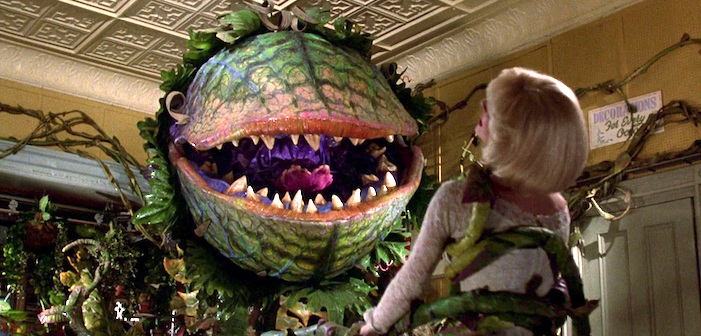
Little Shop of Horrors (Warner Bros.).

Whether you like to grow them, observe them in their natural habitats, or simply just learn about them, it’s easy to understand our collective fascination with carnivorous plants. Many of us may have seen depictions of ‘man-eating plants’ in horror movies, or exaggerated tales of some of these killer plants in fictional stories, cartoons, and other pop culture references. The horror genre’s elaborate and embellished portrayals of carnivorous plants were inspired by Charles Darwin, before which plants were considered to be innocent bystanders to the ecological phenomena surrounding them. Having spent 16 years researching carnivorous plants, Darwin published multiple books about them. This shifted our perception of plants as a whole and how they interacted with other organisms, giving rise to our fascination with carnivorous plants, driving our desire to understand their biology, and fueling our creativity by exaggerating some of these adaptations into very entertaining science fiction. I wonder If he could have ever imagined the creative ways in which popular culture (especially science fiction and horror) would go on to embrace these botanical marvels.

Types of Carnivorous Plants

Carnivorous plants are defined as plants that extract nutrients from animals. These plants have a variety of adaptations that allow them to capture and/or trap prey (most often insects and other arthropods), and enzymes that can break this prey down into nutrients that can be used by the plants themselves. Although carnivorous plants do still perform photosynthesis, they get most of their nutrients from captured prey.

Venus fly trap (Dionaea muscipula). Photo: Karelj, Wikimedia Commons https://commons.wikimedia.org/wiki/File:Dionaea_muscipula_Exhibition_of_Carnivorous_Plants_Prague_2015_1.jpg

Some of the more famous carnivorous plants include the charismatic Venus fly trap (Dionaea muscipula), the North American native pitcher plants (Sarracenia spp.), the tropical vining pitcher plants (Nepenthes spp.), the widespread sundews (Drosera spp.) and butterworts (Pinguicula spp.), and the moisture-loving and often aquatic bladderworts (Utricularia spp.). Some not as well-known examples include a few species of carnivorous Bromeliads (in the genera Brocchinia and Catopsis), and Triphyophyllum peltatum that can become carnivorous in situations of nutrient scarcity, after which it may revert to a non-carnivorous lifestyle. There is also a plant called the Gorgon’s Dewstick (Roridula gorgonia) which captures insects, but lacks the mechanism to digest this captured prey. Instead, this fascinating plant will trap this prey to attract the jumping tree bug (Pamerida spp.) which feeds on these trapped insects, while leaving nutrient-rich frass (insect poop) which is absorbed by the leaves of this plant!

Sundews (Drosera spp.) use the sticky tentacles covering their leaves to trap and digest insect prey like these damselflies. Photo taken in Duck Lake, Oregon, Source: Noah Elhardt, Wikimedia Commons https://commons.wikimedia.org/wiki/File:Drosera_anglica_ne2.jpg

The ways that plants actually capture their prey are pretty diverse: ranging from sticky substances that can immobilize prey, dark tubes and funnels that can trap and disorient them, and mechanical methods that can snap/ensnare or suction prey, dooming them to their fate. These mechanisms are defined as ‘active’ or ‘passive’ based on whether there is movement involved in the prey-capture process.

Evolution of Carnivory in Plants

Although we previously lacked a deeper understanding, advancements in molecular biology have allowed us to paint a more complete picture regarding how plants actually evolved this interesting adaptation.

Carnivory in plants is another classic example of convergent evolution (where unrelated species independently evolve similar traits), with instances of its occurrence over 12 different occasions across the evolutionary timescale of flowering plants (angiosperms). We currently estimate that carnivory is evident in over 800 species of plants across more than a dozen plant families.

Bladderworts (Utricularia spp.). Photo: Nativeplants garden, Wikimedia Commons https://commons.wikimedia.org/wiki/File:Utricularia,_Paithalmala_2.jpg

All of these instances of carnivory were driven by similar needs: limited nutrient availability in the habitats in which these plants grow. These carnivorous plants grow in conditions which lack specific nutrients essential for plant growth (many of which include bodies of water or soils that are low in Nitrogen and Phosphorous). Arthropods such as insects can be excellent sources of these (and other) essential nutrients, and are often abundant in these habitats…all that plants needed to do was to come up with a way to tap into this great resource. They were able to accomplish this by repurposing existing genes to capture these six- and eight-legged snacks, and extract the nutrients found within them. Researchers who evaluated the digestive enzymes found in these plants noticed that there were quite a few similarities between these and defensive chemicals used by ancient flowering plants to protect themselves from pathogens and pests. Most carnivorous plants use similar enzymes including chitinases, proteases, and acid phosphatases (all of which have roles to play in the breakdown, dissolution, and absorption of nutrients from the corpses of their arthropod prey). In an interesting evolutionary twist, these chemicals were repurposed to eat some of the pests that they were originally protecting the plants from! How cool is that?!

If you want to learn more about the evolution of plant carnivory, I recommend reading the wonderful Smithsonian article linked in the resources below.

Carnivorous Plants and their Pollinators

With plants that have evolved to kill and consume arthropods, one can’t help but think about the pollinators that they depend on. How can plants attract both prey and pollinators? How do they go about selectively capturing the ones that they kill and extract nutrients from, while also protecting the ones that they rely on for pollination?

Insect and plant relationships can be multi-faceted, interesting, and extremely sophisticated (and plant/pollinator interactions are arguably some of the most interesting of these). Carnivorous plants have come up with ways to navigate this ‘pollinator-prey conflict’ utilizing a few main mechanisms. These include separation of the traps from the flowers, which is either done temporally or spatially. Some carnivorous plants will bloom before the traps have developed, allowing them to be successfully pollinated before they begin capturing prey, while other plants may physically separate the flowers from the traps themselves, often positioning flowers much higher than the traps which would be found closer to the ground (the method used by the Venus Fly Trap). They may also use different attractants (such as odors and colors) in their flowers and their traps to attract specific pollinators to flowers and only prey to traps; or they may use a combination of the aforementioned strategies.

The Venus fly trap protects its pollinators by spatially separating the flowers from the traps. Photo: NC Orchid, Wikimedia Commons https://commons.wikimedia.org/wiki/File:Dionaea_muscipula_in_flower_(16977455134).jpg

Growing Carnivorous Plants

Although many carnivorous plants can have complex growing requirements that can make them difficult to grow in captivity, there are quite a few plants that are well-suited to this. Furthermore, we all know some very ingenious gardeners that can grow some of the trickiest plants with ease, laughing in the face of what others may consider ‘impossible’! My mother is a classic example of one of these gardening goddesses who manages to propagate and grow some of the most ‘difficult’ plants, often the ones that I have told her will probably not be successful. To those of you who are like my mother, I salute you. For the rest of us, I will focus on some carnivorous plants that are more user-friendly.

There are a variety of carnivorous plants that grow well indoors, and several available resources to help troubleshoot growing requirements (including a variety of websites and blogs that are dedicated to carnivorous plants, some of which I have included in the resources below). For beginner-friendly carnivorous plants, I would recommend starting with Venus fly traps and sundews. Often far less fussy than most, these are sometimes considered ‘gateway’ plants for those who might be starting out on their carnivorous plant journey. Tropical pitcher plants (Nepenthes spp.) are another popular houseplant choice, and these vining beauties can be attractive additions to your carnivorous collection.

Tropical pitcher plants (Nepenthes spp.) are a popular choice for carnivorous houseplants. Photo: Abiya Saeed

There are also a few carnivorous plants that can grow well in outdoor gardens as long as the appropriate conditions are present. The purple pitcher plant (Sarracenia purpurea) is an example of a cold-hardy carnivorous plant that is especially suited to growing outdoors in North America (in USDA Plant Hardiness Zones 3-8), but there are also other temperate species of carnivorous plants that grow well in outdoor gardens in other temperate regions, and tropical carnivorous plants that are better suited to growing in more tropical regions. The most common carnivorous plants grown in outdoor gardens include temperate pitcher plants (Sarracenia spp.), sundews, and the Venus fly trap. I encourage you to look into the carnivorous plants of your region to see what could possibly grow in your home gardens. Note: you should never remove native plants from their native landscapes, because this could damage some of the fragile ecosystems in which they reside. Instead, source suitable plants from reputable suppliers who grow and propagate them sustainably.

Carnivorous plants for sale at a flower show. Photo: Abiya Saeed

Like any plant growing recommendations, there is never a one-size-fits-all approach to caring for carnivorous plants, nor are there plants that work well in every single situation. One of the keys to growing carnivorous plants is to make sure that you are providing these plants the right kind of growing conditions for them to thrive, often mimicking the conditions in which they thrive in nature. Most of these carnivorous plants need bright light, and supplemental lighting may be necessary if you don’t have a suitable location with access to enough sunlight. They also need lots of mineral-free water (many use distilled water for this), and nutrient-poor soils. You can even purchase carnivorous plant-specific soil mixes to simplify this process. Humidity is another consideration, and humidifiers, misting, or using terraria that can maintain humid conditions may be necessary. These plants don’t need to be fertilized, and it is important not to overfeed them. Indoor plants can be fed one or two insects per month (don’t feed them meat), whereas outdoor plants will probably not need to be intentionally fed, (as they can often get their insect nutrient sources on their own), but make sure they are grown in a location that has access to insect prey.

(If you are a carnivorous plant caretaker, what are some of your favorites to grow?)

More Information:

Carnivorous Plants (Penn State University):
https://extension.psu.edu/carnivorous-plants

How Carnivorous Plants Evolved:
https://www.smithsonianmag.com/science-nature/how-carnivorous-plants-evolved-180979697/

El-Sayed, A., Byers, J. & Suckling, D. Pollinator-prey conflicts in carnivorous plants: When flower and trap properties mean life or death. Sci Rep 6, 21065 (2016). https://doi.org/10.1038/srep21065

Some Resources for Growing Carnivorous Plants:

https://carnivorousplantnursery.com/blogs/cpn-blog

https://www.carnivorousplants.org

https://tomscarnivores.com/blog/start-here

Facebook