Podcast #8 – Water Works

We’ve finally gotten our summer here in the Pacific NW and it’s been pretty hot for a few weeks. The plants weren’t really prepared for this, so we’ve had to irrigate quite a bit to keep all that lush foliage happy. So the topic of this podcast is Water Works – focusing on how water moves in the soil and through plants.

One of the more interesting tidbits I found this week is a recent USDA study on growing more potatoes with less water.… Continue reading this article “Podcast #8 – Water Works”
Our visiting GP takes on fertilizers

Like many readers of this blog, I’m like a kid in a candy store where plants are sold.  I try to justify the extra cost of a large annual pot instead of a scrawny 4-pack, or I imagine I’ll find room for that lime green Heuchera and my wife will learn to love it.  But unless I keep my blinders on and stick to the shopping list, I’ll probably leave with a fertilizer.  This year, I’ve purchased 12-0-0, 5-6-6, sulfur, and some 5-1-1 liquid. … Continue reading this article “Our visiting GP takes on fertilizers”

A rant about urban farming

(I know this one will get me into trouble…but hey, if I don’t tick someone off I’m not doing my job.)

I have mixed feelings about the increased popularity of urban farming. On one hand, I love the idea that people are becoming more involved in producing their own food. But on the other hand, the naivety of many urban farmers is scary – because they assume that home-grown food is safer and/or healthier than what they can buy at the market.… Continue reading this article “A rant about urban farming”

Mortal Kombat – garden version

Soil solarization is regarded as an environmentally friendly alternative to pesticides for controlling nematodes, weeds and disease.  Sheets of plastic (generally clear) are spread over the ground and solar energy heats the soil underneath to temperatures as high as 55C (or 131F).  Since the soil environment is usually insulated from temperature extremes, the organisms that live there are unlikely to be resistant to heat stress.

This is a practice best suited to agricultural production, where monocultures of plants have attracted their specific diseases and pests. … Continue reading this article “Mortal Kombat – garden version”

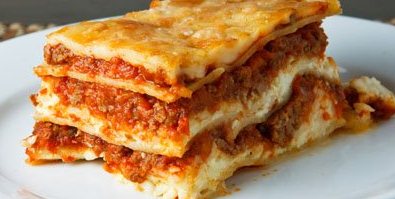
Is “lasagna gardening” really worth the effort?

This week I got a complimentary copy of Urban Farm, dedicated to “sustainable city living.”  The cover story is Lasagna Giardino – follow this recipe for a lasagna garden that grows perfect plants – Italian or not.

This is not a new idea, but was popularized several years ago as a way of preparing soil for planting.  The article relates the steps:

1)  Prepare the ground by mowing the lawn
2)  Dig up the first 12″ of soil (double digging)
3)  Place a layer of “noodles” (paper and cardboard are popular) – the low nutrient material
4)  Place a layer of “sauce” (the green material)
5)  Repeat as often as you like and “let it cook”

I like the first step of this. … Continue reading this article “Is “lasagna gardening” really worth the effort?”

Should we use biochars in our gardens?

In the last few years, I’ve had a number of people ask me about biochar:  what  is it and what does it do?  Should they add it to their garden?  Should they make their own biochar?  So while the subject deserves a longer review, I thought it would be useful to discuss it briefly on the blog.

In the strictest sense, “biochar” refers to charcoal that’s made as a byproduct of biofuel production.  Various crop residues, livestock manures, and just about any other organic material you can imagine has been studied for this purpose. … Continue reading this article “Should we use biochars in our gardens?”

Of Worms and Fertilizers

Today I’m going to write about fertilizers and worms.  The purpose of this post is not to encourage you to use fertilizers.  I agree wholeheartedly with Linda’s post – we don’t need many of the fertilizers which we’re using.  Still, it’s important to know the facts about anything that you’re doing (or not doing) to and for your garden, and to do them (or not do them) for the right reasons.  With that in mind, I’ve been reading about worms and fertilizers for the last few days and wanted to let all of you know the basics of what I’ve been reading, because it is somewhat contrary to what many gardeners believe.… Continue reading this article “Of Worms and Fertilizers”

Fertilizers, crops and landscapes

Last week Jeff wrote about the dangers of using “balanced” fertilizers, especially in reference to phosphorus content.  Comments quickly followed about using fertilizers in many situations – on farms, in container plants, on trees – and so on.  One of the latest comments came from Nick and began “I don’t usually recommend fertilizer for perennials or woody plants to consumers. In most cases they aren’t needed.”  And this leads into today’s topic.

Many of the horticultural practices we use in our gardens and landscapes have, unfortunately, been derived from agricultural crop production. … Continue reading this article “Fertilizers, crops and landscapes”

Building healthy soils?

I love living in Seattle…but I’m getting increasingly impatient with the City’s “Building Healthy Soils” propaganda.  For years I’ve questioned their recommendation to perpetually amend landscape soil with organic material to no avail.  Let’s see what you all think of their “fact sheet” (which you can read here in its entirety).

“The best way to improve the soil is to add plenty of compost or other organic matter throughout the entire planting area before planting. Thoroughly mixing these materials deep into the soil helps provide water, air and nutrients to plant roots.”… Continue reading this article “Building healthy soils?”

International Ag Labs – who are they and what do they do?

Last week I posted a short message about this company, asking you to do a little homework.  Bryn, CP, and Karen all have teased out some details that agree with my skepticism on how reliable this company is for soil testing and analysis.  (See last Wednesday’s post and comments if you haven’t read them already.)

To back up a little bit, I received an email from LB last week, along with the attached soil test, analysis and recommendations. … Continue reading this article “International Ag Labs – who are they and what do they do?”