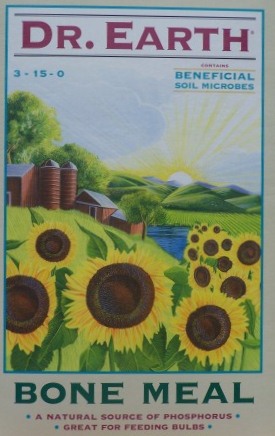
What about fall fertilization?

Posted by Bert Cregg
We had a question on the Facebook site regarding fall fertilization of landscape plants. Fertilization in general, and fall fertilization in particular, is a complex topic and needs a little more room for explanation than the Facebook discussion allows.

As a general rule, most landscape trees and shrubs can maintain acceptable growth and appearance without fertilization. There are a couple of reasons for this. As Linda noted in the Facebook discussion, woody plants are fairly efficient at internal nutrient recycling.… Continue reading this article “What about fall fertilization?”

What’s in the Worm Juice?

A couple of weeks ago I mentioned that I would be taking a look at the leachate that comes from vermicompost. Here is the worm house, owned by Master Gardener Meleah Maynard, from which this leachate came. This is a picture from when the house was new — it now has multiple floors.

It has been running for a few years now, and the “ingredients” that she puts in, mostly table scraps, are pretty typical of what anyone would put into compost.… Continue reading this article “What’s in the Worm Juice?”

Powers of the Mind


A couple of days ago I read a journal article which seemed to show that certain individuals could, using some sort of mind powers, called biofield treatments, influence the growth of plants.  You can read the article here.

In case you were wondering what goes through my mind when I read something like this, let me tell you:  The first thing that enters my head are skeptical thoughts.  I try to get rid of these quickly though, because I believe that, as a scientist, it is my job to critically evaluate the science behind the paper without letting my own preconceived notions influence me.  … Continue reading this article “Powers of the Mind”

Be a Part of History!

Here at the Garden Professors we pride ourselves on being on the cutting edge of technology.  In fact, we’re so tech savvy we didn’t even whine when FaceBook foisted a new homepage format on us for no apparent reason.  So it’s only fitting that we offer you, Mr. and Ms. Garden Professor Blog reader, an opportunity to participate in the first ever landscape horticulture research project designed by social media.


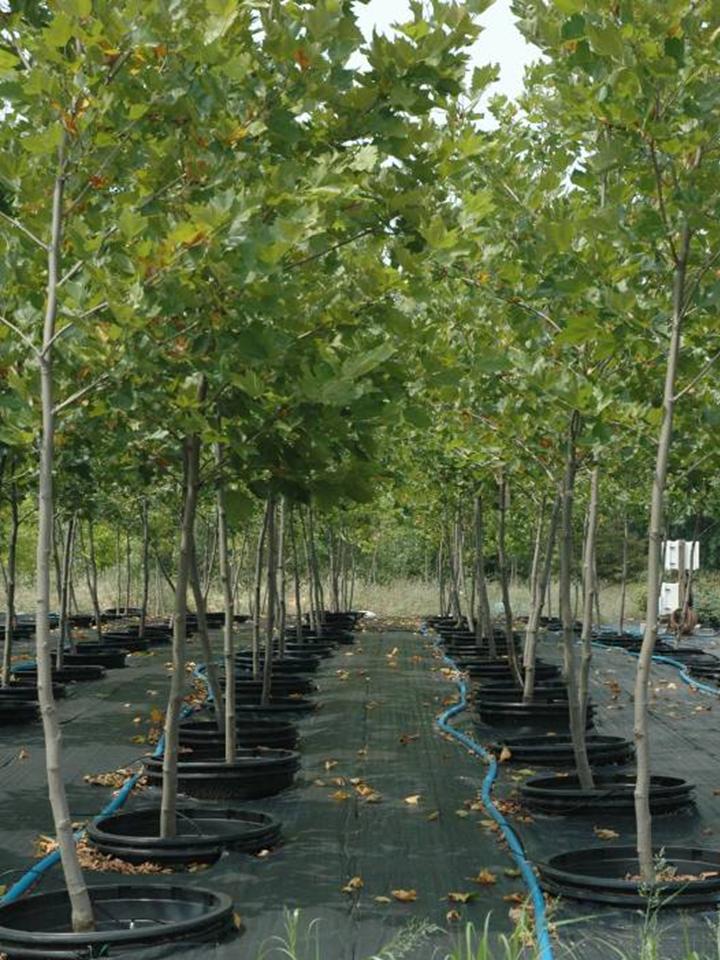
Here’s the deal.  My current research project on water and nutrient management of trees in container production has left us with over 100 ‘Bloodgood’ London planetrees in 25 gallon containers. … Continue reading this article “Be a Part of History!”

Out of the lead frying pan and into the phosphate fire

A recent NYT post reports that adding fish meal to lead-contaminated soils will cause the lead to bind to phosphate found in fish bones.  As the article explains, this chemical reaction results in the formation of pyromorphite, “a crystalline mineral that will not harm anyone even if consumed.”

Given my concerns about excessive phosphate loading in urban soils, I contacted Dr. Rich Koenig, an urban soil scientist and chair of WSU’s Crop and Soil Science department. … Continue reading this article “Out of the lead frying pan and into the phosphate fire”

Interveinal chlorosis mystery

Today my family took our annual 4th of July weekend hike.  We ended up on a fairly new trail through the Robe Canyon Historic Park.  It was a gorgeous day and we saw all manner of plants and animals.  The highlight of this trail is an old lime kiln; bricks and other remnants of early settlers are scattered around the area.  The kiln closed in the 1930’s.  (The hot link embedded in the park name leads to a 2004 article about the trail and the history of the site.)Continue reading this article “Interveinal chlorosis mystery”

Fast food is unhealthy for plants, too

In early December, I posted my thoughts about fertilizing crops vs. landscapes.  An anonymous reader asked if we could follow up by discussing the relationship between excessive fertilizers and plant susceptibility to pests and disease.  It’s taken a month to get the scientific literature (and my act) together, but here it is.

There are decades’ worth of articles about the direct relationship between increased nutrient availability and increased susceptibility to pests, disease, and disorders.  One of the earliest articles linked the incidence of celery blackheart to over-fertilization. … Continue reading this article “Fast food is unhealthy for plants, too”

Fertilizers, crops and landscapes

Last week Jeff wrote about the dangers of using “balanced” fertilizers, especially in reference to phosphorus content.  Comments quickly followed about using fertilizers in many situations – on farms, in container plants, on trees – and so on.  One of the latest comments came from Nick and began “I don’t usually recommend fertilizer for perennials or woody plants to consumers. In most cases they aren’t needed.”  And this leads into today’s topic.

Many of the horticultural practices we use in our gardens and landscapes have, unfortunately, been derived from agricultural crop production. … Continue reading this article “Fertilizers, crops and landscapes”

Dog Spots

There is a general misunderstanding among the gardening (and yard owning) community about dog spots.  It seems that some people believe that dog spots occur because of a high or low pH or because of some sort of poison in a dog’s urine, but that really isn’t the case at all.  Dog spots occur because of something that I pointed out a few weeks ago in another post.  Urine contains a lot of nitrogen.  When a dog pees on your lawn that extra nitrogen isn’t used and so ends up being poisonous to the grass which is peed upon. … Continue reading this article “Dog Spots”

Balanced Fertilizer and Peak Phosphorus

When I first started reading extension recommendations for plants around 15 years ago now, I read a lot about “balanced fertilizers”.  Today I still see balanced fertilizers recommended, but not nearly as frequently, which is a good thing.

At this point you may be asking yourself “what is a balanced fertilizer?”  A balanced fertilizer is one that has three numbers on its label which are the same — such as a 10-10-10 or a 14-14-14 (Nitrogen, Phosphorus and Potassium are the three nutrients indicated by
these numbers). … Continue reading this article “Balanced Fertilizer and Peak Phosphorus”