Container planting: intuition vs. reality

I’m just starting to think about getting my containers planted for the summer and happened to get an email on the topic from a blog reader. John was frustrated with a local columnist’s advice on using gravel in the bottom of the containers for drainage. When challenged, the columnist refuted John’s accurate comments with “logical thinking.” (You can find the posting and comments here.)

Here’s part of the post: “I like to cover the hole with a layer of gravel to improve drainage.… Continue reading this article “Container planting: intuition vs. reality”

Five little lavenders…four years later

If you’ve been following us for a while, you might remember a post from August 2009 when I got cranky about a pot of lavenders with horrendous root systems.  I intervened with my Felcos and planted out the patients, hoping for the best.
Lavender #2 before root pruning

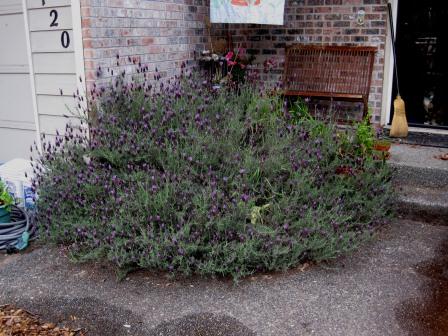
In July of 2010, I gave an update on their progress.  At that point, one of the lavenders had died but the other four were perking along. And now it’s time to show them in their floral glory:

Root washing is still controversial, as is corrective root pruning. … Continue reading this article “Five little lavenders…four years later”

Buried alive – the roots version

Bert’s post yesterday inspired me to share one of my own timelines that I followed for 7 years.  As many of you know, I am a proponent of bare-rooting container and B&B shrubs and trees.  One of the benefits is that you can prune away malformed roots, but another is that you can ensure the roots come into contact with the native soil as soon as possible.  It’s interesting to see what happens over time with the more typical “pop and drop” method.… Continue reading this article “Buried alive – the roots version”

Another WOW (why oh why) – “biodegradable” mesh for plugs

David Hobson, a garden columnist, sent me this great photo of his petunia planted earlier this year. Take a look at the root growth (or lack thereof):

I’m not sure where this particular product came from, but it looks a lot like a FERTISS propagation plug.  Here’s a description from their website of this product.”FERTISS is a ready-to-use, pre-filled propagation tray system. Cuttings are placed in a mixture of peat and perlite wrapped in a non-woven fabric.
Continue reading this article “Another WOW (why oh why) – “biodegradable” mesh for plugs”

When all else fails…

As someone who has had a foot in Horticulture and a foot in Forestry throughout most of my career, people often ask me to compare the two disciplines.  One of the truisms that applies in both cases is, “When all else fails, blame the nursery.”  I’ve seen this following seedling die-offs in industrial forest plantations and I’ve seen it many, many times after street tree or landscape planting failures.  In fact, if you believe some people, tree nurseries are responsible for every plague and pestilence to ever afflict mankind. … Continue reading this article “When all else fails…”

Opening up a can of roots (or worms as the case may be)

Blog reader Alan Haigh asked if we could start a discussion about tree planting recommendations.  He sent along these guidelines from the Colorado State Master Gardener Program.

While I’m glad to see that the consensus now seems to be that burlap, wire, twine etc. do not belong in the planting hole, there’s still plenty of issues to contest.  Here are just a few that I found on my first read:

1)  Not mulching over the root ball;

2)  Assuming that all B&B trees are “field grown,” which I *know* is incorrect for so very, very many B&B trees;

3)  Not including the root-washing technique for B&B, which is not only research-based but is actively promoted through the International Society for Arboriculture’s workshops (see this posting for instance). … Continue reading this article “Opening up a can of roots (or worms as the case may be)”

Be a Part of History!

Here at the Garden Professors we pride ourselves on being on the cutting edge of technology.  In fact, we’re so tech savvy we didn’t even whine when FaceBook foisted a new homepage format on us for no apparent reason.  So it’s only fitting that we offer you, Mr. and Ms. Garden Professor Blog reader, an opportunity to participate in the first ever landscape horticulture research project designed by social media.


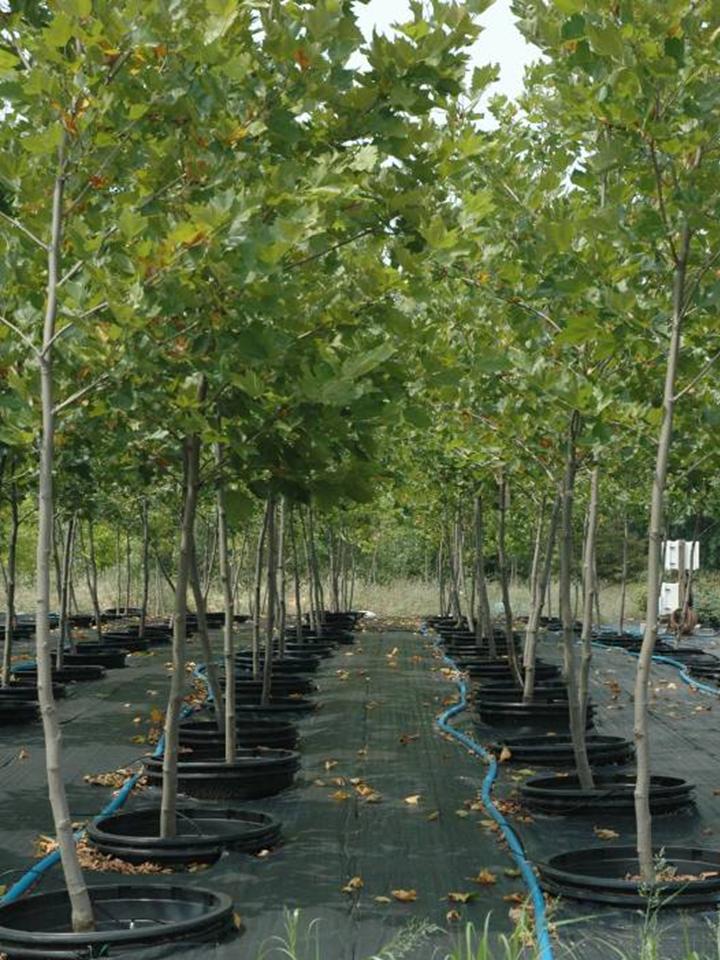
Here’s the deal.  My current research project on water and nutrient management of trees in container production has left us with over 100 ‘Bloodgood’ London planetrees in 25 gallon containers. … Continue reading this article “Be a Part of History!”

WOW again (Why oh Why?)

I’m going along with the “dead tree” theme of the week, but doing a little prognosticating at the same time.  Bert and Holly showed you tree demise on site; I’m going to show you tree demise in the making.  We can call this “dead plant walking.”

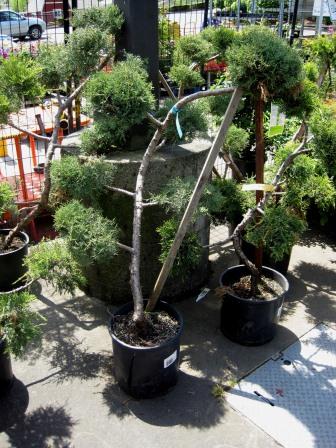
I’ve done a few WOW postings in the past, often with a focus at what you might find at a nursery or big box store.  Here’s a recent find at an unnamed BBS, in the “topiary” section:

Unless you intend to have a giant stake as part of your topiary statement, this tree (actually a juniper) will morph into a prostrate form before your very eyes. … Continue reading this article “WOW again (Why oh Why?)”

Getting to the root of the problem

After getting off to a cool and soggy start, summer has come with a vengeance to Michigan, with heat indices expected to push 100 degrees by Wednesday.  Along with warmer temperatures, summer also means our research season is getting into full swing as well.  One of our biggest efforts these days involves our project to look at pre-plant storage and handling on shade tree liners.


As many GP blog readers are aware, emerald ash borer (EAB) has dominated the conversation regarding shade trees in the Midwest for the past 6-8 years. … Continue reading this article “Getting to the root of the problem”

Harvesting an Experiment

This has been an exciting week for me.  On Monday we started cleaning off 72 rootballs of various tree species that had been planted 5 years ago for a study.  These trees had been planted in containers and become potbound at the nursery from which we received them.  We treated them in one of three ways.  Either we did nothing (in other words we just dropped the pot bound tree in a hole), we used the standard methods that Universities recommend for slicing potbound roots (Four deep slits down the sides and a deeply cut X across the bottom), or we cut off all of the circling roots by cutting the pot bound root system into a box shape.… Continue reading this article “Harvesting an Experiment”