Container planting: intuition vs. reality

I’m just starting to think about getting my containers planted for the summer and happened to get an email on the topic from a blog reader. John was frustrated with a local columnist’s advice on using gravel in the bottom of the containers for drainage. When challenged, the columnist refuted John’s accurate comments with “logical thinking.” (You can find the posting and comments here.)

Here’s part of the post: “I like to cover the hole with a layer of gravel to improve drainage.… Continue reading this article “Container planting: intuition vs. reality”
It’s raining, it’s pouring, it’s a good time for a site assessment…

April is turning out to be a soggy month for most of Michigan and our surrounding states.  While most homeowners are inclined to hunker down indoors and keep an eye on their sump pumps on these dark, dreary days; our current run of wet weather is a good opportunity to take a stroll around your property and make some notes.  In particular, note any areas where water is accumulating.


Poor drainage is one of the most common sites factors that limit landscape tree and shrub survival and growth.  … Continue reading this article “It’s raining, it’s pouring, it’s a good time for a site assessment…”

Update on root-rotted Cornus kousa

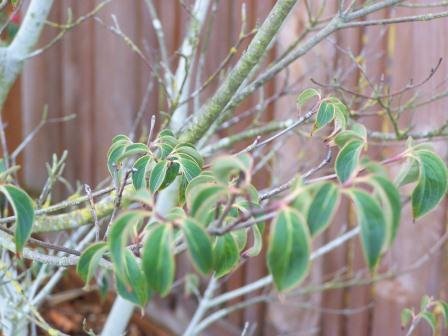
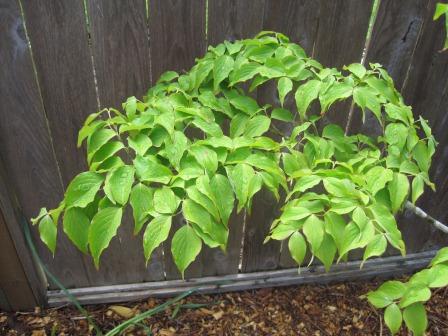
A little more than a year ago I posted a Friday quiz based on a failing Cornus kousa.The answer explained that our landscape has, in part, a perched water table that effectively rotted most of the roots of this poor tree over several years.  Last spring we moved it to a different section of our landscape where we know the drainage is better, and I’ve been monitoring its recovery since that time.


Cornus kousa leaves in 2007


Cornus kousa leaves in 2011

We were gratified to see that the leaves this year are significantly larger than those of previous years. … Continue reading this article “Update on root-rotted Cornus kousa”

Keep Calm and Carry On: Part II

Recently I posted that many of the “rules” that gardeners cling to so tightly regarding tree planting (i.e., dig the planting hole 3 times the width of the root ball, always amend the backfill with organic matter) are probably better considered ‘suggestions’ than rules.  While these practices won’t hurt, there are much better ways to spend time and effort to ensure long-term survival when planting a tree.  Here are the top four:

Irrigate.  No matter how much time and effort goes into the ‘perfect’ planting hole; for most parts of the country, trees that are not irrigated after planting are doomed.  … Continue reading this article “Keep Calm and Carry On: Part II”