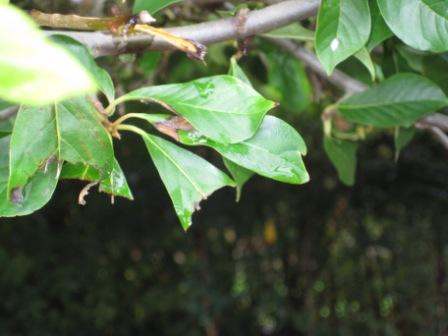
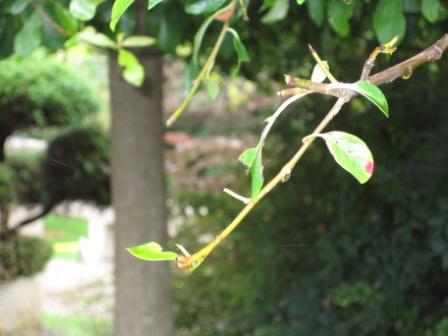
Too often I’ve come across relatively young trees, shrubs, and vines that are surviving, but not thriving. Every year they struggle gamely to put on a few new leaves, grow a few more inches, but something’s fishy and it’s not fertilizer. Today I’m going to try to convince you to give these languishing woody species a second lease on life.
Long-time readers of this blog will remember some of the root horrors I’ve (literally) uncovered in containerized and balled-and-burlapped plants. Poor root quality, improperly amended soil, roots swaddled in multiple layers of materials, and root crowns sunk far below grade are some of the most common reasons why roots fail to establish after transplanting.
Fall can be a great time to correct these problems. For deciduous species, it’s best to wait until the leaves have fallen so that water needs are reduced. You can find basic instructions on how to install and care for woody plants on my web page.
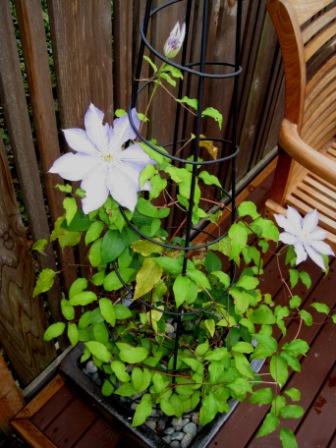
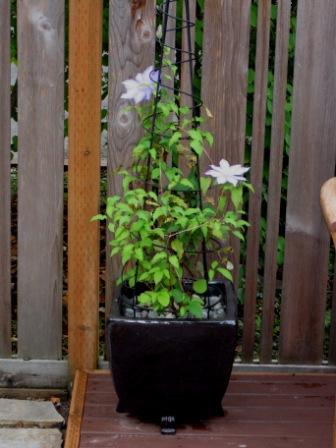
There are other reasons that plants might not establish, too. You might remember my long-suffering Clematis, two which had been planted in an area with a perched water table. The lack of oxygen both retarded root growth and created an iron toxicity problem. I dug them up and transplanted them into containers (during which I had even more fun with overmixing the soil with water and then allowing the undersides of the leaves to sunburn). They were pretty sorry looking back in July – most of the leaves fell off after being burnt – but here they are just two months later:
So while you’re out putting your landscape to bed for the winter, take a close look for stragglers. Give their roots another shot at survival – you’ll be glad you did.