I thought today’s post would feature two awesome plants that are relatively new or unheard of in the industry. Both of these plants have performed well in my own garden and survived our two hardest winters recorded since the 1970’s. Many plants suffered severe winterburn or even death due to extremely low temperatures, but not these two plants. They may be harder to find in the nursery/garden center, but are well worth it and have huge ornamental impact all growing season.… Continue reading this article “Cool Plants for Late Summer”
Category: Interesting Plants
Perennial Funday: Rudbeckia grandiflora ‘Sundance’
Just back from the always-inspirational Perennial Plant Association Symposium, this year held in Baltimore. The theme celebrated the massive influence of German plantsmen and designers on both the mid-Atlantic and the perennial business as a whole. Whether a grower, garden center owner, or landscape designer, the names historically associated with Mid-Atlantic horticulture – Kurt Bluemel, Oehme, van Sweden & Associates, etc. – resonated with all attendees.
The history of the “perennials movement” was recounted – where the Germans (and more than a few Dutch) admired, utilized, and selected cultivars of our fabulous summer and fall-blooming native perennials – long before we North Americans ceased relegating them to ditch weeds. … Continue reading this article “Perennial Funday: Rudbeckia grandiflora ‘Sundance’”
An unexpected cactus
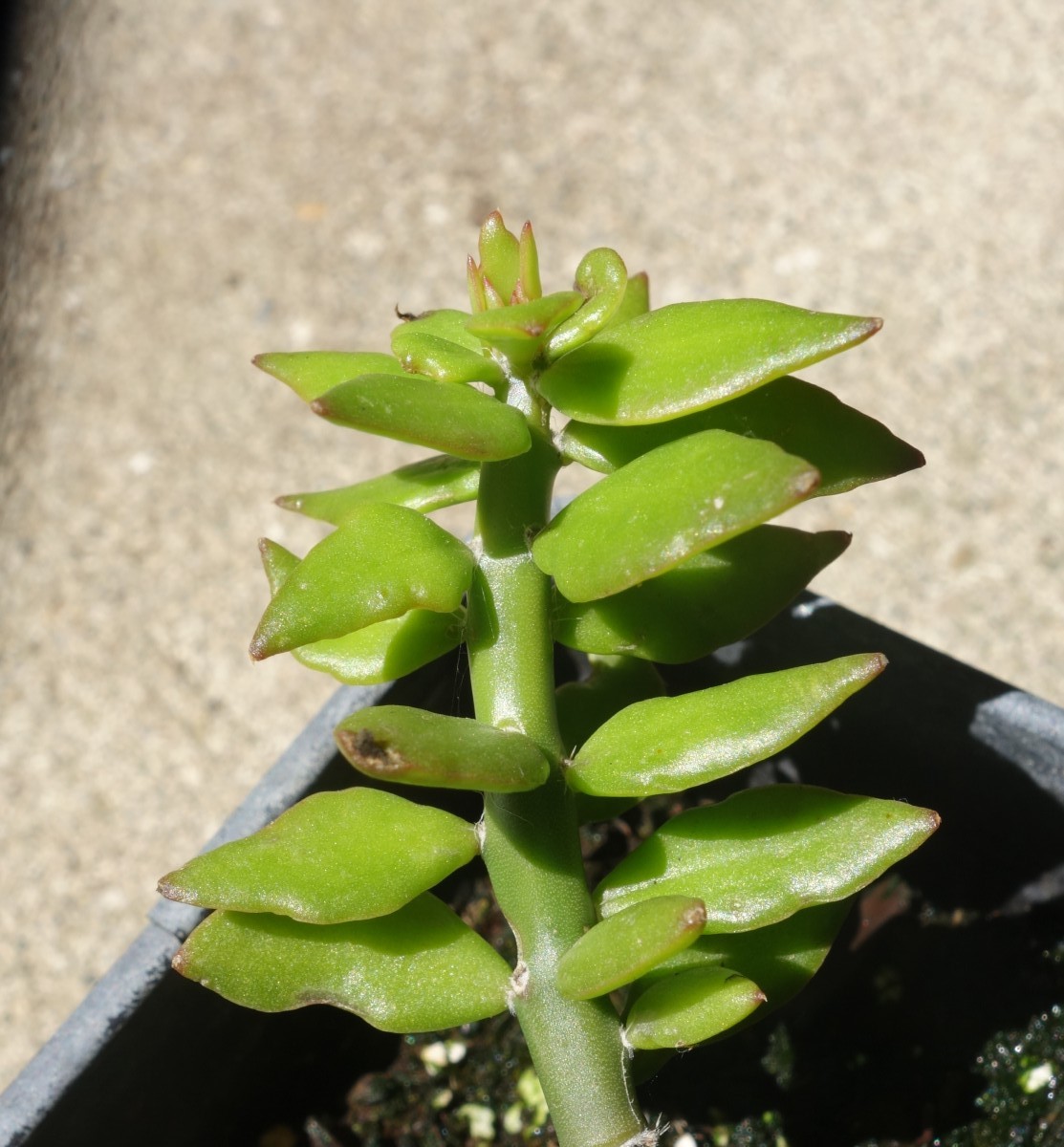 Crazy plant of the day is this: Pereskiopsis spathulata! Which, I’ll admit, looks like a fairly generic succulent, but the cool thing is this is actually a cactus. A cactus with leaves. Most cactus have of course lost their leaves to increase their ability to survive in extremely dry conditions and rely on their stem for photosynthesis, but the genus Pereskiopsis is a bit of living evolutionary history with photosynthetic leaves still intact.
Joseph Tychonievich
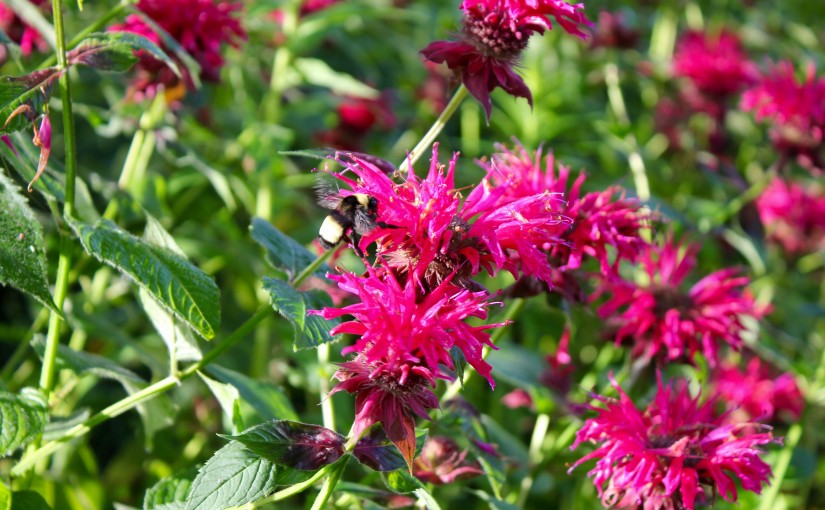
Perennial Monday: Monarda ‘Raspberry Wine’
It’s been a great summer for perennials here in the mountains of SW Virginia – plenty of rain, warm days, cooler nights. We’ve been enjoying this wonderful bee balm in our home garden for the last few weeks. ‘Raspberry Wine’ is tall (up to 5′), vigorous, and a bit ramble-y; not for the carefully-curated border, but great where it can take up some space. For those who fear Monarda’s tendency to spread, know that is shallow-rooted and very, very easy to pull up.… Continue reading this article “Perennial Monday: Monarda ‘Raspberry Wine’”
When Size Does Matter: Dwarf Conifers for the Home Landscape
I just returned from another great “Addicted Confer Syndrome” conference. In reality, ACS stands for the American Conifer Society. The meeting I attended was the Central Region chapter of the ACS held in Green Bay, Wisconsin. You might be thinking that only white spruce and tamarack are the only conifers that can be grown this far north, but you would be wrong. There are many outstanding conifers that can grow up here and throughout the U.S.… Continue reading this article “When Size Does Matter: Dwarf Conifers for the Home Landscape”
Uncommon Clematis
– Holly Scoggins
Here’s a couple of clematis (clemati?) you may not be familiar with. Both are easy to grow but differ from the more common large-flowered form. There is a great deal of hybridization within the genus, so many cultivars are placed within “groups” rather than described as a cultivar of the species.
Clematis ‘Princess Diane’
Texensis Group
Clematis ‘Princess Diana’ in the author’s garden.
Crossing a large-flower clematis cultivar with Clematis texensis (scarlet leather flower) resulted in this lily-shaped beauty.… Continue reading this article “Uncommon Clematis”
Plants for winter interest: Going for the Gold
Winter appears to have a death grip on the eastern half of the U.S. for the second year in a row. The thermometer on my car read -6 F on my way into work this morning; with lows of -5, -11, and -2 predicted for the latter half of the week. And to my Northwest friends that have been out mowing their grass already, may the bird of paradise fly up your nose. At this point I don’t even remember what my lawn looks like.… Continue reading this article “Plants for winter interest: Going for the Gold”
Organic insecticides that will get you high
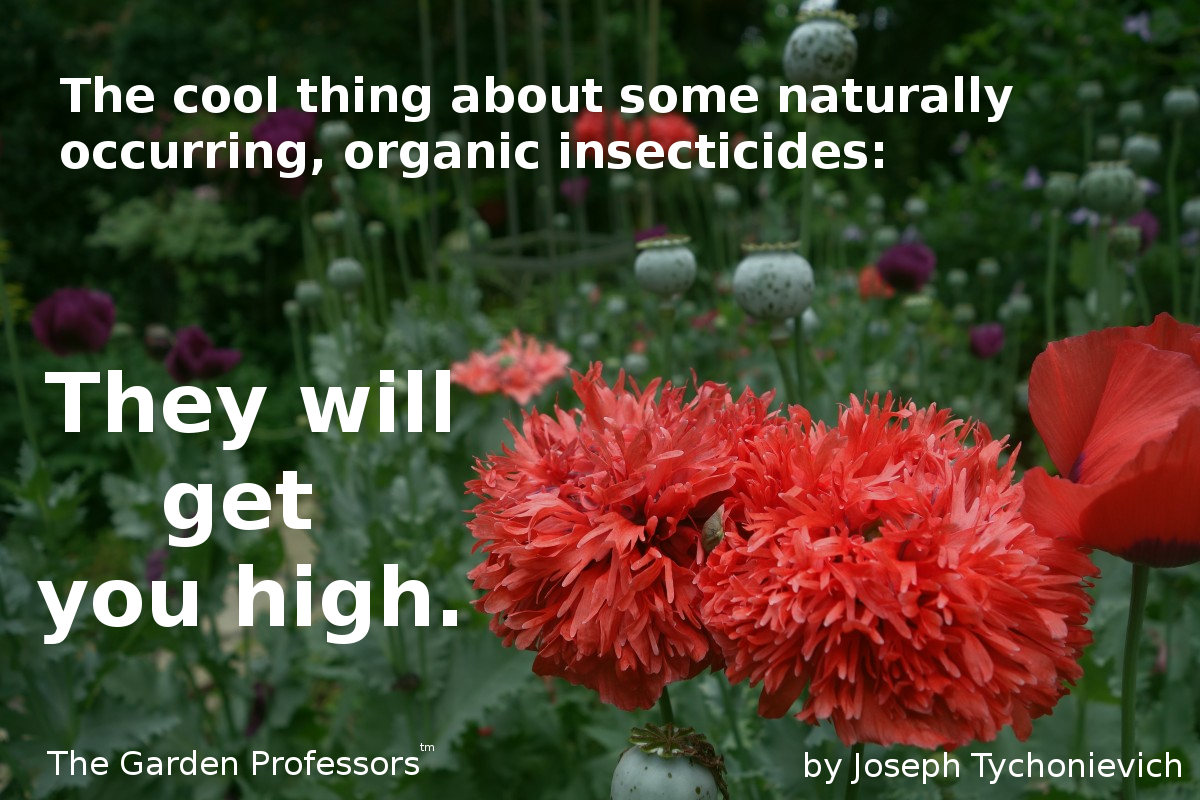
Plants are crazy chemical factories, synthesizing a whole host of compounds that we use for flavoring and dye and medicine and… getting high. And why are they making all these chemicals? They’re certainly aren’t doing it for our sake… no, quite often they’re trying to kill something – usually insects — and it just so happens that sometimes our brains and bodies react differently enough that instead of killing us, they make us high. Well, and sometimes they kill us too.… Continue reading this article “Organic insecticides that will get you high”
You CAN grow it, but is it worth it?
As winter sets in here in Michigan, I’m seeing gardeners deploying winter protection. Like this, which I saw on a visit to Hidden Lake Gardens with some friends recently:
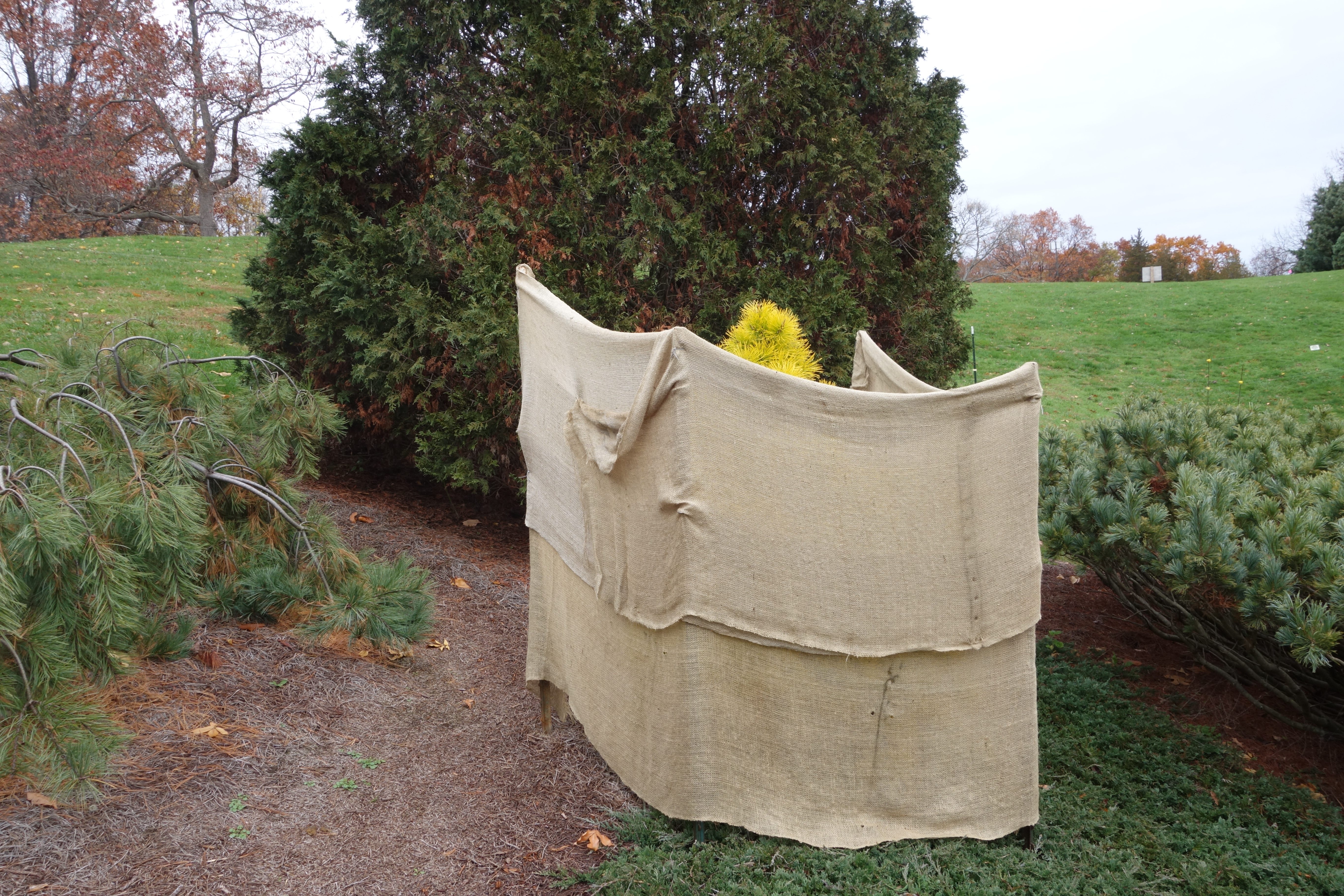
Well. Isn’t that attractive? Come around to the far side, and you see this:
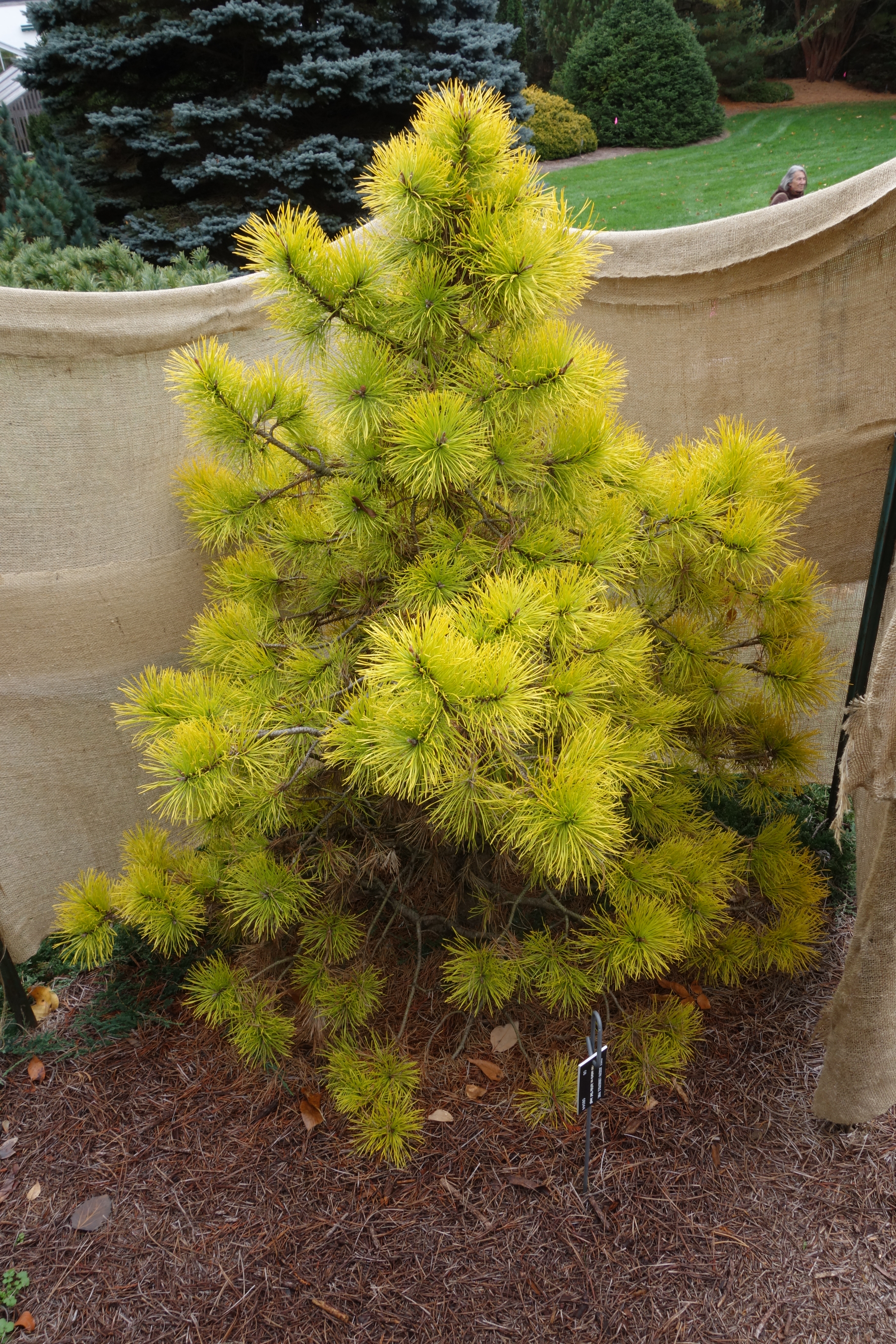
Pinus contorta ‘Chief Joseph’ which is a stunningly beautiful conifer, green in the summer, this brilliant shade of gold in the winter. Sadly, those gold needles are also incredibly prone to turning a less brilliant shade of brown if exposed to too much winter sun and wind.… Continue reading this article “You CAN grow it, but is it worth it?”
Cool plant of the day: Canary Bellflower
I’m such a plant nerd that a few years ago I actually decided to get Canarina canariensis, the Canary Bellflower, for no other reason than that it is one of the very few members of the campanula family that has red-orange flowers instead of the usual purple-blue ones.
Okay. Maybe that isn’t the most normal reason to add a plant to one’s garden, but I am VERY happy I did.
That color!
I’ll admit, it isn’t a plant that is particularly well adapted to life here in Michigan… as the latin name suggests (twice!)… Continue reading this article “Cool plant of the day: Canary Bellflower”