How did your garden fare this year? No matter how it grew, at least some of the impact was due to this year’s weather, although careful soil preparation and a good watering plan can fend off some of the worst effects. As usual, my last blog post of the year will be a brief review of this year’s climate and a look ahead to next year. Gardeners must prepare as well as dream! My review will focus heavily on the United States, but I will try to put in a little for our non-US readers too.

How warm was the earth in 2025?
After 2024’s record-setting warmest year on record for the globe, temperatures worldwide in 2025 were not quite as warm as in 2024, although they were certainly warmer than average. While the final average is not yet available, the first eleven months of the year were the second warmest on record, right behind 2024, so 2025 is likely to be in the top three warmest overall, but is not likely to be the warmest ever due to the extra warming from El Niño in the early part of 2024. If you are interested in seeing a time series of temperature for the globe, you can use the “Climate at a Glance” tool from the National Centers for Environmental Information to make your own plots. You can also see more about how El Niño and La Niña affect global climate here and here.
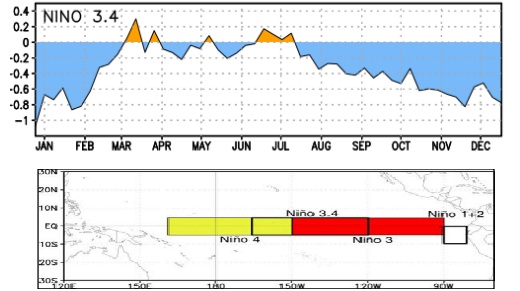
This year’s overall temperature was slightly reduced due to the presence of the La Niña that is currently occurring in the Eastern Pacific Ocean, causing a decrease in the sea surface temperature there (see graph above). As expected, the parts of the globe that are warming the most rapidly are the areas near the Arctic, since the loss of snow cover and sea ice make they warm up much more quickly than other areas with less frequent snowy conditions.
What was the US precipitation pattern like this year?
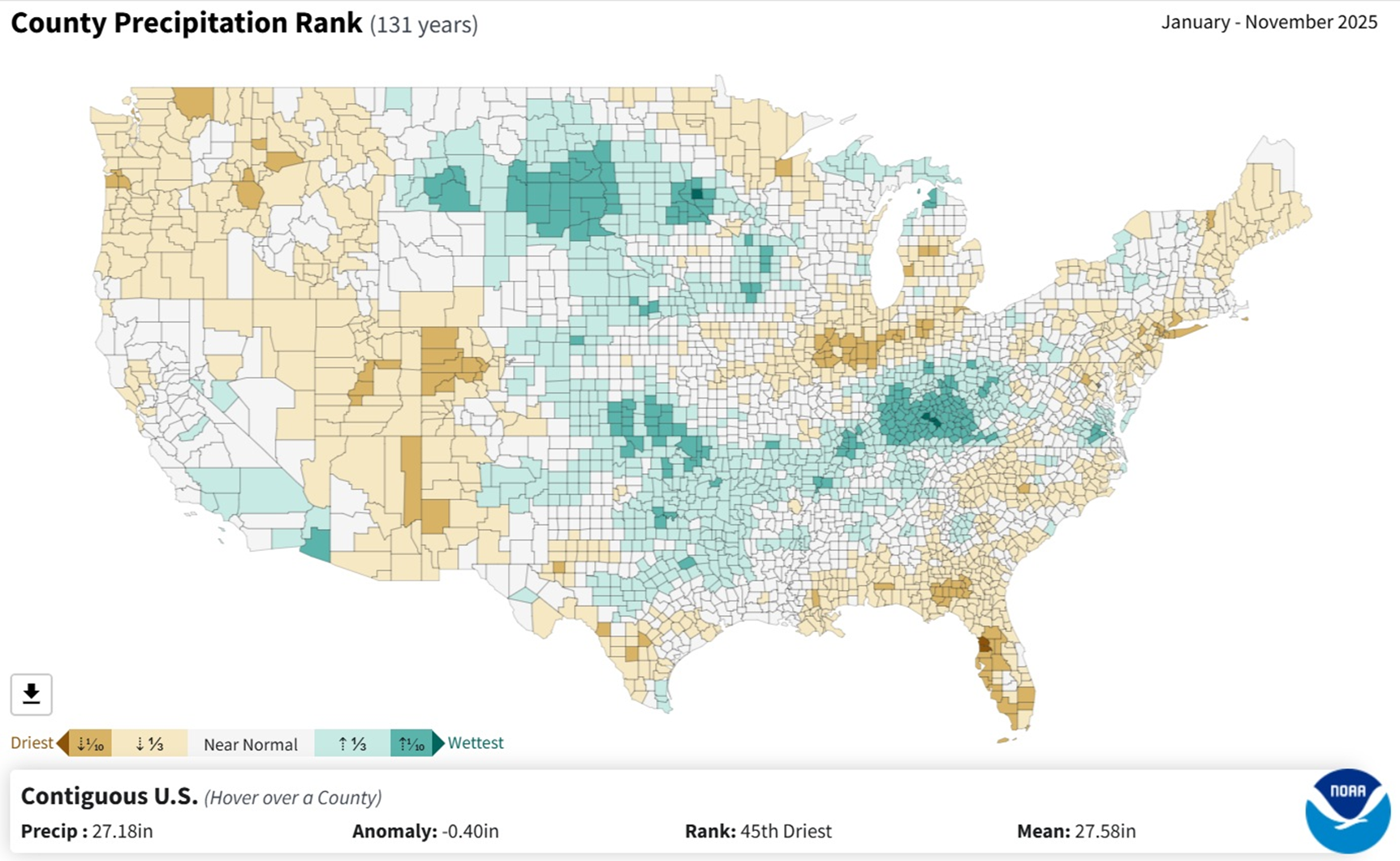
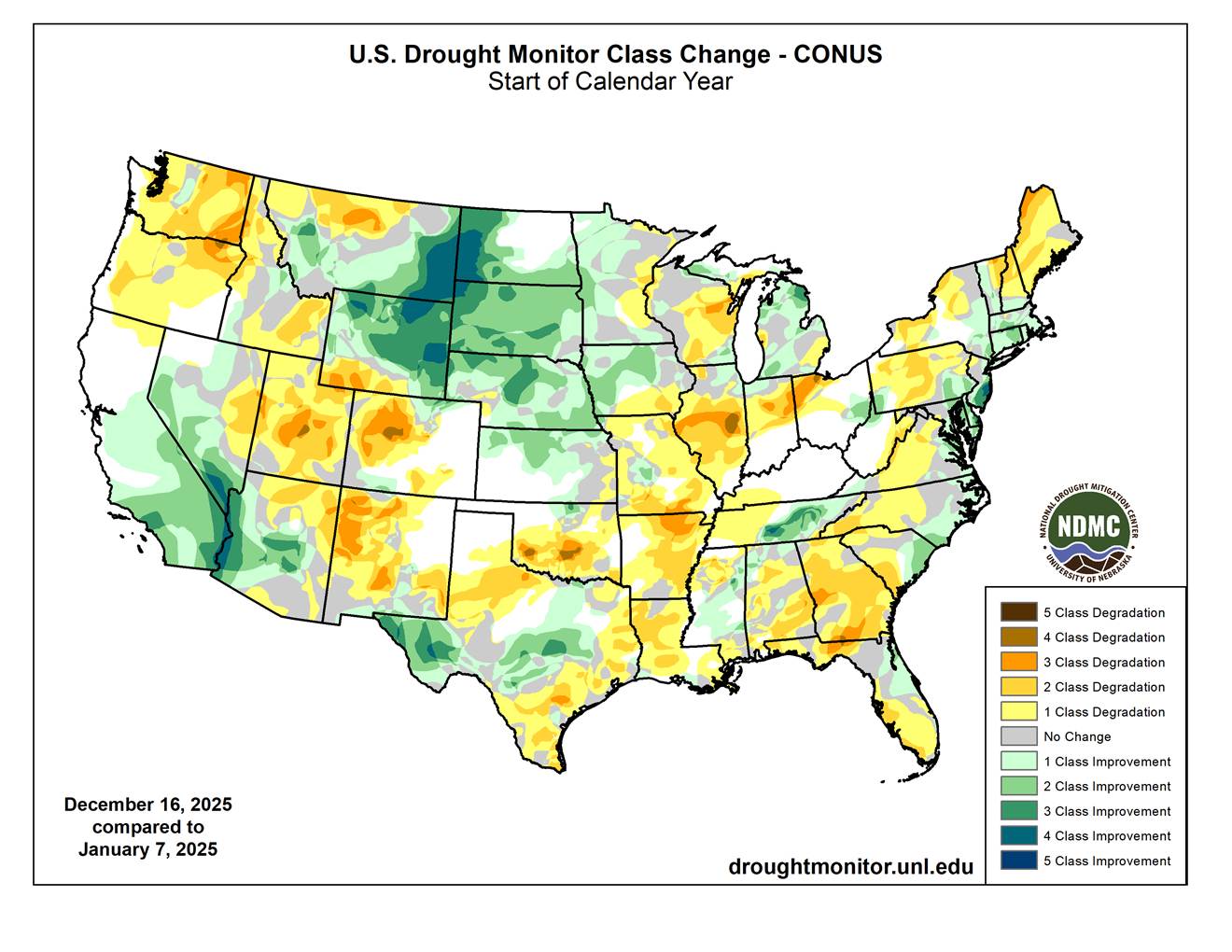
Again, the year is not quite complete yet, so we will have to wait for final numbers to be tabulated in January. However, using the “Climate at a Glance” tool, we can see there was a lot of variation for the first eleven months of the year in precipitation across the lower 48 states, with some areas like Kentucky and the Ohio River Valley and the Northern Plains receiving much above average rainfall while other areas like parts of the Corn Belt in Indiana and Illinois, Florida and adjacent areas of Alabama and Georgia, and most of the western US receiving much lower than normal rainfall.
Of course, an 11-month total does not describe how rainfall varied across the year, and some places like the Southeast where I live actually started out so wet it was hard for farmers to get out into their fields and ended the year so dry that exceptional drought formed in parts of that region. Since we did not experience any landfalling hurricanes this year and only one tropical storm, there was little impact on the rainfall pattern in the US in 2025, and the lack of rain may have contributed to the drought the developed later in the year in the Southeast due to the lack of tropical rainfall, which often provides a significant fraction of the precipitation in the summer months in areas affected by tropical weather.
What was the US temperature pattern like?
The temperature pattern of anomalies across the United States was less variable than the rainfall pattern and showed that most areas of the country were warmer than normal, especially in the western half of the Lower 48 states. You can find more detail, including maps for Alaska and Hawaii, in NOAA’s National Climate Report. A few areas in the eastern US were cooler than the 1991-2020 average but still above the long-term average. One of the things that struck me this year is how variable the temperature was, with some prolonged heat spells followed by cold outbreaks. This was especially seen in mid-November this year, when a warm start to the fall season was broken by an intense cold front that drove freezing temperatures nearly to the Gulf, ending the growing season in the Southeast earlier than expected in many areas.
If you like to see satellite imagery of unusual weather or other activity like volcanic eruptions, be sure to check out NOAA’s annual gallery of interesting photos or videos of interesting events seen from the NOAA satellites, including wildfires, dust storms, atmospheric rivers, hurricanes, and even volcanic eruptions, many of which I have discussed in previous blog posts.

What should gardeners expect in 2026?
As of late December, we are currently in a weak La Niña, which means the ocean temperature in the Eastern Pacific Ocean is cooler than normal. That usually affects weather across the US by shifting the most active weather to the northern states, bringing a lot of rain, snow, and very cold weather to those areas while leaving Southern states warmer and drier than usual. But that is only expected to last into the early months of 2026 and after that we will return to neutral conditions. In fact, it is not unlike the conditions we expected last spring, when we were also leaving a weak La Niña and headed back to neutral conditions. Generally, when there is no El Niño or La Niña, the weather can be more variable and we can get more frequent swings between warm and cold conditions. There is likely to be some lingering effects from the La Niña that is currently occurring, so that means we will likely continue to see cold and wet conditions in northern parts of the country while southern areas are likely to be drier, sunnier, and warmer than usual for the next few months. One difference is that this year the predictions are that after several years of La Niña or neutral conditions, we are expected to swing to an El Niño, which will likely cause much different climate impacts next fall and winter than what we observed this year.
Gardeners in southern and eastern areas should be on the lookout for potentially early blooms on fruit trees with the potential for a late frost that could kill off the blossoms. I would say to be cautious in planting your gardens too early because of the potential for cold weather returning after an early warm-up. In northern areas, spring could be late in coming this year. If it stays warm and dry in the Southeast this winter, a spring or early summer drought could occur, so make sure you have a good watering plan in place (of course, that holds true for most gardeners, since a dry spell can happen even in a season that is fairly wet).
How did the weather affect your own garden this year?
I am always interested to hear stories from gardeners about how the weather and climate affected their own gardens. Please feel free to share anything that affected your local conditions, from hail that damaged vegetables or fruit to unusual heat that caused problems with pollination. If your garden had an excellent year due to perfect growing conditions, I would love to hear that too! Be sure to say what state, country, or city you live in so we can compare the climate maps to what you observed.
Thanks for subscribing to “The Garden Professors” and let’s look forward to another interesting and productive garden year in 2026!