Friday’s freaky flower

Having now depressed my Michigan colleague with my earlier post, here’s a little lighthearted fun for the long weekend:

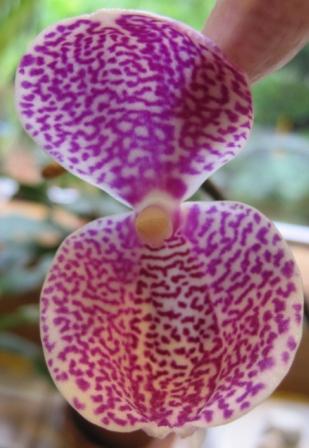
This photo is from Brandi at Fine Gardening.  Can you figure out (1) what it is and (2) why it looks like this?
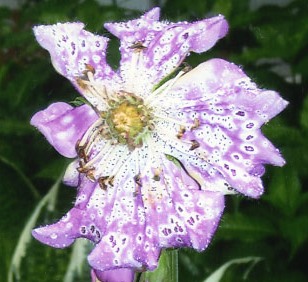
Monday’s photo will reveal more, and we’ll discuss the second question in more detail.

Have a great holiday – enjoy yourselves!
Hues of hydrangeas

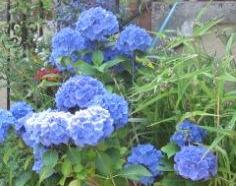
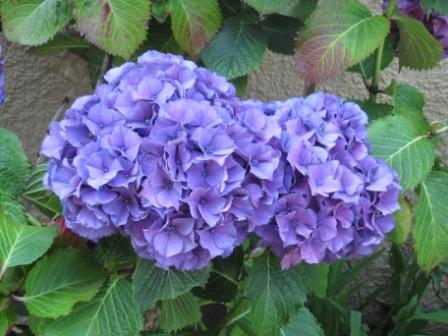
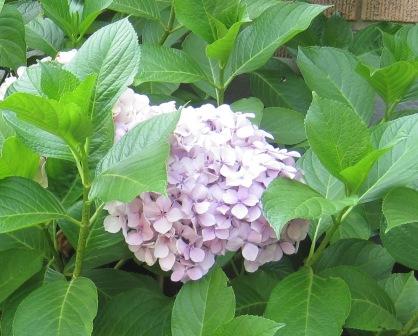
Hydrangeas are in full bloom this time of year.  I snapped these photos yesterday of several hydrangeas, all planted along the same strip of land.  Just look at the different colors:

Why so many colors? Most of you probably know that genetics play a role, as does soil pH.  But there’s much more to it than simple soil chemistry and genes.

1. pH:  Strongly acidic soils produce blue hydrangeas, while slightly acid to slightly alkaline soils favor pink or red flowers.  … Continue reading this article “Hues of hydrangeas”

Lamb’s Ears Revisited

A bit more on my recent travels to the big floriculture conference in Columbus, Ohio.  I always try to make it out to the Chadwick Arboretum & Learning Gardens, on the campus of THE Ohio State University. There are several components, including trials, a large arboretum, and several small gardens.  My favorite is the Steven Still Perennial Garden. It’s a lovely mixed garden, designed by Adrian Bloom (Blooms of Bressingham), and was installed in ONE DAY by their garden volunteers – 2005, I think.… Continue reading this article “Lamb’s Ears Revisited”

What’s New?!

Just back from OFA – my discipline’s humongous tradeshow and conference in Columbus, Ohio. All things Floriculture – new perennials, annuals, and seasonal plants, technology, structures, and equipment for greenhouses, and plants and products for floral designers. The bulk of the show and educational sessions is focused on growers, but garden center owners and florists are also targeted.  I was part of two team talks for growers on “Perennial Production Problems and Solutions”.

Aside from the thousands of attendees and hundreds of exhibitors, it’s like a big family reunion for floriculture faculty involved in teaching, research, and Extension.… Continue reading this article “What’s New?!”

The Other Lamb’s Ears

I’m assuming even you tree people (aka other
Garden Professors) are familiar with the soft, silvery leaves of Stachys
byzantina
or Lamb’s Ear (variously Lamb Ears and Lamb’s Ears).  Not to
disparage S. byzantina, but in our part of the world it looks like a
pile of wet dryer lint in the winter; and can become similarly
disfigured during a hot, wet summer.  Spring brings bright,
pet-able new ears, followed by woolly flower spikes that could serve as
Q-tips for Shrek.… Continue reading this article “The Other Lamb’s Ears”

Flower demystification

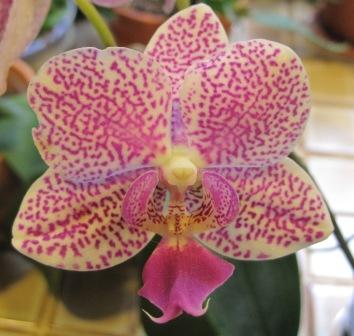
As Paul suspected, this is a Phalaenoposis flower.  Here it is again, shown next to another flower on the same plant (but different stalk):


As to the second question – why does it look this way – there could be a number of reasons.  I’m leaning toward environmental.  This particular flower stalk is an old one – after it had bloomed initially (with normal flowers), we left it on after the flowers fell.  As often happens, new flower buds appeared, but all of them have been abnormal. … Continue reading this article “Flower demystification”

Friday puzzle – Mystery flower

What am I?  And why do I look like this?

Neither the flower nor photo has been altered.  But it is a tricky question.

Answer on Monday!

Every survivor has a story

It’s been suggested, not unfairly, that the Garden Professors are sometimes a little ‘Tree-Centric’.  As a forester and tree physiologist by training, I’m probably the guiltiest among my co-conspirators on that count.  But occasionally I do notice things less than 10’ tall and lacking a single, woody trunk.


When weather permits I like to take my lunch down to the MSU annual trial gardens behind my office here at the Plant and Soil Science Building.  Every summer the annual gardens are awash with the color of impatiens, geraniums, petunias, and other annuals. … Continue reading this article “Every survivor has a story”

Visiting Professor guest post: Native wildflowers

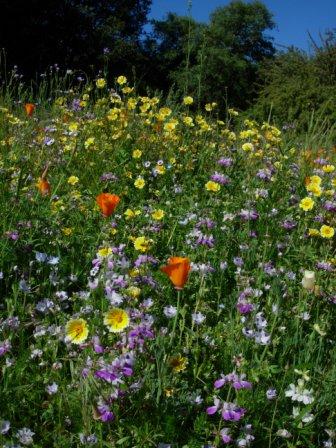
Recently I have been fascinated by the native wildflower field I planted last fall.  Although I seeded it with the same mixture of seeds (mixed with sand to spread them evenly), you can see that we have clumps of different flowers throughout the area.


Figure 1. Descanso Gardens, California

The area where the wildflowers were planted had several 1-2 foot raised mounds; some were in the shape of keyholes.  These were built with silty sand from a nearby seasonal stream that had some erosion problems in a rainy year.… Continue reading this article “Visiting Professor guest post: Native wildflowers”

Baptisia: Beyond the Blue

The Perennial Plant Association recently released the identity of the PPA Plant of the Year – for 2010 it is Baptisia australis (False Blue Indigo).  Various blogs have noted this (including Garden Professor fave Garden Rant) and I’ve read some interesting comments, both pro and con.

True story: I asked for Baptisia at a small rural garden center years ago; the owner said “Don’t have any; but I think I have a Methodist running around here somewheres…”  Badda-bump.Continue reading this article “Baptisia: Beyond the Blue”