Are Soaker Hoses Safe?

By Cynthia Lee Riskin

With drought predicted for the west, southwest, and south through June 2015 (National Weather Service March 2015), many conscientious vegetable gardeners will try to conserve water by using soaker-hoses, those bumpy black hoses that weep water onto the soil through tiny pores.

Brussel sprouts and red lettuce
Soaker hoses are made from fine-crumb rubber, usually recycled from vehicle tires. Research strongly establishes that tire particles leach heavy metals, carcinogens, and mutagenics, among other toxins. Yet soaker hoses have not been studied for potentially increasing the toxicity of edible plants.… Continue reading this article “Are Soaker Hoses Safe?”

Go sport fishing at your local nursery

Regular fishing, for actual fish, is quite possibly the second most boring think ever invented (First place, of course, goes without question to baseball) but sport fishing! Now THAT is something I can get behind.

By sport fishing I mean, of course, looking for sports – chance mutations – in plants. Sometimes a flower color changes, or sometimes a leaf becomes variegated, like on this lilac branch I found at a friend’s nursery a couple years ago

variegatedsyringa

Nurseries are great places to go “fishing” for these sports, simply by walking down the rows of plants looking for anything odd or out of place.… Continue reading this article “Go sport fishing at your local nursery”

Welcome to our new home!

This month, the Garden Professors have moved to a new website. You can still easily find us at gardenprofessors.com (bookmark that address!), but we’re no longer actively posting on the eXtension website. This change was necessitated by eXtension’s decision to restrict leadership to faculty belonging to premium universities (those paying a sizable annual membership fee). Since neither Dr. Gillman nor Dr. Chalker-Scott belongs to a premium university, and since both are founding members of the Garden Professors, we made a group decision to host our blog independently.… Continue reading this article “Welcome to our new home!”

Spec errors mount

For years I subscribed to Consumer Reports. I appreciated their objective approach to product testing and lack of advertising. In their own words, their policy is to “maintain our independence and impartiality… [so that] CU has no agenda other than the interests of consumers.” But recently they’ve veered off the science-based trail – at least the one running through our gardens. Their approach to plant and soil sciences is more pseudo than science. And last year, after 30+ years of loyal membership, I quit my subscription when Consumer Reports began partnering with Dr.… Continue reading this article “Spec errors mount”

Cat TV and tulips

Like many gardeners, we provide a couple of bird feeders in our yard. Along with the desirable birds, we get less desirable visitors like pigeons and squirrels. Having tried (and failed) to make our system squirrel-proof, I finally decided to wave the white flag and embrace our furry visitors with their own bowl of treats – raw peanuts and sunflower seeds in the shell. We put this on our deck next to the sliding door so our cats can enjoy the show.… Continue reading this article “Cat TV and tulips”

New Extension publication on wood chip mulches

For long-time readers of this blog, you know how much I love arborist wood chip mulches. Now my new WSU Extension fact sheet has just come out – feel free to share it with your gardening friends.

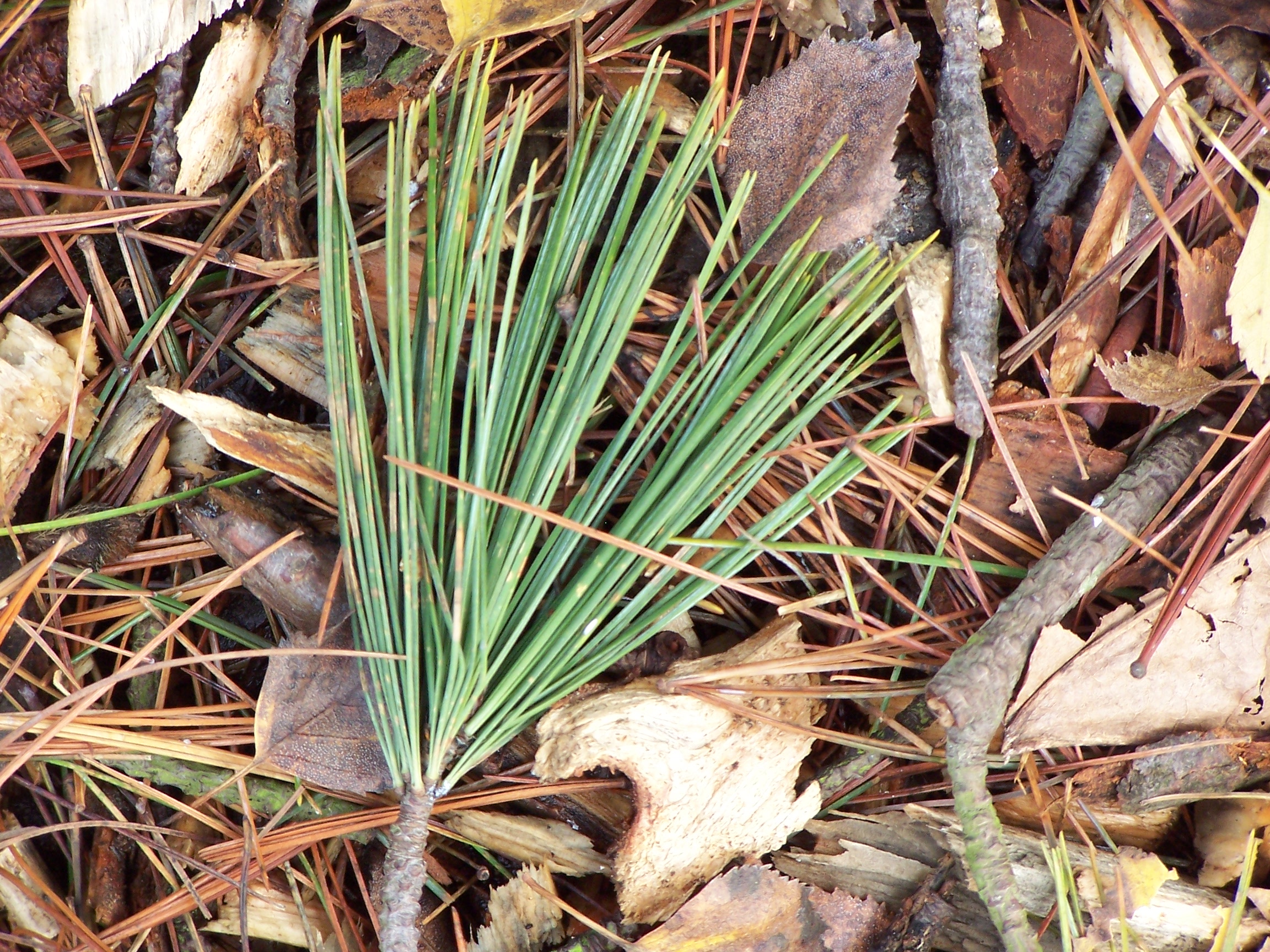
pine needles

Your feedback needed!

If you value what we do, please take a few minutes to fill out the survey linked below. We’ll leave this open for the month of January but will need to close it then so we can analyze and use our results. Feel free to share this with other gardening aficionados.
Thanks in advance for your interest and support!
https://www.surveymonkey.com/s/7R6C6FH

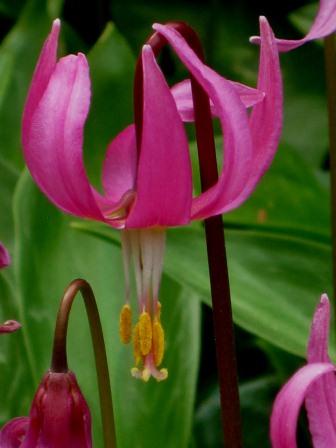
Diener%20flower.jpg

Nanomechanical oscillations…

This week one of our Facebook group members posted a link to a 2013 paper entitled “Love thy neighbour: facilitation through an alternative signalling modality in plants”. The premise in the paper is that plants are capable of acoustic communication and the experiment purported to demonstrate this. (I strongly encourage you to download the article from the link above so you can read it for yourself.)

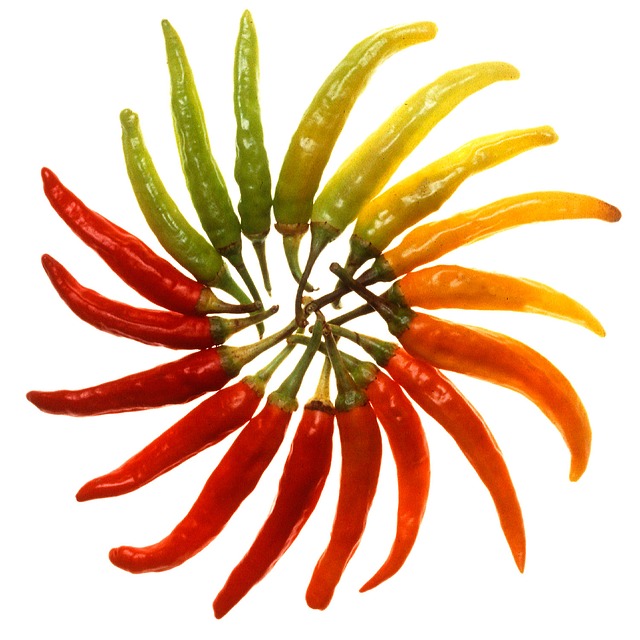
chilisBriefly, chile seeds (Capsicum annuum) were placed into petri dishes, covered to ensure darkness, and then the dishes were placed in a circle.… Continue reading this article “Nanomechanical oscillations…”

Organic insecticides that will get you high

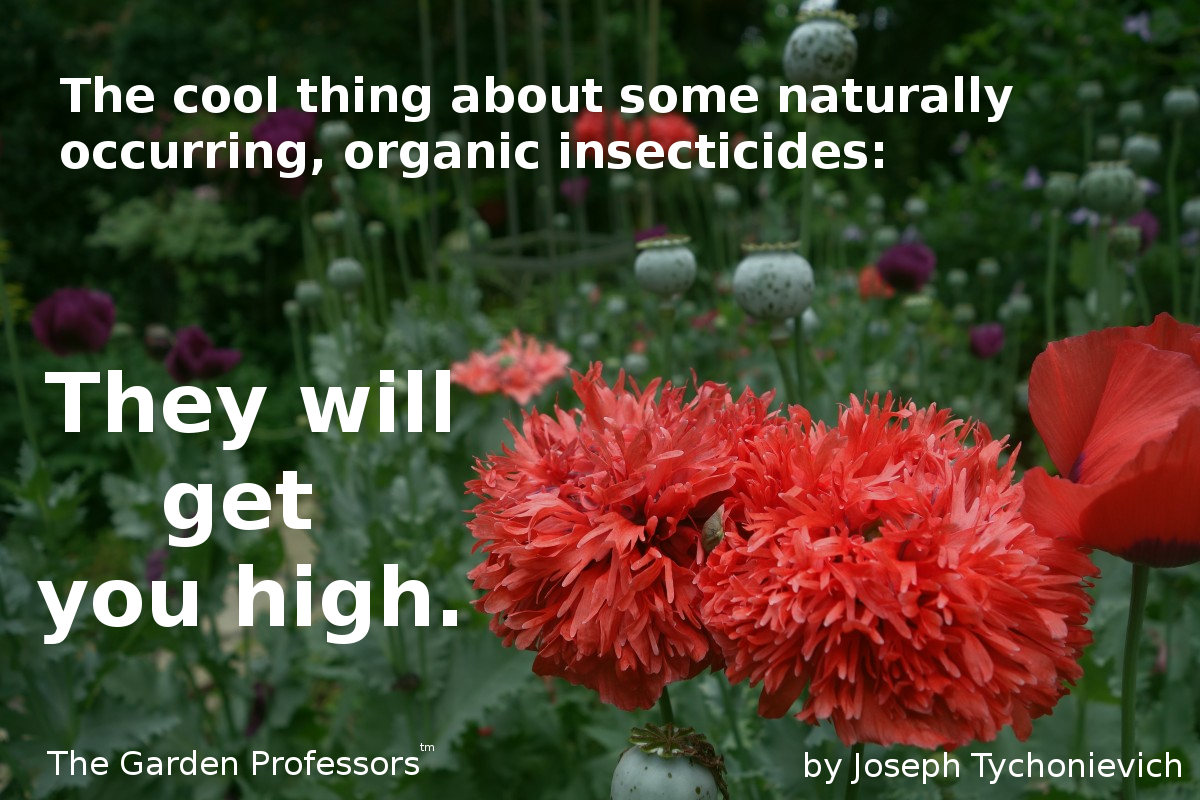
papaversgetyouhigh

Plants are crazy chemical factories, synthesizing a whole host of compounds that we use for flavoring and dye and medicine and… getting high. And why are they making all these chemicals? They’re certainly aren’t doing it for our sake… no, quite often they’re trying to kill something – usually insects — and it just so happens that sometimes our brains and bodies react differently enough that instead of killing us, they make us high. Well, and sometimes they kill us too.… Continue reading this article “Organic insecticides that will get you high”

Harvesting, Curing and Storing Sweet Potatoes (A Visiting Professor feature)

Submitted by Ray Eckhart

Introduction
Sweet potatoes (Ipomoea batatas) are warm-season plants in the morning glory family (Convulvulaceae). The part we eat is the fleshy storage root of the plant, which is a little different than the regular Irish, or white, potato (Solanum tuberosum), a plant in the family Solanaceae. In that case, the part we eat is a fleshy underground stem of the plant, called a tuber.

Although sweet potato roots continue to grow until frost kills the vines, an extremely hard frost can cause damage to the ones near the surface.… Continue reading this article “Harvesting, Curing and Storing Sweet Potatoes (A Visiting Professor feature)”