A new excuse for bad pruning

I spent last week in Orlando at the ISA annual meeting (that’s the International Society for Arboriculture). It’s a great venue for networking with colleagues and hearing about the latest tree research. And once in a while I’ll have a WTF moment. (That stands for Why Trees Fail in case you’re wondering.)

My WTF experience this year revolved around some new terminology and techniques. I learned there are now “environmental arborists” who practice “retrenchment pruning.” In the last few days I’ve tried mightily to find some standard definitions from reputable sources.… Continue reading this article “A new excuse for bad pruning”

Don’t buy problems

Sometimes where you shop matters, because if you buy plants at the wrong place you run the risk of importing new problems into your garden. Those cheap plants you grab on a whim sometimes are far more trouble than they are worth.

I learned (or relearned…) this the hard way last year when I grabbed a bag of super cheap gladiolus corms at a box store. They were cheap, and pretty… and infested with gladiolus thrips.… Continue reading this article “Don’t buy problems”

The cardboard controversy

I’m not a fan of using corrugated cardboard as a mulch, which like other sheet mulches creates problems for the underlying soil. Long-time readers of this blog may remember several previous posts (1, 2, 3 and 4) on this topic and I won’t belabor the points made in those posts. Instead, today I’m doing to focus on cardboard itself.

First, cardboard is a generic term that can refer to many types of manufactured paper.… Continue reading this article “The cardboard controversy”

Corny Ancestry

I love growing weird plants, and I’m endlessly fascinated by plant breeding and the extreme transformations humans have made in our crop plants over the history of agriculture.

Which is why growing teosinte, the wild ancestor of corn, was a no brainer. Even before I planted it, comparing the seeds is fascinating. teocornseed

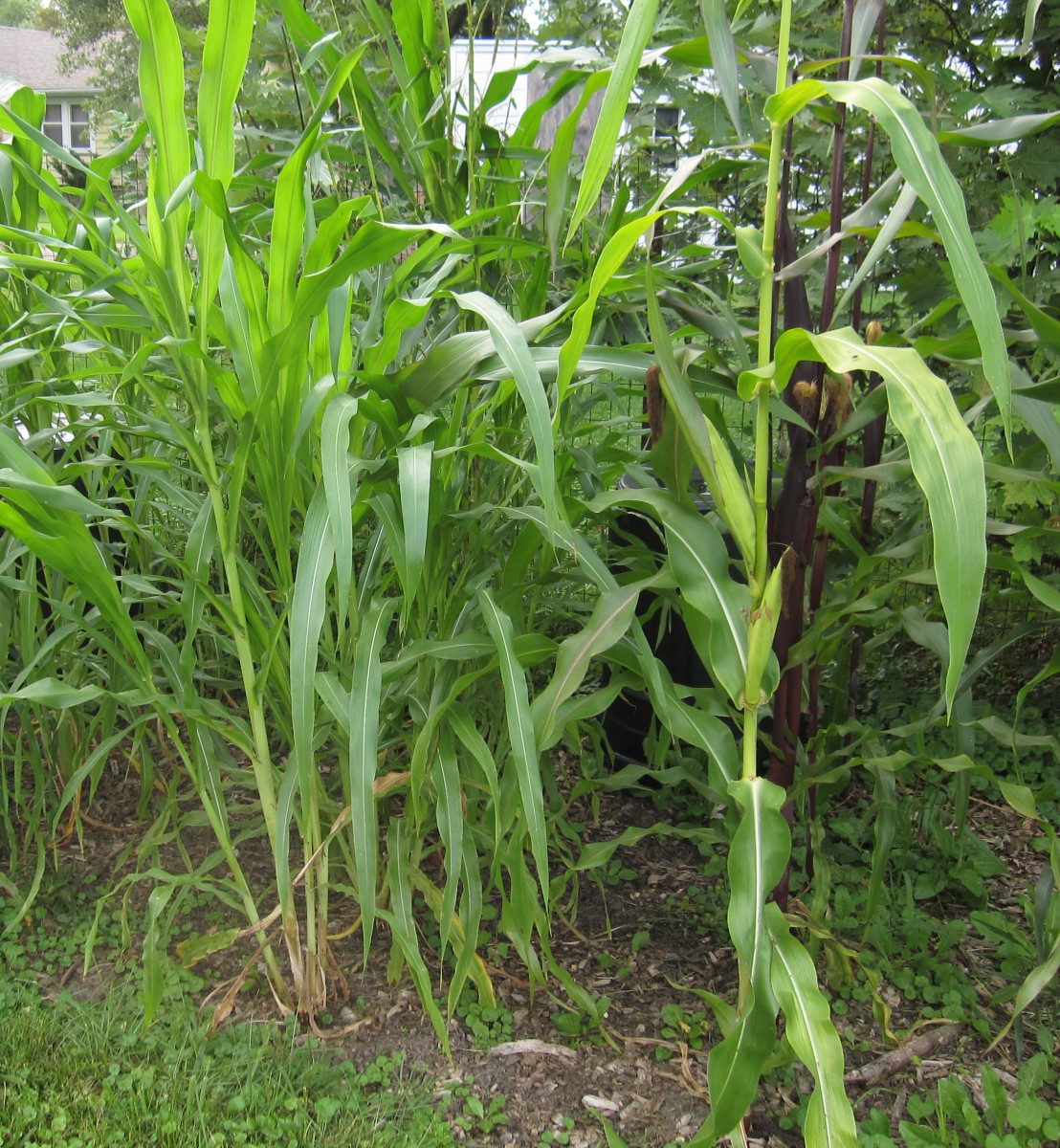
Once growing you can see the similarity. Teosinte is on the left in the picture below, corn on the right.

teocorn

The most dramatic difference between the two, I think, is the “ear” of teosinte, which is nothing more than a thin sprig of half-a-dozen seeds.… Continue reading this article “Corny Ancestry”

Out of the bottle and into the bag

Last week I was having lunch with my mom at our favorite nearby nursery/café. After failing to resist the grilled cheese sandwich (3 cheeses! And buttery panini bread!), we walked off lunch in the garden supply part of the nursery. Normally I’m on my best behavior when I’m shopping with my mom (i.e. I don’t take photos of things I’m going to take to task on the blog). But like the 3-cheese grilled sandwich I was unable to resist the bags of biodynamic compost.… Continue reading this article “Out of the bottle and into the bag”

Eggplants getting their buzz on

eggplantflower

I was checking my eggplants today, and watching the bumble bees getting busy with the large purple flowers. As they flew in, buzzing away, they landed on the flower and kept buzzing — but the note changed, dropping in pitch. The bumble bee hummed away for a while, then flew off to the next flower.

I was watching buzz pollination at work. Egg plants, and a lot of other flowers, don’t leave their pollen hanging out in the open where any ant or fly that happens by could eat it.… Continue reading this article “Eggplants getting their buzz on”

Dogwood rescue – an update

Long-time readers of this blog might remember a Friday quiz I gave back in 2010. It involved the slow but inexplicable decline of our dogwood (Cornus kousa). On the following Monday I revealed the reason for the decline and reported that we were moving this nearly dead tree to another location without the offending perched water table.

In 2011 I posted my first update along with photos of the new leaves and flowers. And today I reveal its obvious recovery to a fully functional if somewhat still spindly tree (several of its multiple leaders died as a result of the rotted root system).… Continue reading this article “Dogwood rescue – an update”

An unexpected cactus

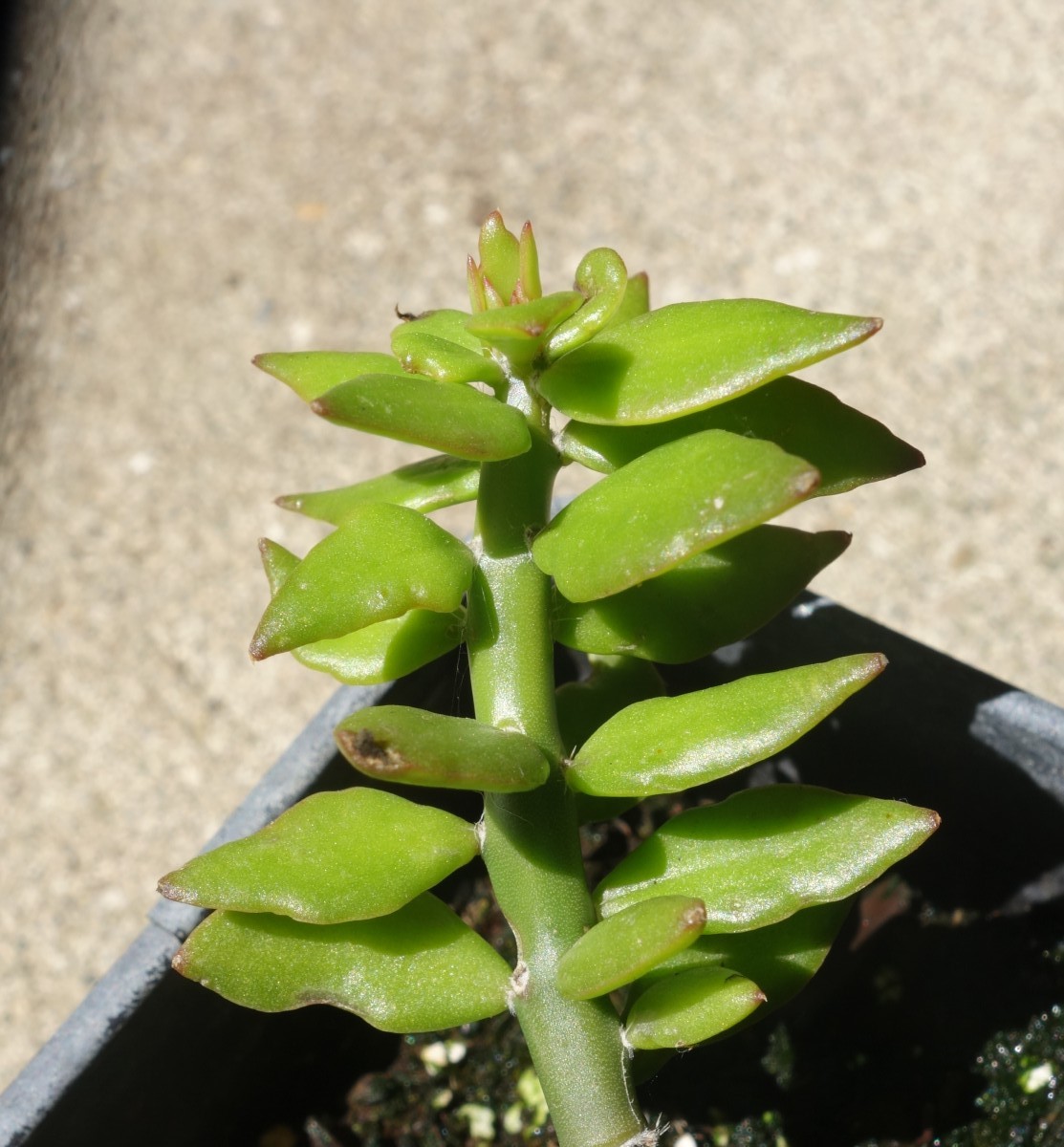
PereskiopsisspathulataCrazy plant of the day is this: Pereskiopsis spathulata! Which, I’ll admit, looks like a fairly generic succulent, but the cool thing is this is actually a cactus. A cactus with leaves. Most cactus have of course lost their leaves to increase their ability to survive in extremely dry conditions and rely on their stem for photosynthesis,  but the genus Pereskiopsis is a bit of living evolutionary history with photosynthetic leaves still intact.

Joseph Tychonievich


Can Permaculture and Good Science Coexist

Several years ago I posted a four-part discussion about permaculture and my concerns with the blend of philosophy, science and pseudoscience that it contains. (Here are links to Parts 12, 3 and 4.) So I was pleased to be part of an Extension tour group that visited an established permaculture farm in the San Juan Islands earlier this spring. This gave me an opportunity to see whether there was any perceptible shift in the permaculture community towards practices based on applied plant and soil sciences.… Continue reading this article “Can Permaculture and Good Science Coexist”

Jumping genes!

This spring, I noticed this striped flower in a stand of feral Hesperis matronis
hesperistransposonStripey flowers! And like almost all striped flower variants, almost certainly caused by transposons, aka jumping genes.

To understand transposons, you can think of genes as instructions. So when making a flower, a plant may be following a gene that says:

MAKE PURPLE PIGMENT

And so it does, and the flower is purple.

You can think of a transposon as a gene that says:

COPY ME!Continue reading this article “Jumping genes!”