Things have settled down briefly here and I have had a chance to summarize some of the data from the container tree transplanting experiment we installed earlier this year. For those that aren’t familiar we installed two tests this summer using 96 ‘Bloodgood’ plane trees grown in 25 gallon containers that were leftover when we completed an earlier trial in our Pot-in-Pot nursery. I decided to use this as an opportunity to look at some tree transplanting recommendations. … Continue reading this article “SoMeDedTrees update”
Ecosystem services: Am I going to get a bill?
Spent last Friday in a departmental faculty retreat – you know, the “vision thing” – S.W.O.T. analysis, where are we going to be in five years, etc. But we actually got some things accomplished. One of the more interesting aspects was discussing trends in horticulture, both popular and practical, and how we could respond. One of the reoccurring themes throughout the day, especially related to urban agricultural/horticulture, was ecosystems services. I’ve heard the term mostly from environmental science and urban forestry folks. … Continue reading this article “Ecosystem services: Am I going to get a bill?”
Another WOW (why oh why) – “biodegradable” mesh for plugs
David Hobson, a garden columnist, sent me this great photo of his petunia planted earlier this year. Take a look at the root growth (or lack thereof):

I’m not sure where this particular product came from, but it looks a lot like a FERTISS propagation plug. Here’s a description from their website of this product.”FERTISS is a ready-to-use, pre-filled propagation tray system. Cuttings are placed in a mixture of peat and perlite wrapped in a non-woven fabric.
… Continue reading this article “Another WOW (why oh why) – “biodegradable” mesh for plugs” New study on pesticide use and GMOs
Some environmental extremists discount agricultural research done by universities, because they receive funding from Big Ag and therefore their researchers can’t be trusted. So this news report of a recent study by one of my Washington State University colleagues is doubly important: it dispells this baseless assertion and it provides some significant – and troubling – information about pesticide use and GMO crops.
Briefly, the article links an increased use of herbicides as a result of increased use of GMOs such as Roundup-ready crops.… Continue reading this article “New study on pesticide use and GMOs”
An unwanted bonus in your urban chickens
Longtime reader Ray Eckhart sent me a NYT story on urban chicken eggs and lead contamination. As I’ve mentioned before on this blog, urban gardeners should have their soils tested for lead, arsenic, and other commonly found heavy metals before they plant edibles. Chickens that are allowed to peck and scratch in metal-contaminated soils will pass that unwanted load on to you via their eggs.
So test your soils! It costs a bit of money, but then you know exactly what’s lurking in there. … Continue reading this article “An unwanted bonus in your urban chickens”
Garden Professors – More Efforts on Your Behalf
We’re out there for you, our loyal readers.
Debunking myths, reviewing the literature, setting people straight, battling blister beetles, flying in balloons… and taking out those pesky deer, one at a time.

Yes, indeed, that is fur in my windshield.
Plant sentience – a slippery slope
I maintain a “Garden Professors blog” group on Facebook, where people can pose questions and make suggestions. Ellyn Shea asked about the trend towards calling plants sentient, especially given the new book by Daniel Chamovitz – What a Plant Knows: A Field Guide to the Senses
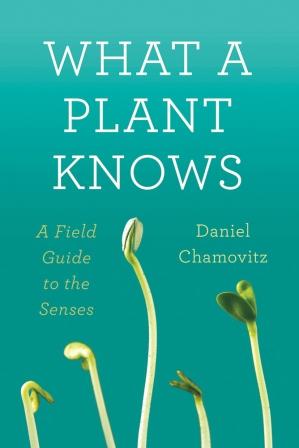
Dr. Chamovitz is a respected scientist, and there is no doubt that plants sense and respond to their environment in ways we are still learning to understand. But couching plant responses in language associated with human sentience is a slippery slope. … Continue reading this article “Plant sentience – a slippery slope”
Up, up, and away…
First, let me cue the 5th Dimension.
I got a call the other day from the owner of a local hot air balloon company. They specialize in fall color rides and he wanted to include some info from me about the state of fall color in Michigan this year. Despite our concerns following this summer’s heat and drought, it turns out this year has been very good for fall color. I think our color has been a bit more variable than usual with some trees turning early and I’m noticing many maples are dropping pretty leaves quickly once they hit peak. … Continue reading this article “Up, up, and away…”
When all else fails…
As someone who has had a foot in Horticulture and a foot in Forestry throughout most of my career, people often ask me to compare the two disciplines. One of the truisms that applies in both cases is, “When all else fails, blame the nursery.” I’ve seen this following seedling die-offs in industrial forest plantations and I’ve seen it many, many times after street tree or landscape planting failures. In fact, if you believe some people, tree nurseries are responsible for every plague and pestilence to ever afflict mankind. … Continue reading this article “When all else fails…”
Pennsylvania is for…..Snake Oil?
This year at the Philadelphia Flower Show there were a few groups talking about compost tea. Meadow Brook Farm, a farm owned by the Pennsylvania State Horticultural Society is one, and another is F2, a company that provides “Scientific Soil Management”. Apparently they do things that are good for the soil, though the “method” section of their website is a little too vague for me. They also offer pictures of the results they’ve had with compost tea on a few different projects. … Continue reading this article “Pennsylvania is for…..Snake Oil?”