Cross-pollination making you cross?

No, your cucumbers have not hybridized with your melons.

I’ve been fielding different versions of the same question a LOT lately.
Three different people have sent pictures of “cucumelons” telling me they planted cucumbers next to their melons, and now the cucumbers look strange, so they’re concerned that they have cross pollinated with the melons. One person planted what was supposed to be a red raspberry next to their yellow raspberry, but the new plant is producing yellow fruit, so they think that it must be cross pollinating with their yellow plant, causing the fruits to turn yellow.… Continue reading this article “Cross-pollination making you cross?”

Mark Stennes

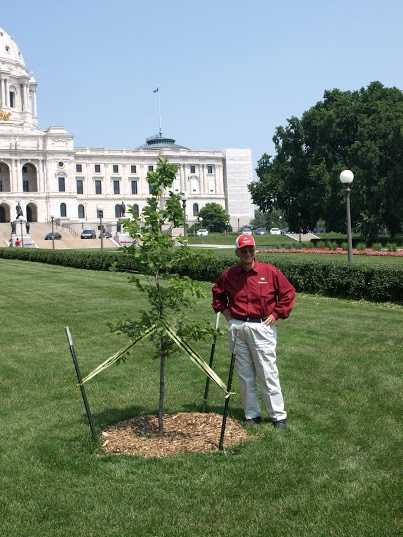
This past week the world of trees lost a true friend. Mark Stennes was a tireless worker who selflessly promoted our urban trees and the people who worked with them and was a driving force behind elm research in Minnesota.

Mark Tree

When it came to trees, there are few people who could equal Mark’s passion. He had an insatiable curiosity in the world around us. He lived trees and took every opportunity to discuss them. He discovered the St.… Continue reading this article “Mark Stennes”

Plant sentience – “It is happening…again”

Those of you who were Twin Peaks fans will recognize the title quote. And while my topic is not quite as scary as being stalked by Bob, the fact that plant sentience continues to rear its irritating head in legitimate scientific venues makes me want to curl up in a ball and whimper. Here’s what made me cringe: “Sound Garden: Can Plants Actually Talk and Hear?”

I posted on this topic a few years ago, and I’d invite you to read it and the accompanying comments.… Continue reading this article “Plant sentience – “It is happening…again””

When worlds collide

This past week I was in Alnarp, Sweden to present at the International Urban Tree Diversity Conference. Lots of interesting talks, posters and field tours. Much more to discuss than I can fit into a blog post, but if you’re interested you can read the presentation abstracts.

One of the best features of the conference is that the presenters and participants included not only arborists and urban forester but also landscape architects and urban planners.… Continue reading this article “When worlds collide”

Another close shave…

Life is full of surprises. A case in point is some recent work on our Social Media Designed Tree Establishment Study (SoMe-Ded-TrEeS). One of the objectives of the project was to determine the impact of root-ball manipulations to remove circling roots on container-grown trees. When we planted the trees (‘Bloodgood plane trees in 25 gal. containers) two years ago, we ‘shaved’ the outer roots on one-third of the trees, ‘teased’ apart the circling roots on one-third, and planted the rest as-is (‘pop and drop’ in Linda’s vernacular).… Continue reading this article “Another close shave…”

You and me Baby ain’t nuthin’ but mammals…

As spring slowly makes it appearance in the Midwest, homeowners and landscapers are likely to continue discovering damage from our record-breaking winter. While brutally cold temperatures and heavy snow loads took their toll in many areas, some of the most severe damage that occurred to landscape trees and shrubs this winter was caused by mammals.

Our long, harsh winter resulted in heavy feeding damage by deer, rabbits and voles, also called field mice. Depending on the age and type of plant and which animal was feeding on it, mammal damage can range from light pruning to death of a tree or shrub.… Continue reading this article “You and me Baby ain’t nuthin’ but mammals…”

Go ahead, weed, make my day…

Ridding an ecosystem of invasive plants is never easy. We can bring in goats to munch on offending plants or force armies of schoolchildren into slavery to pull them out; but, in all likelihood the sneaky little devils (the invasive plants, not the schoolkids) will be re-sprouting and back with a vengeance before we can turn around. For many invasive plant infestations the most practical long-term solution is chemical control – in other words, herbicides. Of course, herbicides have their issues such as drift and potential impacts on non-target plants.… Continue reading this article “Go ahead, weed, make my day…”

Feel the burn…

One of the most obvious impacts of this winter’s winter is rapidly becoming apparent in Michigan and other parts of the Midwest: winter burn on conifers. The primary symptom of winter burn is needle browning, especially on evergreen conifers in exposed locations. Needles may be damaged by extreme cold or the browning may be associated with winter desiccation as needles lose moisture during brief warm-ups. Winter burn is one of those situations that draws a lot of attention because it can look devastating; yet it often has relatively little long-term impact on plants.… Continue reading this article “Feel the burn…”

Bert, I’ll see your SOME-DED-TREES with POOR-DEAD-TREES

Bert’s done some nice posts on his SOcialME DesignED TREE transplant Study (or SOME DED TREES). I’m going to add to the discussion with a new addition to my Preventing Optimization Of Roots DecrEAseD TREE Survival (or POOR DEAD TREES) series.

It took a while, but the prediction I made in 2010 has come true. You’ll have to look at the link to see the whole story, but the bottom line is that this tree lasted only 7 years before succumbing to poor planting practices.… Continue reading this article “Bert, I’ll see your SOME-DED-TREES with POOR-DEAD-TREES”

Spring = really?

I’m sorry I’ve been so quiet, but I am not feeling SPRING. Here in the Blue Ridge of Virginia (Zone 6), March is averaging 10 F below average. Snow and ice is piled up on the north side of buildings. My Herbaceous Landscape Plants class is not impressed by the inch-tall Mertensia and the fact that the only thing we can call a cool-season annual (pansies/violas) is brown mush. All the delightful Zone 7 things I’ve been pushing on people for several years here – er, whoops.… Continue reading this article “Spring = really?”