I grew up on a small farm (30 or so acres) near Tacoma, Washington. We raised our own Herefords, I gathered eggs from my frizzle chickens, and we all enjoyed apples, plums and cherries from our fruit trees. Neither of my parents were farmers by profession, though my grandfather owned a dairy farm in Oregon. Eventually, my husband and I hope to move back to the family farm, if for no other reason than preserve it from the surrounding encroachment of houses.… Continue reading this article “Organic or local?”
Category: Uncategorized
Love in Broom
Recently, Rebecca Finneran, an MSU Extension Educator from the Grand Rapids area sent me a cool photo. The tree is a large Norway spruce near the Kent country Extension office.

This is a great example of witch’s broom. Witch’s brooms are growth anomalies that occur on various trees, most commonly conifers, Brooms can be caused be a variety of factors including diseases, aphids, environmental stress and random mutations. In some cases the growth defect is only present when the casual agent, say, a pathogen is present. … Continue reading this article “Love in Broom”
An evolving view of plant nutrition
One of the hallmarks of science is that our view of the world evolves and changes as new evidence comes to light. When I was a grade-schooler following the Apollo missions, for example, I knew all the planets in order from Mercury to Pluto and how many moons each one had; Jupiter was the champ with 12. Today, Jupiter has as many as 63 moons depending on who’s counting. And Pluto, let’s not even go there. … Continue reading this article “An evolving view of plant nutrition”
Atrazine, The news, And the reality
A paper was recently published in the Proceedings of the National Academy of Sciences which discussed the dangers of one of the most commonly used weed killers in the United States, atrazine. This paper was written by Tyrone Hayes and colleagues and was immediately embraced by the media because it showed something scary (which the media loves — in case you were wondering). In a nutshell this study showed that frogs were changed from males to females when they were exposed to relatively small amounts of the herbicide atrazine. … Continue reading this article “Atrazine, The news, And the reality”
Art, Science, and Faith
First of all, who we are and what we do. All of the Garden Professors are in the business of the science of Horticulture. What’s Horticulture? The standard definition of Horticulture is the art and science of tending a garden. Horticulture is clearly more than science but science is the foundation and underpinning. For anyone that needs convincing that Horticulture is an art as much as a science I suggest the following exercise. Go to a major research university and wander through their Botany or Plant Biology greenhouses.… Continue reading this article “Art, Science, and Faith”
The No-Work Garden Book
Occasionally one of the GPs will blog about a book that’s particulary good – or not. I was given a copy of Ruth Stout’s No-Work Garden Book a few years ago and frankly hadn’t given much more than a passing glance. But last week I thumbed through it and was immediately struck by the quality of science this self-taught gardener brought to her writing.
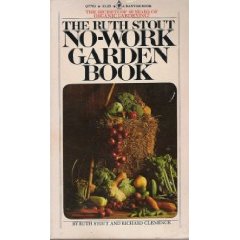
Much of Ruth’s gardening practices included the use of organic mulch on vegetable gardens, and she regularly wrote to scientists to ask for their interpretation of “expert” advice. … Continue reading this article “The No-Work Garden Book”
Packing Pearls
Yes, not my day to post, but I just received an email with a link to a new product called Packing Pearls. These are polystyrene balls that fill the bottom of large containers so they aren’t so heavy. They are promoted as “improving water drainage and oxygen flow.” You can find a link here
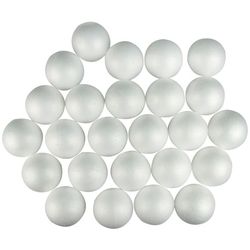
The “pearls” are separated from the soil and plant roots with a pot liner (composition unknown). We’re told that the roots can’t grow through the pot liner. … Continue reading this article “Packing Pearls”
Peanuts
I’m not from the South, and so I can’t call myself a Southerner like Holly can, but I did spend 6 years in Georgia. There are lots of things about it which I miss: winters which are more like a Minnesota fall, the almost disgustingly friendly people (OK, there was that one time that I was chased by a guy with an SKS assault rifle — but that was an exception — generally Southerners are the nicest people you could ever want to meet), and, especially, the food. … Continue reading this article “Peanuts”
International Ag Labs – who are they and what do they do?
Last week I posted a short message about this company, asking you to do a little homework. Bryn, CP, and Karen all have teased out some details that agree with my skepticism on how reliable this company is for soil testing and analysis. (See last Wednesday’s post and comments if you haven’t read them already.)
To back up a little bit, I received an email from LB last week, along with the attached soil test, analysis and recommendations. … Continue reading this article “International Ag Labs – who are they and what do they do?”
Cool tree App for i-Phone users
I’m preparing to give my Woody Plant Physiology students their first opportunity to flaunt their new-found knowledge (aka Exam one) so only time for a short post.
As my fellow Garden Professors are aware, I am among the least tech-savvy people roaming the halls of academia these days and was long ago declared roadkill on the information superhighway. However, I recently found out about a new App for the i-phone that could lure me back into the 21st century.… Continue reading this article “Cool tree App for i-Phone users”