I got a Facebook message early this week from a friend in Sacramento CA that said after over 200 days with no rain, she got 4.83 inches in a 24-hour period from the latest extreme rainfall that occurred over northern California. Others have reported up to a foot of rain in three days. If you follow the news, you may have heard the term “atmospheric river” used to describe the torrential rains and flooding that have occurred this week in San Francisco and other parts of Northern California.… Continue reading this article ““Cry Me A River””
Category: Uncategorized
Why root washing is important – an illustrated cautionary tale
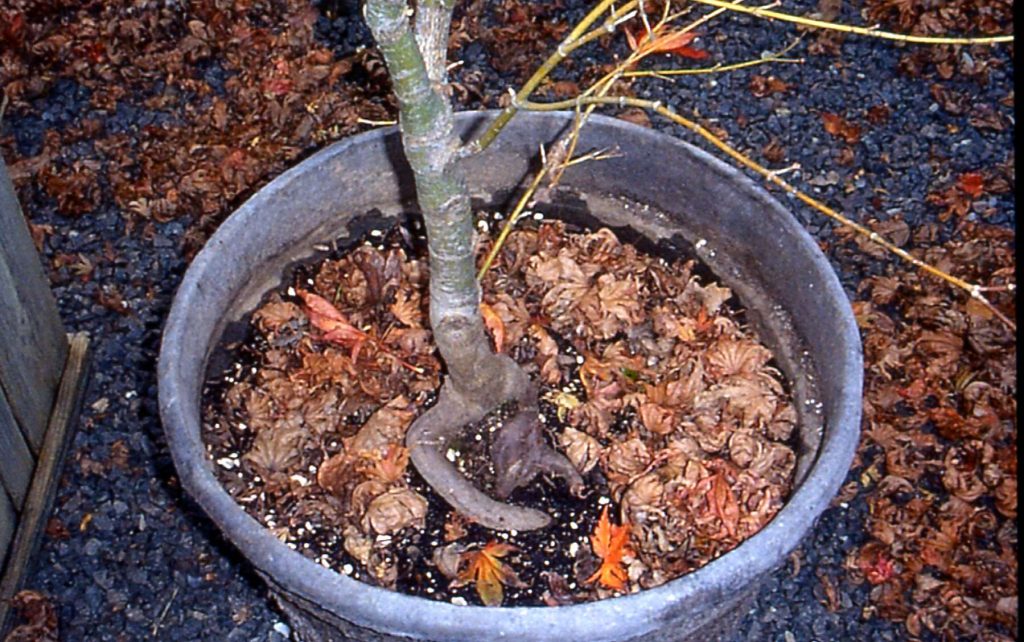
I’ve promoted root washing of containerized and B&B trees and shrubs for a few decades now. The experimental science is slowly coming along – it can take several years to determine if the practice is more successful in terms of plant survival than leaving the rootball intact. But we know how soils function in terms of water, air and root movement, and we understand woody plant physiology. So it’s pretty easy to predict what will happen when trees, whose roots are held captive in layers of stuff, are then planted, intact, into the landscape.… Continue reading this article “Why root washing is important – an illustrated cautionary tale”
Pruning newly planted trees
As the climate warms the value of trees for cooling the environment around buildings, especially in cities, drives tree planting programs. Planting trees is just the first step in growing a tree in a sustainable landscape. Successful plantings require evaluation and guidance of the new tree’s current and future branch architecture. In almost every case, nursery grown trees will require some structural pruning so that a shade tree can develop strong and effective branch attachments that will support the canopy for the coming decades without failure.… Continue reading this article “Pruning newly planted trees”
La Niña expected to affect climate around the world by end of year
Do you wish you had a crystal ball that could tell you what the climate will be next year when you plan your garden? So do many other gardeners (and climatologists). But while there is no magic answer, we do know that in many parts of the United States and other countries, year-to-year climate variability is strongly dominated by what is going on in the eastern tropical Pacific Ocean. This is through a phenomenon called “El Niño Southern Oscillation” or ENSO for short.… Continue reading this article “La Niña expected to affect climate around the world by end of year”
Pruning Basics
As we head into Fall garden routines and leaves start to turn color, the smell and feel of the Fall weather is in the air. Winter is just around the corner and with those horticultural routines comes the urge to prune stuff . Both fruit producing and shade producing trees often get a hair cut during fall and winter months, herbaceous perennials are often cut back in the fall after bloom and before their winter rest so it seems a good time to blog about pruning before you get the urge! … Continue reading this article “Pruning Basics”
Everything is chemicals: the myth and fear of “chemical-free” gardening
“Chemical-free” – a term I’ve seen several times attributed to many products, especially food and produce at farmers markets and even in gardening circles these days. This term is often misused to describe plants grown without the use of any pesticide, either conventional or organic. I have my thoughts that I’ll share later on that subject but first let’s talk about this “chemical-free” that gardeners, farmers, and others use and why its not only a myth, but a dangerous one at that.… Continue reading this article “Everything is chemicals: the myth and fear of “chemical-free” gardening”
Xeriscape – landscaping whose time has come.
With drought conditions or lower than average precipitation becoming more widespread across the country, it’s time to revisit the principles of xeriscape gardening. Let’s take a look at the “classic” principles and we’ll update them, Garden Professor style.
Note: If you’re growing food crops to supply your table not all of these principles will apply. Some will, e.g mulching, and some won’t. This blog post is focused on ornamental landscaping.

SO WHERE DID IT ALL BEGIN?… Continue reading this article “Xeriscape – landscaping whose time has come.”
Two new climate reports indicate what gardeners may expect in the future
In the past week, two new major climate reports have been released. One is the latest (6th) report from the Intergovernmental Panel on Climate Change (IPCC) and the other is the State of the Climate 2020 report. Of the two, the IPCC report has garnered a lot more press, but both are compilations of work by hundreds of scientists looking at recent weather and climate patterns and how they are affecting us here on earth.… Continue reading this article “Two new climate reports indicate what gardeners may expect in the future”
Diagnosing Abiotic Disorders II
In this blog I continue to examine maladies caused by environmental conditions in the absence of a disease agent or insect.
Salinity
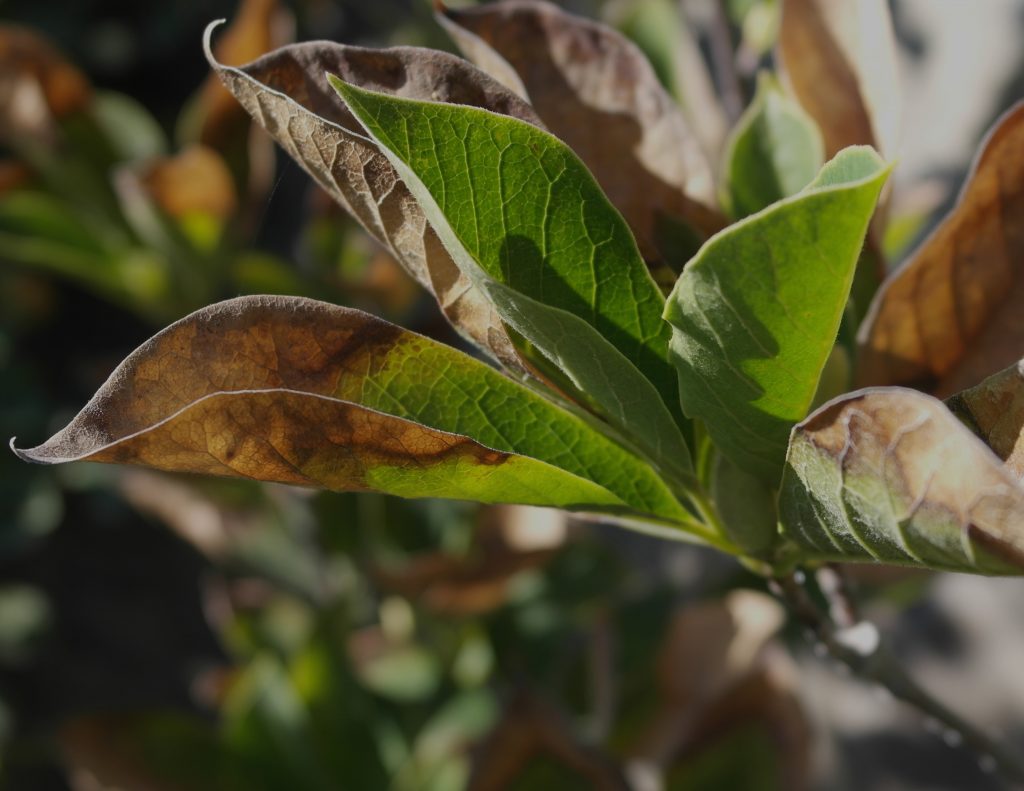
Salt in soils or water is simply the presence of too many soluble ions in the soil-water solution. This tends to happen in dry climates where evaporation rates exceed precipitation rates. In these climates salts accumulate in soil when surface waters pick up minerals from soil that is high in precipitated salts.… Continue reading this article “Diagnosing Abiotic Disorders II”
Heat domes, wet spells, and the weather patterns that tie them together
Do you have a favorite kind of weather that you love to experience? For me, it’s the first warm evening of spring, when the air is just warm enough and the wind just strong enough for the air to feel as though it is dripping off my fingers. On nights like that, I can tell that the air really is a fluid, the topic of this week’s blog.
