Cross-pollination making you cross?

No, your cucumbers have not hybridized with your melons.

I’ve been fielding different versions of the same question a LOT lately.
Three different people have sent pictures of “cucumelons” telling me they planted cucumbers next to their melons, and now the cucumbers look strange, so they’re concerned that they have cross pollinated with the melons. One person planted what was supposed to be a red raspberry next to their yellow raspberry, but the new plant is producing yellow fruit, so they think that it must be cross pollinating with their yellow plant, causing the fruits to turn yellow.… Continue reading this article “Cross-pollination making you cross?”
Plant sentience – “It is happening…again”

Those of you who were Twin Peaks fans will recognize the title quote. And while my topic is not quite as scary as being stalked by Bob, the fact that plant sentience continues to rear its irritating head in legitimate scientific venues makes me want to curl up in a ball and whimper. Here’s what made me cringe: “Sound Garden: Can Plants Actually Talk and Hear?”

I posted on this topic a few years ago, and I’d invite you to read it and the accompanying comments.… Continue reading this article “Plant sentience – “It is happening…again””

Bert, I’ll see your SOME-DED-TREES with POOR-DEAD-TREES

Bert’s done some nice posts on his SOcialME DesignED TREE transplant Study (or SOME DED TREES). I’m going to add to the discussion with a new addition to my Preventing Optimization Of Roots DecrEAseD TREE Survival (or POOR DEAD TREES) series.

It took a while, but the prediction I made in 2010 has come true. You’ll have to look at the link to see the whole story, but the bottom line is that this tree lasted only 7 years before succumbing to poor planting practices.… Continue reading this article “Bert, I’ll see your SOME-DED-TREES with POOR-DEAD-TREES”

New publication on biodynamics

Happy New Year to our blog readers!

Now that we have our blog safely moved to this new format, we all resolve to post more frequently. (It’s actually Bert’s day to post, but given that his computer is probably frozen – literally – in Michigan, I’ll step in.)

Today I got a link to my most recent publication in HortTechnology on the science behind biodynamic preparations. I’ve written about this topic before, but recognize the importance of peer-reviewed information for researchers, extension educators, and Master Gardener volunteers.… Continue reading this article “New publication on biodynamics”

Conventional vs. organic agriculture – the battle continues

An article was published earlier this week comparing the nutritional content of milk from organically raised cows to that from conventional dairies. The principle finding in this report is that “organic milk contained 25% less ω-6 fatty acids and 62% more ω-3 fatty acids than conventional milk, yielding a 2.5-fold higher ω-6/ω-3 ratio in conventional compared to organic milk (5.77 vs. 2.28).” (ω-3 fatty acids are considered to be “healthy” and you’ve probably heard of them in association with fish consumption.)… Continue reading this article “Conventional vs. organic agriculture – the battle continues”

Working out the bugs

It’s December and I hereby vow to post every week from now on! I’ve actually been on the blog behind the scenes for the last several weeks troubleshooting the archives. We transferred over four years of material from the old site, and there are still some rough patches. And that’s where you can help.

If you have been browsing the archives (listed on the right hand menu) or searching for topics (the search box is in the upper right corner just below the Garden Professors banner where the little magnifying glass lurks), you may have found odd line breaks, broken links, missing pictures, etc.… Continue reading this article “Working out the bugs”

How NOT to do an experiment

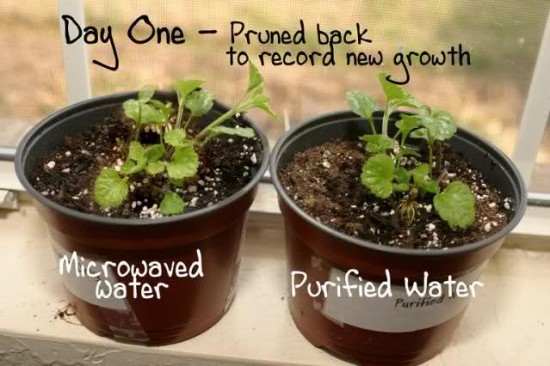
Over on Facebook I follow some groups who find provocative topics, and today’s “science fair” post was so over the top that I had to share it here.

science fair

Here’s the original post. Now the accompanying text about microwaves is whacky enough on its own (and well worth reading), but my primary interest is with the experiment. This exemplifies why there are basic rules for doing science.

This starts out okay – identical pots, the same type of media (I assume), similar sized plants – but then things go downhill:

1) Replicates are important.… Continue reading this article “How NOT to do an experiment”

Don’t worry…we’re still here!

I can’t even tell you how many months it’s been since I posted on the blog. It’s been a perfect storm for the four of us, with writing books (Linda), new jobs (Jeff), doing the Garden Professors gig in Toronto (Holly, Bert and Linda) and writing grant proposals (all of us). I am going to try my best to post once a week, even if it’s short and silly.

Something new to let you know…the blog will be moving to a new format in the near future.… Continue reading this article “Don’t worry…we’re still here!”

Container planting: intuition vs. reality

I’m just starting to think about getting my containers planted for the summer and happened to get an email on the topic from a blog reader. John was frustrated with a local columnist’s advice on using gravel in the bottom of the containers for drainage. When challenged, the columnist refuted John’s accurate comments with “logical thinking.” (You can find the posting and comments here.)

Here’s part of the post: “I like to cover the hole with a layer of gravel to improve drainage.… Continue reading this article “Container planting: intuition vs. reality”

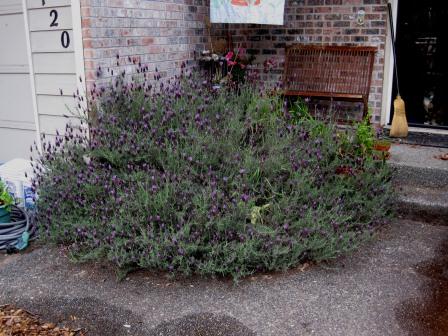
Five little lavenders…four years later

If you’ve been following us for a while, you might remember a post from August 2009 when I got cranky about a pot of lavenders with horrendous root systems.  I intervened with my Felcos and planted out the patients, hoping for the best.
Lavender #2 before root pruning

In July of 2010, I gave an update on their progress.  At that point, one of the lavenders had died but the other four were perking along. And now it’s time to show them in their floral glory:

Root washing is still controversial, as is corrective root pruning. … Continue reading this article “Five little lavenders…four years later”