Soap and Deer

Short post today — Linda appears to have transmitted her illness electronically over a couple of thousand miles — Thanks Linda!

I was reminded yesterday that it’s almost time for gardeners to start worrying about winter deer damage. With that in mind I thought I’d share with you my favorite research article on the subject.  It’s a little paper by Michael Fargione and Michael Richmond and published about 18 years ago.  You can find it here.… Continue reading this article “Soap and Deer”
If Harvard Says That It Works Then It Works Dammit!

So back in September my department head (who is, for all intents and purposes, my boss) handed me a New York Times article (http://www.nytimes.com/2009/09/24/garden/24garden.html) about the grass at Harvard which is now being managed organically.  We share the opinion that many organic techniques, such as compost tea, are “Voodoo Science” (that’s a term I stole from Mike Dirr) and so she thought I’d be interested in the techniques that Harvard was using.  She didn’t say it explicitly, but I think she thought I’d get a laugh out of it. … Continue reading this article “If Harvard Says That It Works Then It Works Dammit!”

Slugs and Eggshells

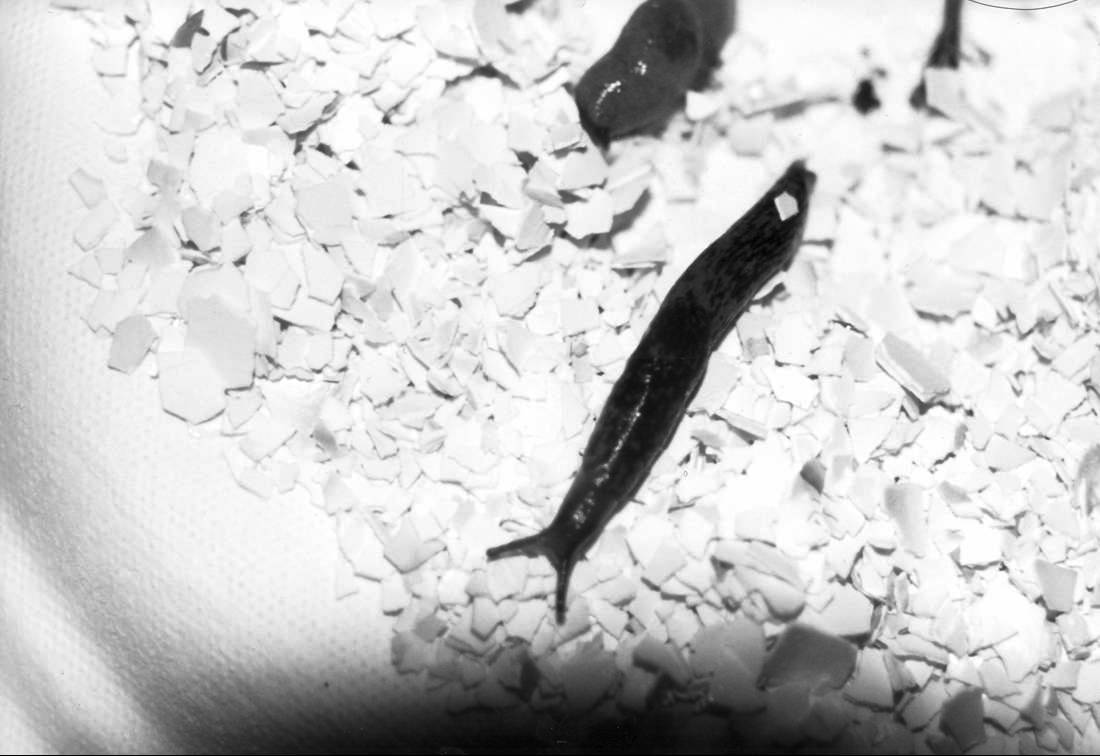
I just couldn’t resist posting this picture today.  There are a bunch of garden gurus out there who claim that slugs won’t cross crushed eggshells.  I, personally, have never seen a slug halted by them.

What Makes Growers Change?

Over the last few weeks I’ve said a lot of complimentary things about the Minnesota Nursery Industry and how they’re careful to avoid situations where trees are planted too deeply.  What I haven’t mentioned is that there is a reason for this.  During the 1980s and early ’90s trees were usually planted deeply with lots of soil over the uppermost roots.  It was just common practice.  Unfortunately this practice led to roots growing across the trees stems and, when those roots cross the stem, the roots always win  (as you saw in Linda’s quiz last week)! … Continue reading this article “What Makes Growers Change?”

Something Scary!

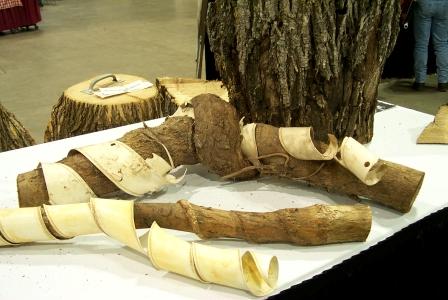
It’s almost Halloween!  How about a scary picture….I think I’ll call this one revenge of the mummies (Thanks to Dave Hansen for this picture).

My Least Favorite Pesticide

People often ask me about the most dangerous pesticides — the ones which they should be careful to avoid.  There are lots to choose from:  Di-syston (aka disulfoton) is really bad.  Rotenone has some potential problems that make it scary, as does copper sulfate.  But for my money the worst thing out there is something that isn’t even supposed to be used as a pesticide (at least not anymore) but which finds its way into our gardens thanks to recommendations from people like Jerry Baker:  Tobacco.… Continue reading this article “My Least Favorite Pesticide”

Chad and Jeff’s Excellent Nursery Adventure

About 3 months after I started my job in Minnesota I hired a technician to help me run the nursery and to manage research plots.  His name is Chad and he stands about 6 foot 4, has shoulders that threaten to pop the sides of the skid steer loader whenever he enters it, and he knows his stuff because he needs to (and even if he didn’t know his stuff you’d be scared to tell him that because he looks dangerous with his frightening Fu-Manchu moustache). Continue reading this article “Chad and Jeff’s Excellent Nursery Adventure”

As Bad As It Gets?

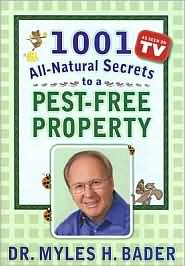
Last week I took a look at old, out of print books that are worth finding and reading.  This week I think I’ll take a slightly different track and instead turn my attention to a book that is currently in print, but which shouldn’t be.  In fact, 1001 All-Natural Secrets to a Pest-Free Property by Myles H. Bader can be found in many bookstores, was actually one of the best selling garden books of 2006, and is still selling today. … Continue reading this article “As Bad As It Gets?”

Old Books

It’s a rainy day in the upper Midwest.  My favorite time to read.  Of course, I should be writing papers, grading papers, or setting up seminars for next semester.  But instead I’m drawn to my bookshelves.  In most professors offices that I visit the shelves are an odd mix of old and new books that focus on the particular subject which that professor works on, along with the scientific journals that relate to that discipline.  It’s no different in my office, except that I tend towards older books and my tastes are just a little bit more eclectic than most. … Continue reading this article “Old Books”

A Winner!

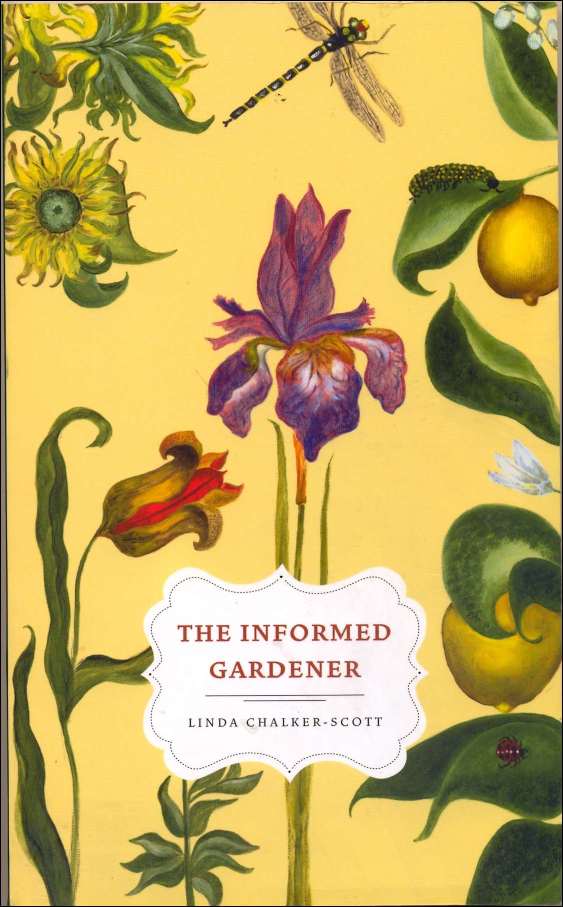
Over the weekend Linda accepted an award from the Garden Writers Association for her book The Informed Gardener.  It’s good to see that people are starting to pay attention to science based gardening, and no-one has worked more tirelessly than Linda to get the word out there!