So back in September my department head (who is, for all intents and purposes, my boss) handed me a New York Times article (http://www.nytimes.com/2009/09/24/garden/24garden.html) about the grass at Harvard which is now being managed organically. We share the opinion that many organic techniques, such as compost tea, are “Voodoo Science” (that’s a term I stole from Mike Dirr) and so she thought I’d be interested in the techniques that Harvard was using. She didn’t say it explicitly, but I think she thought I’d get a laugh out of it. … Continue reading this article “If Harvard Says That It Works Then It Works Dammit!”
Category: Knock It Off
Should I boycott cypress mulch?
It’s hard to think of mulch as a controversial topic but, as with most things these days, we find people on both sides of an issue. And, as with most things these days, some of opinions are based on substance, others are not. In the southern U.S. some environmental groups are advocating a boycott of cypress mulch.
Cypress mulch is derived from baldcypress and pond cypress, which grow in ecologically sensitive wetlands in the Southeast. Cypress wood is highly valued for is natural decay resistance. … Continue reading this article “Should I boycott cypress mulch?”
Epicormic mystery solved!
Good morning (at least it is in my time zone)! And welcome to those of you who found us through Blotanical or another blog site. We love seeing the increased participation on our blog.
Since I am a teacher at heart, I was glad to see so much thoughtful discussion over the weekend. Many of you suggested that pruning for vehicular traffic was the trigger for this growth, and it’s true that removing large limbs or heading back branches will result in vigorous epicormic growth. … Continue reading this article “Epicormic mystery solved!”
My Least Favorite Pesticide
People often ask me about the most dangerous pesticides — the ones which they should be careful to avoid. There are lots to choose from: Di-syston (aka disulfoton) is really bad. Rotenone has some potential problems that make it scary, as does copper sulfate. But for my money the worst thing out there is something that isn’t even supposed to be used as a pesticide (at least not anymore) but which finds its way into our gardens thanks to recommendations from people like Jerry Baker: Tobacco.… Continue reading this article “My Least Favorite Pesticide”
The Flap Over Burlap
This month’s issue of the Oregon Association of Nursery’s Digger magazine includes the second part of a two-part article on urban foresters’ perspectives on nursery stock. It was interesting to note that some urban foresters felt they were in a quandary because their specs require removal of burlap from B&B trees, yet many nurseries will void their warranty if burlap is removed from the root ball.
Removing burlap from B&B trees is a practice that is widely recommended, yet there is little, if any, data to support it. … Continue reading this article “The Flap Over Burlap”
Chad and Jeff’s Excellent Nursery Adventure
About 3 months after I started my job in Minnesota I hired a technician to help me run the nursery and to manage research plots. His name is Chad and he stands about 6 foot 4, has shoulders that threaten to pop the sides of the skid steer loader whenever he enters it, and he knows his stuff because he needs to (and even if he didn’t know his stuff you’d be scared to tell him that because he looks dangerous with his frightening Fu-Manchu moustache). … Continue reading this article “Chad and Jeff’s Excellent Nursery Adventure”
Building a better tree? Not in the long run!
One of the landscape tree production practices that drives me absolutely nuts is heading back trees in the nursery to create “columnar” specimens. It’s easy to find examples of these in Washington state nurseries, like the pathetic oak shown below:
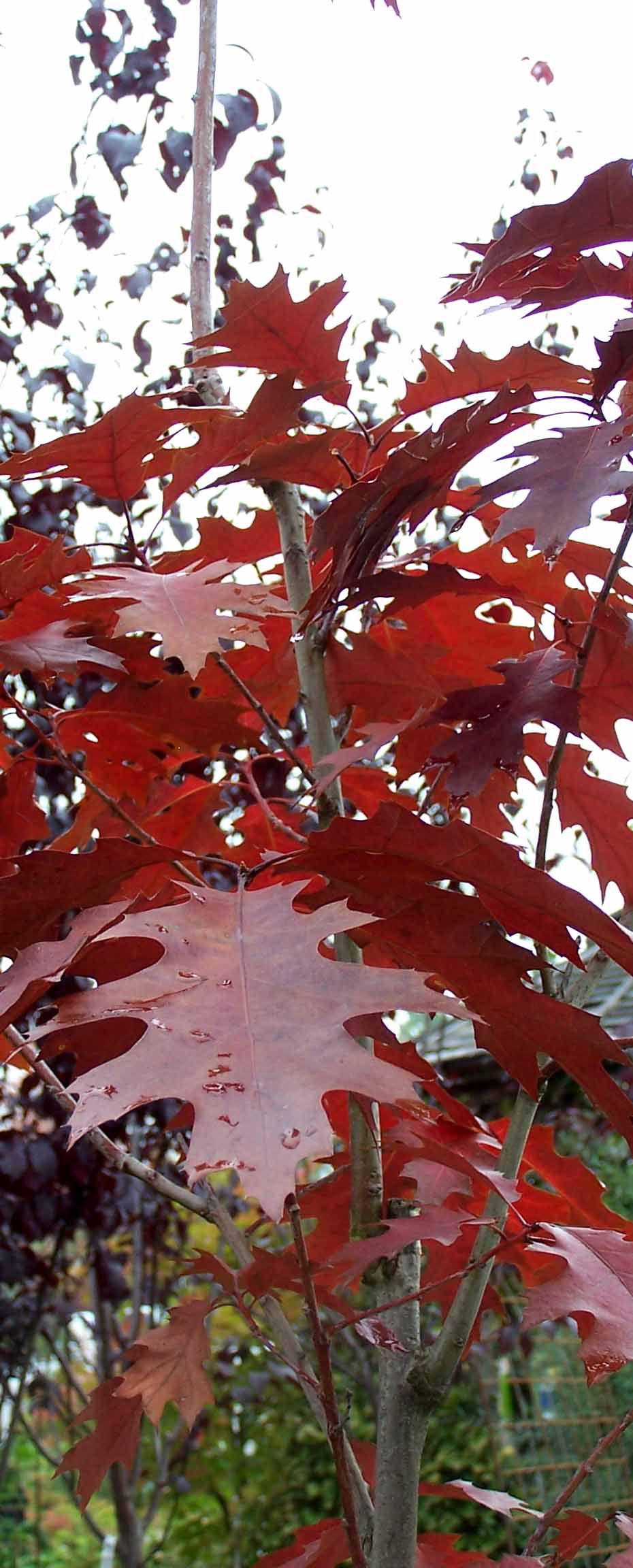
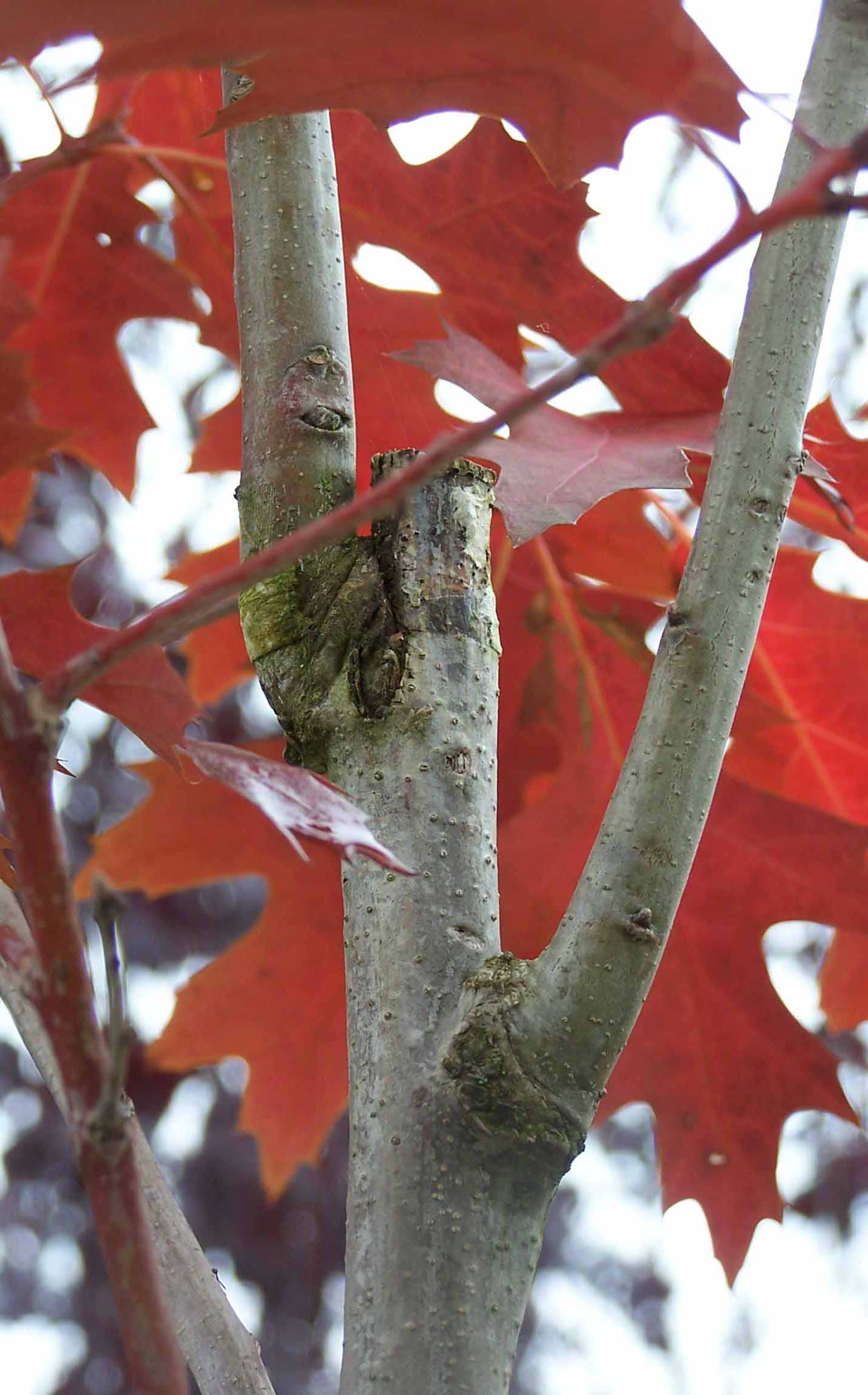
Aesthetics aside, let’s focus on how the tree responds to heading back. The removal of the dominant leader encourages lateral branches below to become more upright; from these laterals, a new leader is selected. This new upright growth habit is highly prized by many landscape architects and urban planners, as such trees fit more neatly into small urban spaces without interfering with vehicle and pedestrian traffic. … Continue reading this article “Building a better tree? Not in the long run!”
As Bad As It Gets?
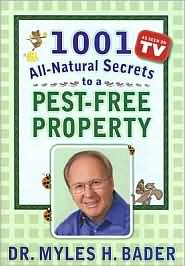
Last week I took a look at old, out of print books that are worth finding and reading. This week I think I’ll take a slightly different track and instead turn my attention to a book that is currently in print, but which shouldn’t be. In fact, 1001 All-Natural Secrets to a Pest-Free Property by Myles H. Bader can be found in many bookstores, was actually one of the best selling garden books of 2006, and is still selling today. … Continue reading this article “As Bad As It Gets?”
Size matters.
Yesterday I received a call from an administrator at a large military base. (I have to tell you that anytime I get a call from someone in government I immediately start wondering about “the file” that I’m sure is kept on me. No, I’m not paranoid, but I’m an outside reviewer for a number of graduate student theses from the University of Agriculture in Faisalabad, Pakistan. In fact, I’m doing two right now. So every once in a while I am sent a brown paper package from Pakistan. … Continue reading this article “Size matters.”
The Heartbreak of Plagiotropism…
…Otherwise known as “splayage”. When vegetatively propagating some species of woody plants, care should be taken when selecting where to take a cutting (piece of stem) to root. Propagation from terminal cuttings (pointy end up) usually results in orthotropism or a vertical growth habit. Cuttings from extremely lateral branches (those that grow parallel to the ground) can, in a few species, result in a spreading growth habit or plagiotropism.
This is not always undesirable – some species are purposefully propagated this way to maintain the prostrate habit that particular cultivar is known for.… Continue reading this article “The Heartbreak of Plagiotropism…”