“Lazy” corn and gravitropism

Inspired by Linda’s post about thigmomorphogenesis, I decided today I would add the word gravitropism to your vocabulary. It simply means growth in response to gravity. Shoots of plants grow up, because they are negatively gravitropic, they grow against the pull of gravity, while roots are positively gravitropic and grow down towards the pull of gravity.

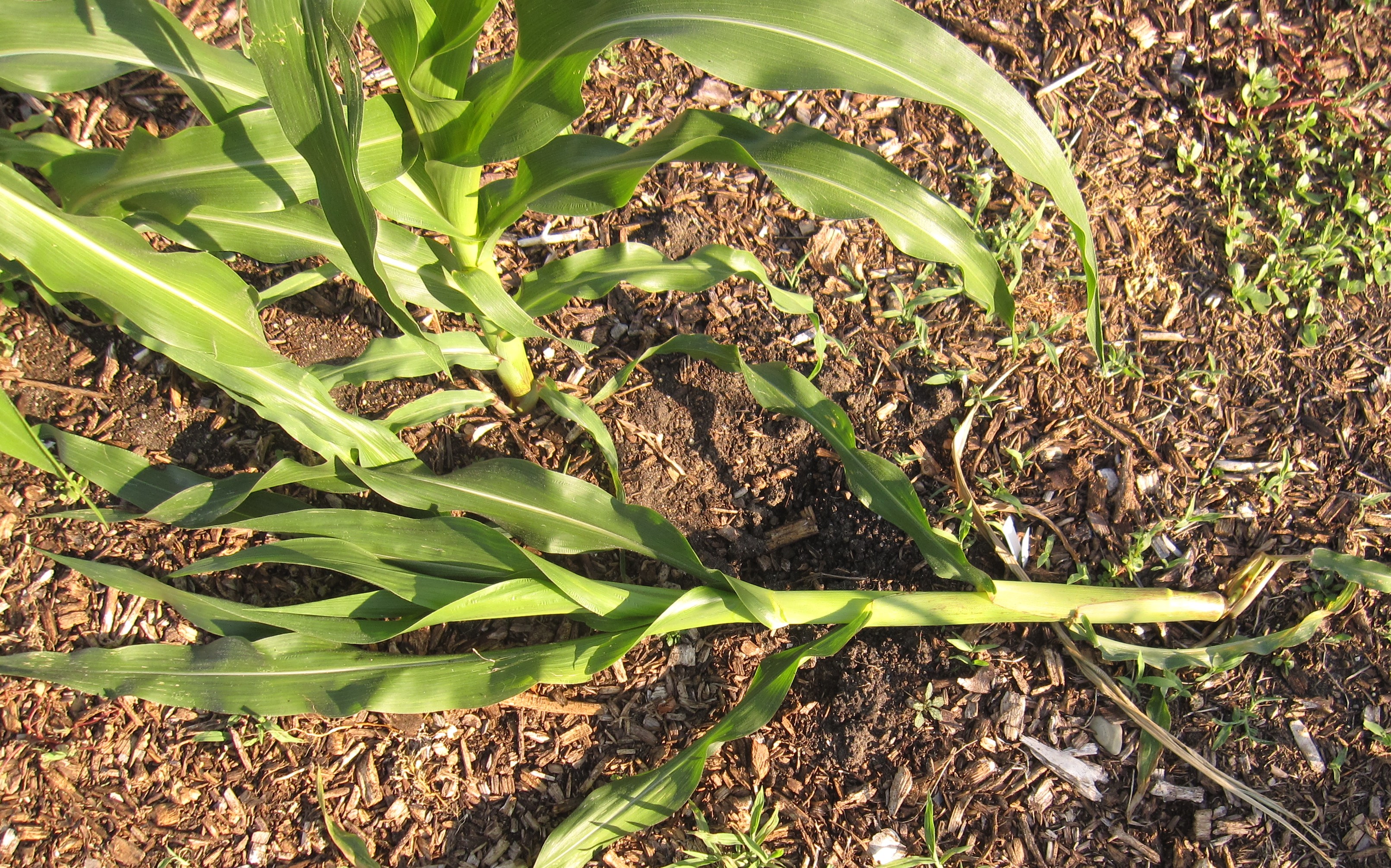
And why is that so important? Well… this is what happens when gravitropism is missing.
cornlazyplant

To the left is normal old corn.… Continue reading this article ““Lazy” corn and gravitropism”

Your new word for the day: thigmomorphogenesis

I just finished reviewing 4 manuscripts for three different journals and boy is my brain fried. My private reactions ranged from “I can’t wait until this one is published!” to “If I were to use sheet mulch this manuscript would be my first choice.” Anyway, it was the latter manuscript that got me to thinking about what can go wrong with experimental design, which brings up today’s word: thigmomorphogenesis.

This is a great word for those who enjoy figuring out word meanings by deciphering the (usually) Greek or Latin roots.… Continue reading this article “Your new word for the day: thigmomorphogenesis”

Bad power line pruning

Driving home today, I saw this lovely sight:

powerlinepruningOur local utility company has been busy butchering trees around the power lines.

Every plant person I know complains about this, but I honestly don’t think there is much hope for a change. Power companies don’t want limbs falling on the electric cables during storms, and they’re not likely to start spending money to hire real arborists to do the pruning.

What I really wish is that people would start thinking a little more before putting in a tall tree directly under electric lines.… Continue reading this article “Bad power line pruning”

Little ball of horrors

One of the great things about doing a multi-author science blog is that there will be topics about which colleagues will disagree. One of those topics revolves around the best way to prepare woody rooted plants (trees and shrubs) before planting them. This is an area in arboricultural science that is evolving. A search through our blog archives will find many of these posts and for convenience’s sake I’ve linked one from each of us here.… Continue reading this article “Little ball of horrors”

Why doesn’t my plant look like it did last year?

I get versions of this question often. You have something in the garden, but this year it looks a bit different than it did before. There are a bunch of different things that could have happened to cause this change, and I’ll attempt here to make a complete list of them.

Rootstock

Trees and shrubs, including things like tree peonies and roses, are often grafted, so the part with the pretty flowers or delicious fruit is stuck onto the roots of a different variety, often not as pretty/useful/tasty but more vigorous and/or easier to propagate.… Continue reading this article “Why doesn’t my plant look like it did last year?”

Thoughts on reproducibility and reliability in science

You’ve probably heard about a project that attempted the replicate 98 psychological studies and found that only a third of them were reproducible, the other two thirds produced different results – sometimes very different, more often only somewhat so.

Though psychology was the subject of this study, you shouldn’t assume the results were unique to that particular field. The are plenty of reports of similar failings and the so-called ‘Decline effect’ in other scientific disciplines.

So why is that?… Continue reading this article “Thoughts on reproducibility and reliability in science”

Another unnecessary tree failure

The end of August brought an unseasonable rain- and windstorm to the Puget Sound region. We had some spectacular tree failures which I missed seeing as I was out of town. But one of our Facebook group members, Grace Hensley, was on the ball and took some great photos of a fallen purple-leafed plum. The first thing you see is the complete lack of a stabilizing root system.

Now look at the base of the trunk, which is actually a massive circling root that has girdled the trunk over time.… Continue reading this article “Another unnecessary tree failure”

Where double flowers come from (sometimes)

Doubling of flowers — the development of extra petals — is a common mutation, and often beloved by gardeners. Sometimes double forms of flowers become so popular that gardeners hardly recognize the single flowered, wild-type. Wild roses, for example, have just 5 (or, in once case, 4) petals and look totally different than the extra petal flaunting varieties familiar from gardens.

Doubling usually happens when gene expression gets mixed up and bits of cells that were destined to develop into anthers develop into extra petals instead.… Continue reading this article “Where double flowers come from (sometimes)”

When half a flower is the wrong color…

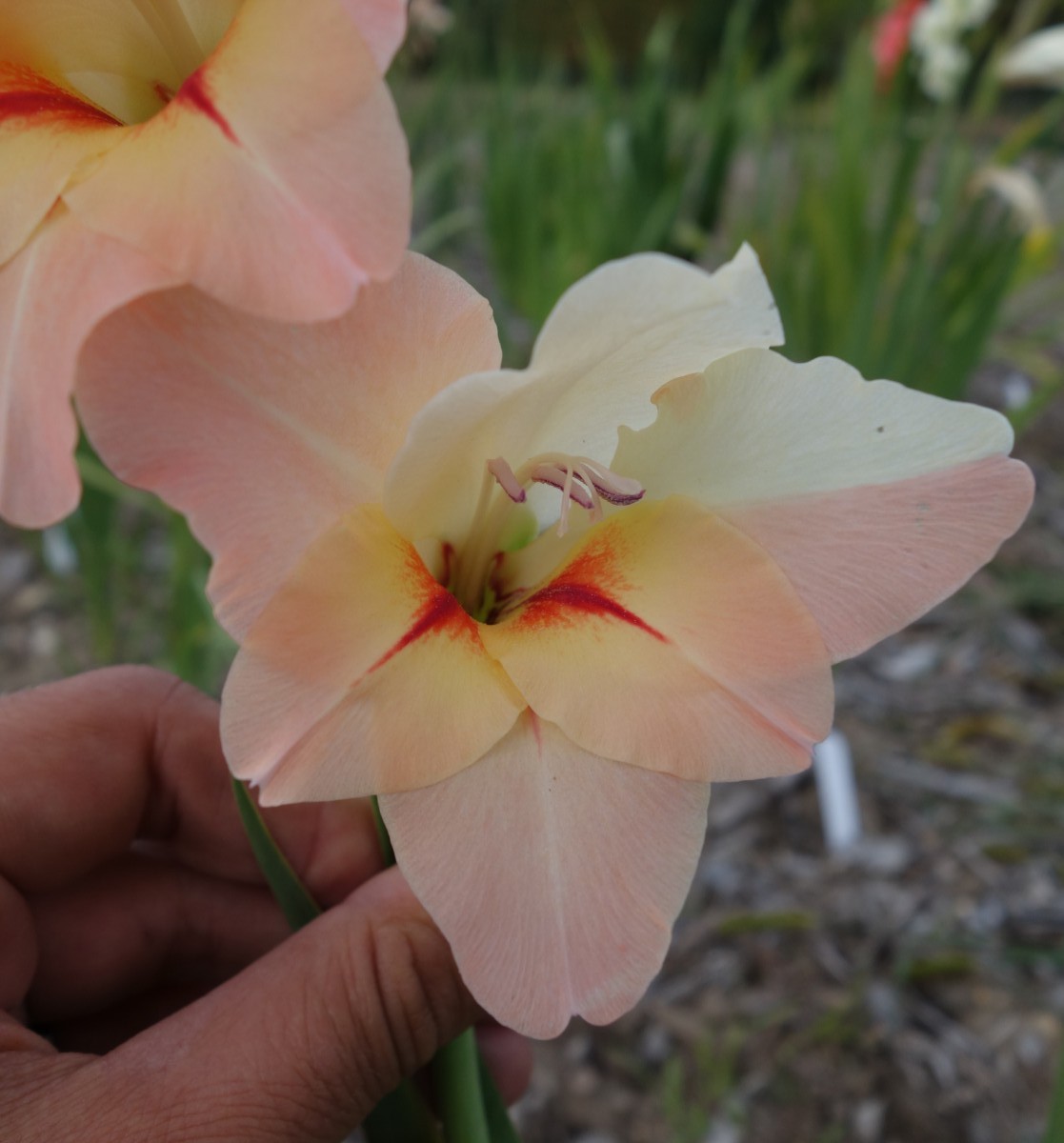
If you’ve spent enough time around flowers, you’ve probably seen this. It isn’t exactly common, but it happens, and is so distinctive that you’ll almost always notice when it happens, as I did on one of my gladiolus the other day.

sectoralchimera

Everything else is as normal, but a chunk of the flower is white instead of the usual soft peachy white.

What we have here is a sectorial chimera. Chimera means an organism with two (or more, I suppose) genetically different cell types, and a sectorial chimera is when there is one distinct section of the plant made up of a different cell type.… Continue reading this article “When half a flower is the wrong color…”

Robbers in the garden

Salvia azurea (maybe my favorite salvia in the world — sky blue flowers in late summer/fall, hardy to zone 5) is blooming in the garden, and the bees are all over the flowers. But while some are poking their heads into the flowers to drink nectar and transferring pollen as they do so, others are up to something more sinister.

The evidence of what they are up to is clear if you look closely at the side of the flowers after they leave.… Continue reading this article “Robbers in the garden”