Research in real time

It’s been a busy spring around the Cregg lab.  In many ways, it feels more like mid-summer than mid-May.  One of the items my students and I have been with is installation of the Social Media Designed Tree Transplant Study (SoMeDedTreeS).  As loyal Garden Professor blog readers will recall, we conducted a Survey Monkey poll last fall to help develop a study plan to investigate tree transplanting practices of container-grown trees.  Based on the results of the survey we designed a study to look the effects of root-ball manipulation and post-transplant fertilization on 96 planetrees.… Continue reading this article “Research in real time”

Truth in advertising, finally.

*drum roll*

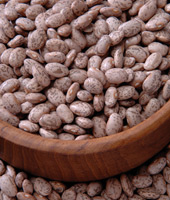
Ladies and gentlemen, the latest effort in pinto bean breeding from Seminis Vegetable Seeds:

"beans, beans, good for your heart..."

‘Windbreaker’

Windbreaker is an upright, short-vine pinto bean that has produced consistently good yields, especially for the Red River Valley production area. Windbreaker ripens quickly and uniformly with reduced seed weathering. Try Windbreaker in narrow rows for direct harvest.
Relative Days to Maturity: 94-98
Plant Type: Indeterminate, short vine
Color: Brown flecks on buff
Seeds/LB: 1,076
Disease Resistance: BCMV, R (R)

How Much Would You Pay?

OK, here’s a question for you.  How much would you pay for an online course taught by professors (perhaps garden professors?) about plants and gardening including things like fertilizers, pest control, etc.?

Hour long lectures once a week (through Skype or something similar) with an additional 1/2 hour built in for questions?  12 weeks of lectures.  No college credit.

I haven’t talked to the other garden professors about it — this is purely a hypothetical question for now. … Continue reading this article “How Much Would You Pay?”

Podcast – Better living through chemistry

One of the coolest things about plants is their unlimited ability to manufacture some of the most amazing biochemicals.  This week’s podcast will brief you on some of these phytochemicals in the news – they’re good for you as well as for plants!  We’ll also explore whether natural organic compounds are really all that much safer than synthetic chemicals.  (You can probably already guess the answer to that one.)

Enjoy!

Maybe an early demise is better?

Yesterday I gave a presentation at an Urban Forestry symposium here in Seattle.  One of the sidebar conversations I had came from a urban forester who had (to my mind, anyway) a different way of looking at urban street trees.  I’ve bemoaned for years that our trees die far too young – we plant species that should live for decades or even centuries, only to watch them fail and die in a fraction of that time.  … Continue reading this article “Maybe an early demise is better?”

Something to grate on your nerves

I’ve had an on-going discussion – OK, argument – with a fellow faculty member who does research on social dimensions of forestry, including urban forestry.  She contends that we basically know everything we need to know about growing trees in cities and that the real underlying problems in urban and community forestry these days are social issues.  This, of course, means that funding for urban forestry research, what little there is, should be directed at social sciences.… Continue reading this article “Something to grate on your nerves”

Upon Further Review…Iron Phosphate for Slugs and Snails

I’m not going to sugar coat it – I’ve been too cavalier in recommending iron phosphate for slugs and snails. 

A few days ago Erin Harris put a comment in my post about dandelions asking whether those iron phosphate baits you can buy for slugs might also be toxic to earthworms.  The answer is yes – they might.  And not only that, these iron phosphate baits can also be toxic to other animals such as dogs.… Continue reading this article “Upon Further Review…Iron Phosphate for Slugs and Snails”

Podcast – another chat with Riz!

Those of you who’ve been following the podcasts remember Riz Reyes as one of my recurring guests.  He’s back this week, discussing ways you can shop for plants effectively at the big box stores.  It all fits into the theme “Getting Your Money’s Worth.” You won’t want to miss it!

Are you a “before” or an “after” mulcher?

Planting annual displays is not (at all) my
favorite gardening pastime, but we do some "color" around our events
building and along the garden entrance to make the area pop during our busy
season.

Those of you who install institutional or commercial color beds are familiar with the process  – yank out last season’s annuals/tulips/whatever, smooth out the bed, plant new annuals, then mulch. Or…do you mulch first, then plant?

If the order of events is plant, then mulch, care must be taken not to get it all over the plants.… Continue reading this article “Are you a “before” or an “after” mulcher?”

Answer to Monday quiz

Well, students just finished finals here at MSU so I suppose it’s appropriate we put our faithful GP readers through their own gauntlet of quizzes…

Top marks to Terry for determining the damage on the conifer seedlings was due to incomplete overlap on the sprinklers the grower used for frost protection during our most recent freeze.  Our record-setting March warm up pushed budbreak ahead by about a month in most locations in the state.  Fruit crops (cherries, grapes, blueberries, and peaches) have been devastated but nursery crops and landscape trees came through relative unscathed until the freeze the weekend before last.