Sometimes it’s fun to experience life unfolding around you. This past week I started my new position as the Director of the UNC Charlotte Botanical Gardens and am very excited to be working with my old friend (she’s not old – I’ve just known her a long time) Paula Gross, Assistant Director of the garden, a fantastic horticulturist, and one of the best people you could ever hope to meet. Together with our highly skilled staff we’re going to be working to bring the world of plants to people.… Continue reading this article “A Brief Announcement”
The cardboard controversy
I’m not a fan of using corrugated cardboard as a mulch, which like other sheet mulches creates problems for the underlying soil. Long-time readers of this blog may remember several previous posts (1, 2, 3 and 4) on this topic and I won’t belabor the points made in those posts. Instead, today I’m doing to focus on cardboard itself.
First, cardboard is a generic term that can refer to many types of manufactured paper.… Continue reading this article “The cardboard controversy”
FrankenFoodFacts
The subject of Genetically Modified Organisms, or GMOs, first came to my attention sometime in the fall of 2009, not long after I started following the Garden Professors Blog.
I stumbled across a site called Biofortified, run (at the time) by a couple of grad students in the field, who were trying to accomplish the same thing that the GPs were, combatting myths and misconceptions about a subject, with research based information.
I spent about 2 years lurking there, because much of the information at the time was over my head, and seemed to be targeted to fellow scientists to help with getting the information out.… Continue reading this article “FrankenFoodFacts”
Why doesn’t my plant flower? Part 2
As promised last week, here is Part 2 of “Why doesn’t my plant flower?”. If any of you know of more reasons that are not listed here or in the previous week’s blog, please let me know. Happy gardening!
There may be several reasons why a landscape plant does not flower (see last week for more reasons):
1) Over fertilization may inhibit flowering.
- Do not fertilize newly planted trees and shrubs the first 2-3 years after planting
- Plants need to put their energy into establishing a healthy root system to support future shoot growth
- Once the plant is established (2-3 years), fertilizers may be added if a soil test suggests fertilization is needed
- Over fertilization with quick-release, high nitrogen (N) fertilizers can lead to excessive leaf growth at the expense of flower bud development
- Avoid using lawn fertilizers around the base of your plants, as they are often high in nitrogen
- More is not better; follow all fertilizer label directions and do not add more than is required
- Your landscape plants might not even need fertilization, especially if compost is added or the soil conditions are favorable for plant growth
2) Poorly-drained, heavy clay soils can result in leggy, unhealthy looking plants that may not flower or will die.… Continue reading this article “Why doesn’t my plant flower? Part 2”
Corny Ancestry
I love growing weird plants, and I’m endlessly fascinated by plant breeding and the extreme transformations humans have made in our crop plants over the history of agriculture.
Which is why growing teosinte, the wild ancestor of corn, was a no brainer. Even before I planted it, comparing the seeds is fascinating. 
Once growing you can see the similarity. Teosinte is on the left in the picture below, corn on the right.
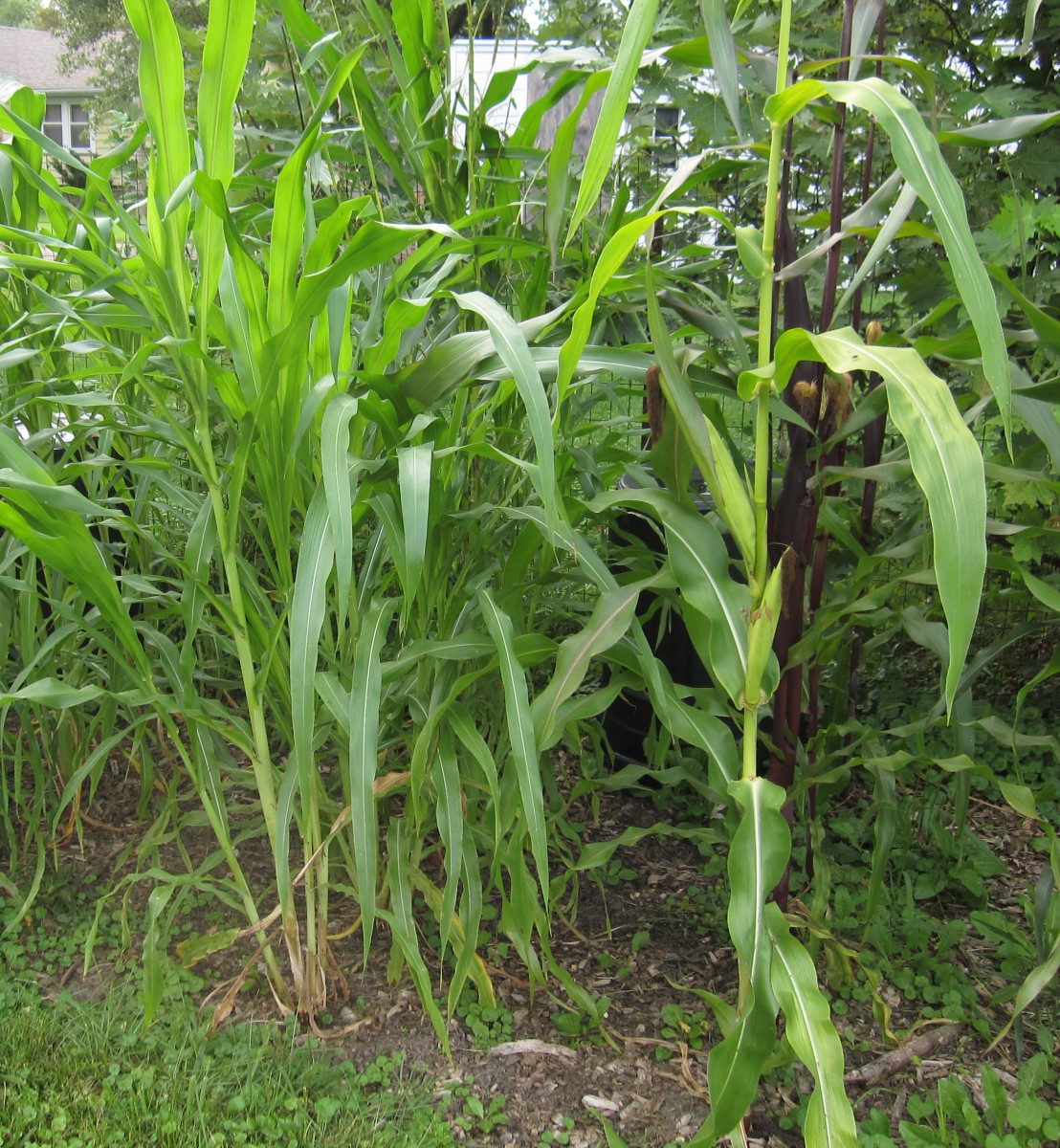
The most dramatic difference between the two, I think, is the “ear” of teosinte, which is nothing more than a thin sprig of half-a-dozen seeds.… Continue reading this article “Corny Ancestry”
Perennial Funday: Rudbeckia grandiflora ‘Sundance’
Just back from the always-inspirational Perennial Plant Association Symposium, this year held in Baltimore. The theme celebrated the massive influence of German plantsmen and designers on both the mid-Atlantic and the perennial business as a whole. Whether a grower, garden center owner, or landscape designer, the names historically associated with Mid-Atlantic horticulture – Kurt Bluemel, Oehme, van Sweden & Associates, etc. – resonated with all attendees.
The history of the “perennials movement” was recounted – where the Germans (and more than a few Dutch) admired, utilized, and selected cultivars of our fabulous summer and fall-blooming native perennials – long before we North Americans ceased relegating them to ditch weeds. … Continue reading this article “Perennial Funday: Rudbeckia grandiflora ‘Sundance’”
Hey, Consumer Reports Wrote Back! And Yes, They Are Comfortable Recommending Useless Chemicals That Might Cause Cancer!
Two weeks ago I wrote an open letter to Consumer Reports voicing my concerns about some recent articles they had published regarding lawn and garden care, as well as reiterating some issues that Linda Chalker-Scott Ph.D. had with one of their stories. You can read the article for yourself, but the long and short of it is that they made some weed control recommendations that don’t work and recommended a chemical which might cause cancer.… Continue reading this article “Hey, Consumer Reports Wrote Back! And Yes, They Are Comfortable Recommending Useless Chemicals That Might Cause Cancer!”
Out of the bottle and into the bag
Last week I was having lunch with my mom at our favorite nearby nursery/café. After failing to resist the grilled cheese sandwich (3 cheeses! And buttery panini bread!), we walked off lunch in the garden supply part of the nursery. Normally I’m on my best behavior when I’m shopping with my mom (i.e. I don’t take photos of things I’m going to take to task on the blog). But like the 3-cheese grilled sandwich I was unable to resist the bags of biodynamic compost.… Continue reading this article “Out of the bottle and into the bag”
James Kennedy on Chemistry
Sometime in the last twenty years or so, the word “chemical” has become a dirty word. Hard to pronounce words. Unnatural synthesized substances. Mad scientist concoctions brewed in a laboratory.
I used to try to introduce some perspective when I facilitated pesticide workshops for the general public by teaching how scientists and regulators determined toxicity, so comparisons between familiar substances, like caffeine, aspirin, or detergents could be made, to varying degrees of success.
It was the “unnatural synthesized substances” part that I had the most difficulty overcoming.… Continue reading this article “James Kennedy on Chemistry”
Show me the data!
One of my favorite bumper stickers from days gone by said simply “Stop Continental Drift”. Good luck with that.

Today’s topic deals with another type of drift – a phenomenon one of my professors referred at ‘Bibliographic drift’. This type of drift occurs when authors cite a paper without bothering to look up the original source. Then a second author cites original source based on the first author’s paper; then a third author cites it based on the second paper and so on and so forth. … Continue reading this article “Show me the data!”