An evolving view of plant nutrition

One of the hallmarks of science is that our view of the world evolves and changes as new evidence comes to light.  When I was a grade-schooler following the Apollo missions, for example, I knew all the planets in order from Mercury to Pluto and how many moons each one had; Jupiter was the champ with 12.  Today, Jupiter has as many as 63 moons depending on who’s counting.  And Pluto, let’s not even go there.  Continue reading this article “An evolving view of plant nutrition”

Friday mystery photo

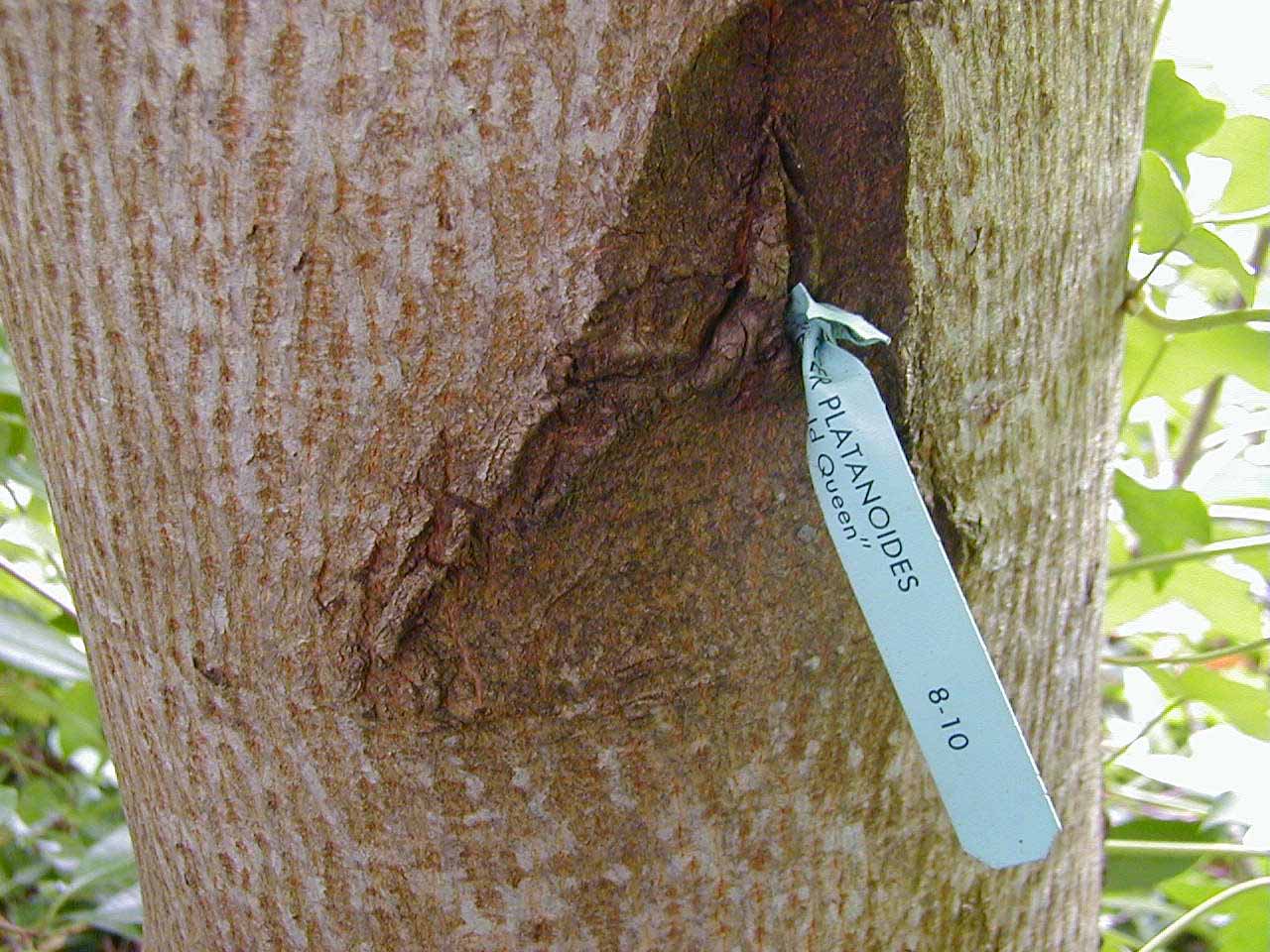
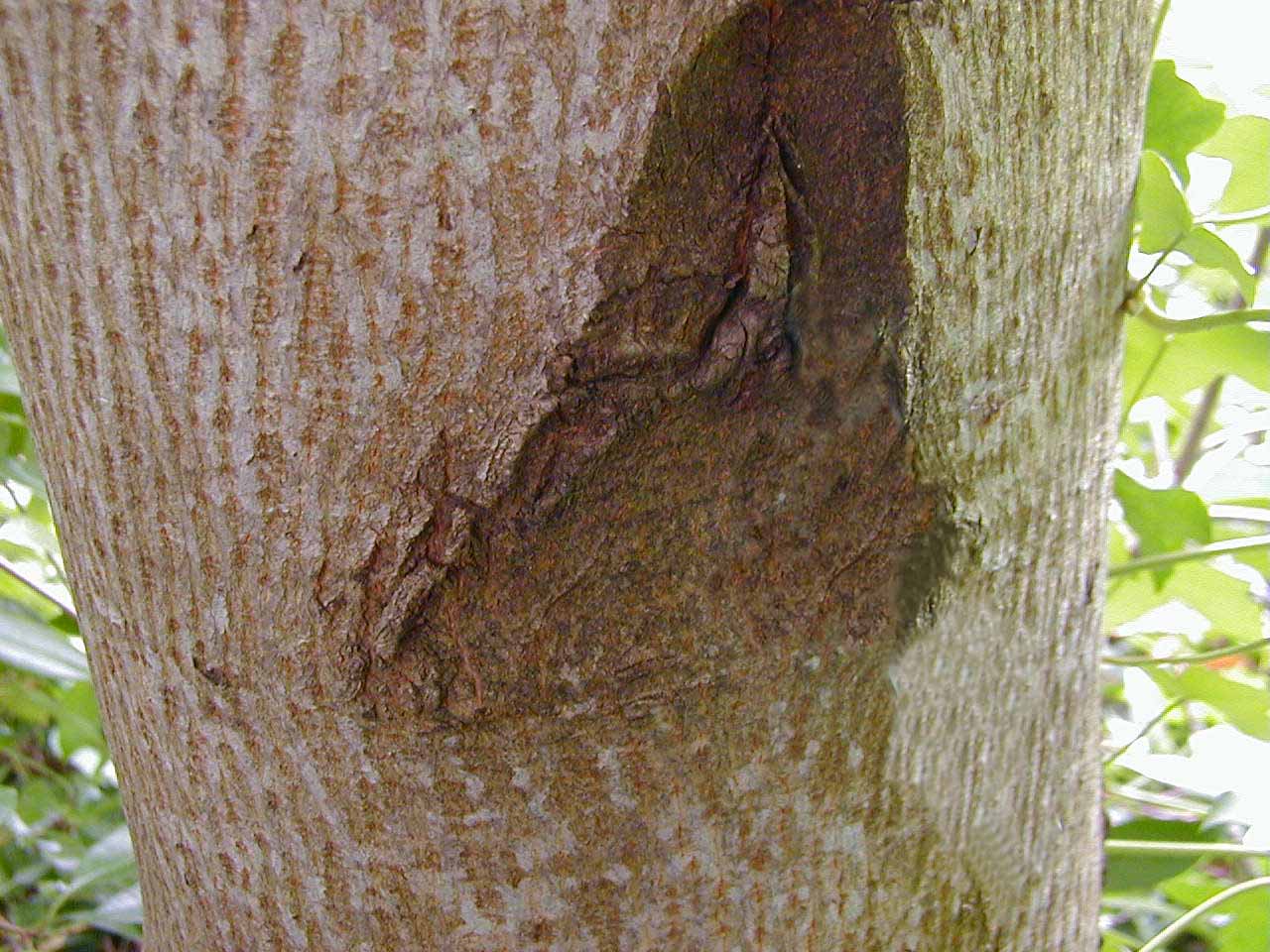
Today’s photo is courtesy of Photoshop technology.  I’ve edited the damaged area so you can’t see what caused, or at least contributed to, the damage:

Now before you complain that I’m cheating (which I am!) keep in mind that what I edited out could have been removed before you were asked to diagnose this injury.  I will tell you that it’s not due to pests or disease.  As is so often true in real life, there could easily be multiple correct answers. … Continue reading this article “Friday mystery photo”

Atrazine, The news, And the reality

A paper was recently published in the Proceedings of the National Academy of Sciences which discussed the dangers of one of the most commonly used weed killers in the United States, atrazine.  This paper was written by Tyrone Hayes and colleagues and was immediately embraced by the media because it showed something scary (which the media loves — in case you were wondering).  In a nutshell this study showed that frogs were changed from males to females when they were exposed to relatively small amounts of the herbicide atrazine. … Continue reading this article “Atrazine, The news, And the reality”

You say tomato, I say phytochrome

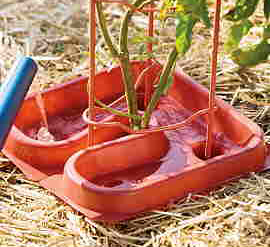
Yesterday I got an interesting email about a new product – a Tomato Automator.  Briefly, this square, red plastic disk slips around the stem of a tomato plant to suppress weeds and pests.  Most intriguingly, we’re told that the color “triggers a natural plant protein that makes tomatoes mature faster and product more fruit.”

Given this is a red product, it’s likely that the protein referred to is phytochrome (literally, “plant pigment”).  Phytochrome activity is maddeningly complicated to explain, so we’re going to keep this simple and refer (somewhat inaccurately) to “active” and “inactive” forms of phytochrome. … Continue reading this article “You say tomato, I say phytochrome”

I’m Saving Myself for Pollination

Let’s take a very brief respite from the socio-religious implications of science, soil testing, and compost tea to ponder a more lighthearted topic. I need a bit of a morale-boost.

You: “O.K. Holly, Spring’s allegedly coming…how about a closer look at some wildflowers?”

Me: “Done!” (fingers snapping)

For a short time in March, forest floors across Eastern North America can be absolutely littered with a multitude of sparkling white flowers.  This very cool little plant, Sanguinaria canadensis, is one of the first wildflowers to emerge in the spring and colonizes deciduous and mixed woodlands.… Continue reading this article “I’m Saving Myself for Pollination”

Art, Science, and Faith

First of all, who we are and what we do.  All of the Garden Professors are in the business of the science of Horticulture.  What’s Horticulture?  The standard definition of Horticulture is the art and science of tending a garden.  Horticulture is clearly more than science but science is the foundation and underpinning.   For anyone that needs convincing that Horticulture is an art as much as a science I suggest the following exercise.  Go to a major research university and wander through their Botany or Plant Biology greenhouses.… Continue reading this article “Art, Science, and Faith”

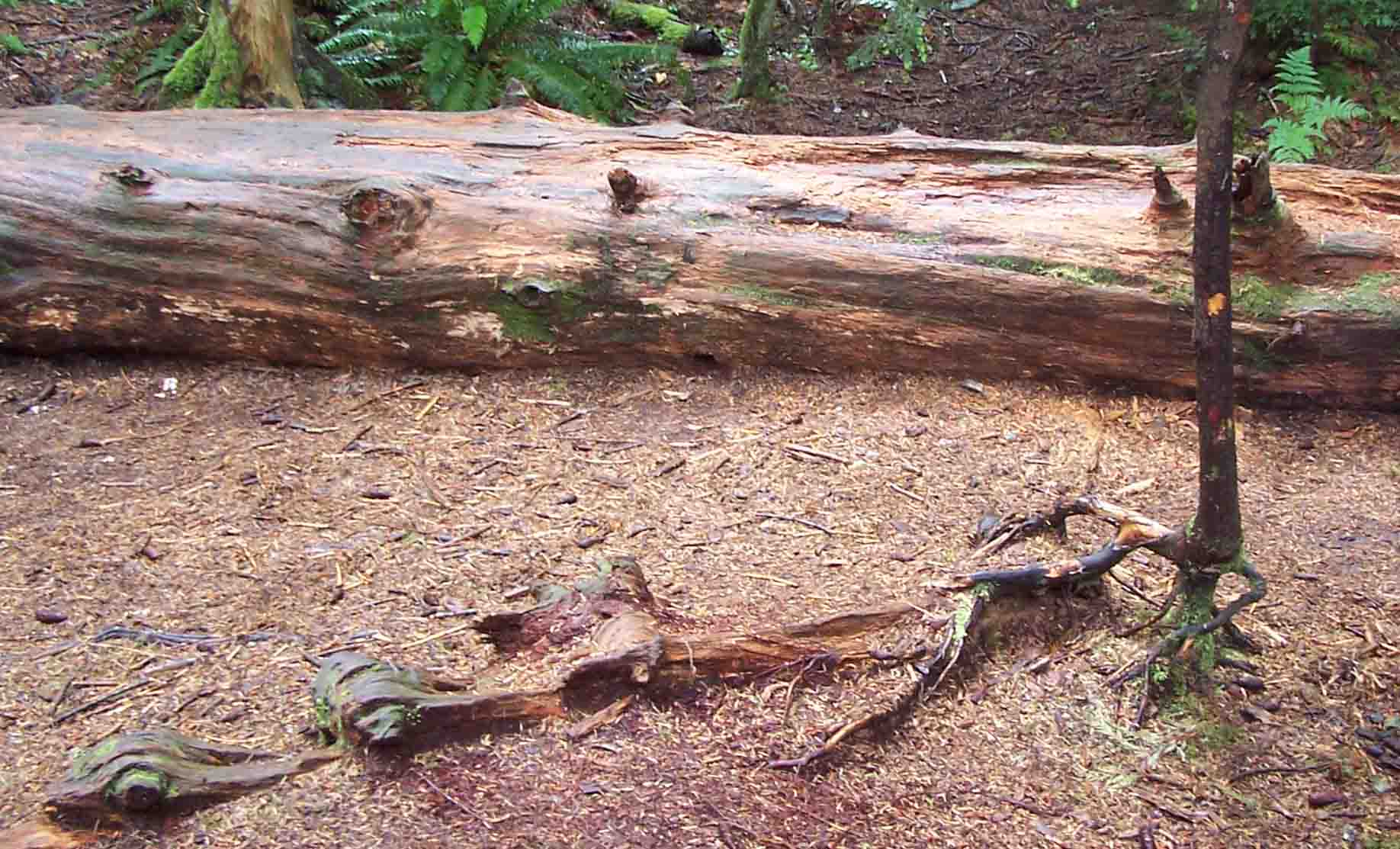
Friday puzzle solved!

Lots of brainstorming over the weekend, and all the answers were legitimate.  A few people came close with the observation that the roots looked like they had grown over something.  And that’s exactly right:

This is a great example of nurse log decomposition.  When the tree on the right first began growing (and it could have been decades ago), it sent lateral roots out, over, and around the nurse log to reach the soil.  As the nurse log degraded, the tree’s roots were left high and dry, outlining the girth of the original log.… Continue reading this article “Friday puzzle solved!”

Friday puzzle

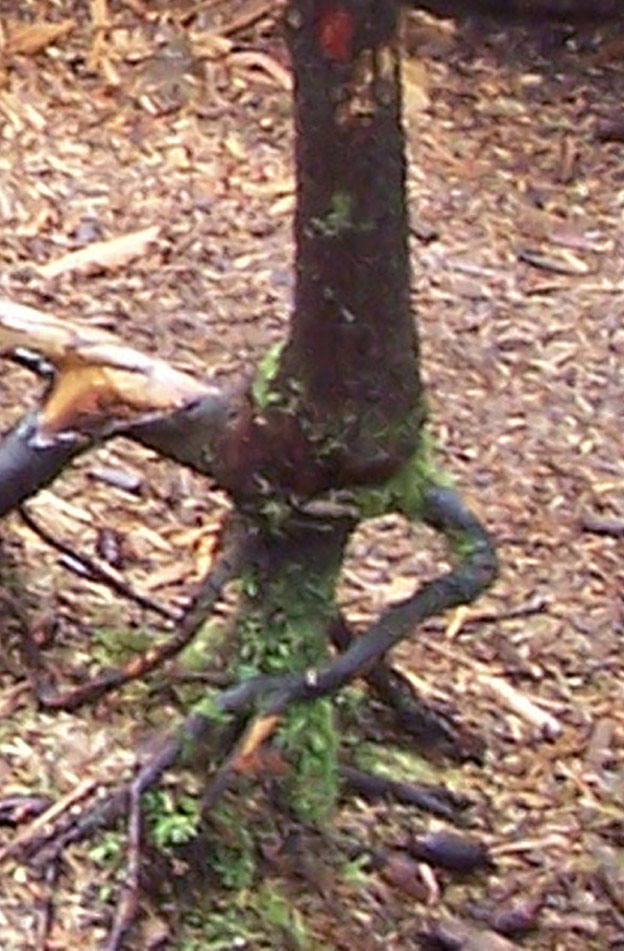
Finally – something else to do rather than post to the IAL blog!  On to today’s photo (and I apologize for its blurriness).

The tree in this photo is alive, and as you can see has structural roots perched well above the soil.  How might this have happened?  There are multiple possibilities.  And secondly, is there a negative impact on the tree, and if so, what?  Answers and another photo on Monday!

Have a nice weekend! 

Two new postings on compost tea efficacy – and safety

We just don’t have enough excitement on the blog, so I thought I’d bring up two new items that just crossed my virtual desk.  The first is today’s Garden Rant posting from Susan Harris.  I won’t spoil her well-written blog, but if you’ve been following the debate on the disease-control properties of compost tea, you’ll be interested in reading it.

The second was in an email from a colleague at the EPA on a new journal article. … Continue reading this article “Two new postings on compost tea efficacy – and safety”

My Favorite Drug

I love coffee, but I’m not a big coffee drinker.  On average I probably consume a cup of coffee every week or two.  Why don’t I drink it more often?  For a few reasons: First, I’m too jumpy/jittery/nervous to begin with and I don’t need this stuff making it worse, second, it tends to upset my stomach if I haven’t had a meal beforehand, and third, while I like regular coffee, the stuff that I really love are those insane fru-fru coffee drinks that you can only get at specialty shops for five or six bucks — which seems like a waste of money to me.  … Continue reading this article “My Favorite Drug”