Root washed perennials – 3 months later

You’ll recall that in July I posted about root-washing perennials before planting them in the middle of our typically hot and dry summer in the Pacific Northwest.  I wanted to update everyone on how they performed now that we’re heading into our cooler and wetter fall months.

Just to remind you, here’s a photo of the garden right after planting:

And here is the same garden, 3 months later:

No plants died; in fact, as you can tell, they all thrived.… Continue reading this article “Root washed perennials – 3 months later”
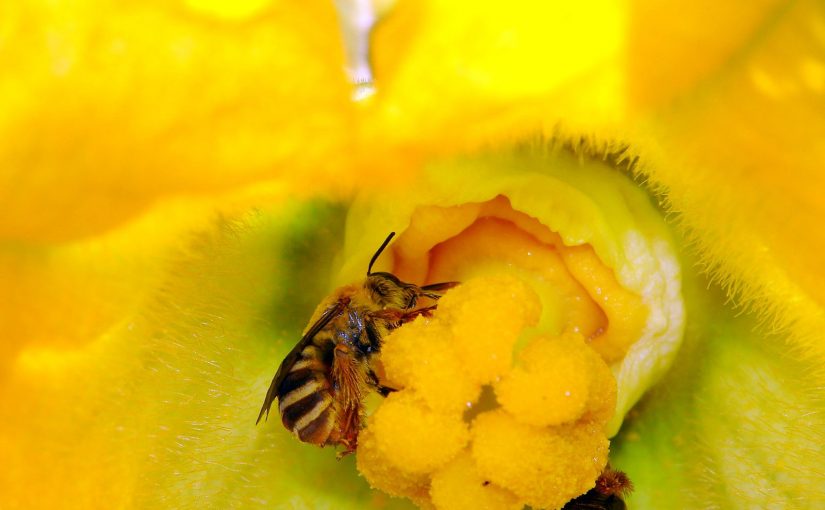
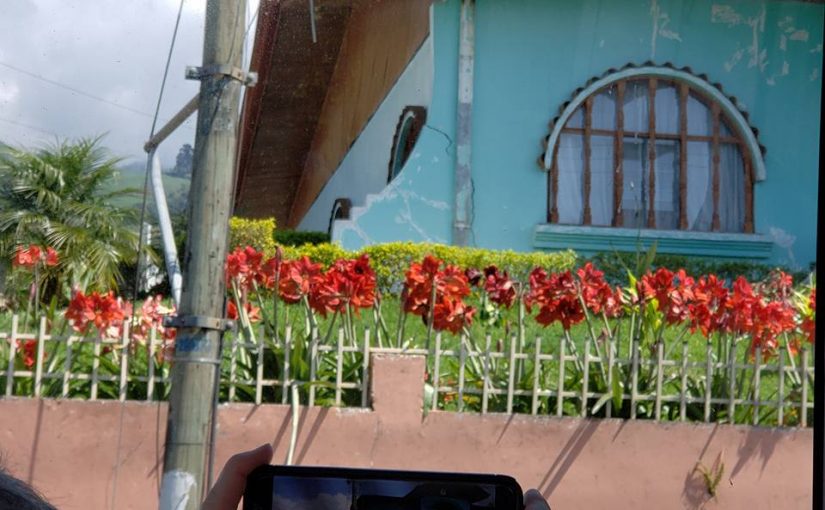
My cucurbits won’t stop having sex.

Not really a botanically-correct statement, but you know what I mean. John Porter’s previous blog post did a great job of explaining cucurbit reproduction (loved the Pucchini). Though I was surprised to learn “not getting any fruit” is actually a problem. Can’t say I’ve had an issue with that, ever. We have a really vibrant bee population and they’ve been super busy.

I love growing squash of all sorts, despite not being a terribly gifted vegetable garder.… Continue reading this article “My cucurbits won’t stop having sex.”

Sex and the Single Squash: A study in plant sex, sexuality, reproduction, and seed saving

In the 1960s, author and future Cosmopolitan magazine Editor Helen Gurley Brown scandalized the country with her book about independent single women called “Sex and the Single Girl.”  Taking a page from Ms. Brown, we can have a discussion about “Sex and the Single Squash.”  Here, we can talk about plant floral structure and reproduction and its effect on fruit production and even seed saving.  A true discussion of the “birds and the bees” if you will.… Continue reading this article “Sex and the Single Squash: A study in plant sex, sexuality, reproduction, and seed saving”

The search for bogus info and products continues!

The Garden Professors, led by our warrior princess Dr. Linda Chalker-Scott, continue to ferret out bad advice, bogus information, and worthless products foisted upon the unsuspecting gardener.

I’m assisting in the hunt as well.  See my survey link below.  Looking specifically for :

1) Gardening-related blogs and vlogs (video blogs) that are out there – could be anywhere on the spectrum of misinformation: spewing pseudoscience or just plain malarkey.  Or some of the content is o.k., … Continue reading this article “The search for bogus info and products continues!”

You, too, can be up to your pits in perennials!

(posted by Holly Scoggins)
The Perennial Plant Association (PPA) is a unique group of folks – comprised of plant breeders, educators, propagators, promoters, garden writers, growers, retailers, gardeners, and landscape designers – all under one umbrella. The PPA is probably one of the most vertically-integrated plant organizations out there. If it has anything to do with a perennial plant, there’s a good chance one of our members is involved.

The marvelous/legendary PPA Symposium has been held in all parts of the country.… Continue reading this article “You, too, can be up to your pits in perennials!”

Costs and benefits of pre-plant root manipulation

Spring has sprung here in Michigan; time to get cracking on lots of projects. One of our new projects is an investigation of pre-plant techniques for dealing with root systems on container grown trees. As many of you know, Linda Chalker-Scott is advocate of bare-rooting trees before planting to correct potential root defects before planting. As some of you may know, I’m skeptical of this approach. It’s not that I think root systems are perfect – far from it.… Continue reading this article “Costs and benefits of pre-plant root manipulation”

It’s all about location, location, location

Whenever we (the Garden Professors and our community) answer garden questions, we almost always will ask the location of the garden.  I’m sure this frustrates some people who think that plants act the same wherever they are.  However, this is not the case.  There isn’t a one-size-fits-all to most garden questions.

For example, I work on the east side of Nebraska in Omaha, along the Missouri river.  The environment (weather, soil, etc) here is vastly different than where I’ve spent most of my life in West Virginia. … Continue reading this article “It’s all about location, location, location”

Master Gardeners at a crossroads

{Warning. Today’s post is a rant. So I’ve illustrated it with pretty flowers in soothing colors to make it more palatable.)

Anyone who gardens in the United States will be familiar with Master Gardeners. The Master Gardener program was started by Washington State University in 1971, when Extension agents in the largest urban counties found themselves overwhelmed with questions from the gardening public. These agents proposed training volunteers to help with educational outreach efforts, and with support from the university the first Master Gardener program was born.… Continue reading this article “Master Gardeners at a crossroads”

Arbor Day of Horrors

Happy Arbor Day!  What, you aren’t celebrating?  As a recent transplant to the state of Nebraska, I was amazed to learn that the Cornhusker State is the birthplace of the day we set aside to celebrate trees.  (Since most people associate the state with corn, football fanatics, and steak).  And since Arbor Day is near and dear to Nebraska, it is the only state that celebrates it as a civic holiday (most state offices were closed – no drivers license for you!).… Continue reading this article “Arbor Day of Horrors”

Cryptic cladophylls – stems hiding in plain sight

One of my favorite topics back when I taught Botany 101 was plant oddities. A recent question on our Garden Professors’ discussion group on Facebook reminded me about cladophylls, like the one pictured below.

Cladophyll literally means “branch leaf.” Anatomically it’s a branch (it has nodes from which new stems, leaves, flowers, and even roots can arise), but it functions as a leaf. It’s the main site of photosynthesis in plants such as holiday cacti (Schlumbergera species).… Continue reading this article “Cryptic cladophylls – stems hiding in plain sight”