One of our international readers, Johannes, sent along this web site of photographs demonstrating what happens when trees meet immobile objects. The text is in German, but the photos are self-explanatory.
One of our international readers, Johannes, sent along this web site of photographs demonstrating what happens when trees meet immobile objects. The text is in German, but the photos are self-explanatory.
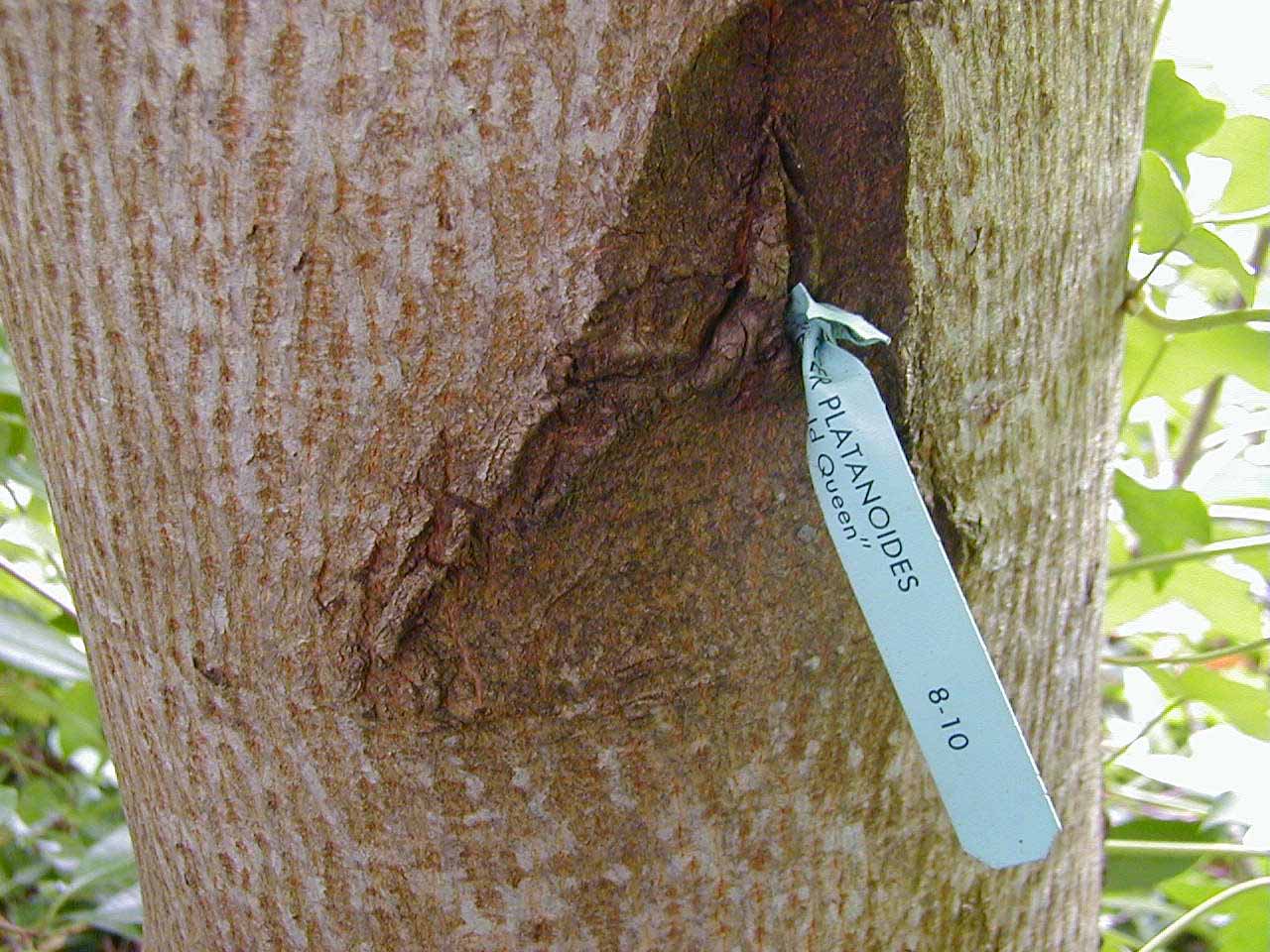
Once again you had some great diagnoses! The popular view was neglected staking material, and you were right:
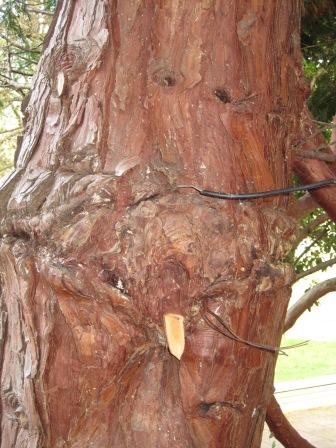
Peter’s answer was my favorite (I love puns – the worse the better!). Tom, I hestitate to ask about your previous experience here….
As usual, thanks to all of you for playing our quiz. I’ll try to be better about doing this every Friday. Our survey results indicated you like this feature a lot.
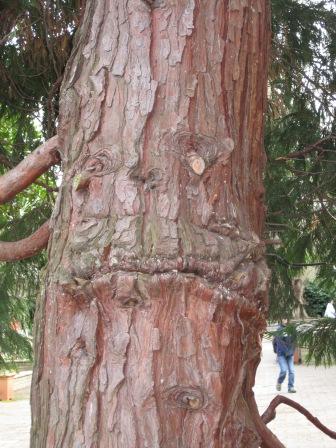
Why is this western red cedar (Thuja plicata) so angry? (Hopefully you can see the two “eyes,” nose and mouth.)
Answer on Monday!
I was gently reminded last week that I never published the results of our survey, asking our readers for feedback on the first full year of posting on The Garden Professors. All four of us are extremely grateful to those of you that participated, as we could use this information in our annual reporting and reviews. Thank you all for taking the time.
To keep this from being too long for our blog, I’m going to just cover the first two questions today. … Continue reading this article “Blog Survey Results, Part 1”
In the last few years, I’ve had a number of people ask me about biochar: what is it and what does it do? Should they add it to their garden? Should they make their own biochar? So while the subject deserves a longer review, I thought it would be useful to discuss it briefly on the blog.
In the strictest sense, “biochar” refers to charcoal that’s made as a byproduct of biofuel production. Various crop residues, livestock manures, and just about any other organic material you can imagine has been studied for this purpose. … Continue reading this article “Should we use biochars in our gardens?”
Looks like I was too easy on you Friday! Most of the you correctly noted that this “devil’s fork” is most likely the result of topping by a human or nature:
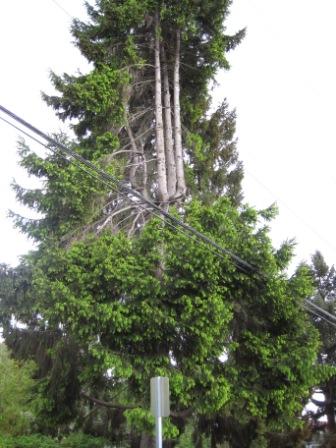
Given that there are powerlines nearby, and more importantly a view to the water downhill, it’s likely that someone deliberately headed this Douglas fir (Pseudotsuga menziesii) back. On the other hand, this species will commonly lose branches, and often their leaders, in a windstorm.… Continue reading this article “Friendly firs follow-up”
Since Valentine’s Day is coming, today’s quiz features a situation that’s a little too close for comfort:

This is not the result of three trees being planted too closely together, either by a person or by nature. What is it the result of?
Answer and another picture on Monday!
[I enjoyed Jeff’s Valentine story so much that I thought I’d stick to the theme of togetherness…for better or worse.]
A week or so ago a reader asked about the practice of planting three or four fruit trees in the same hole. Having not heard of this before, I checked on the web and found many “how to” pages geared to home gardeners who either want a longer harvest of a particular fruit (early to late) or a mixture of different species. … Continue reading this article “Planting trouble: multiple trees in one hole”
So many great answers…so many problems with this landscape! Everyone who made a comment was spot on in their reasoning. And each of these flaws was completely preventable with good design. But I’m not sure I would have been able to predict the problem that I now see every week at this location:
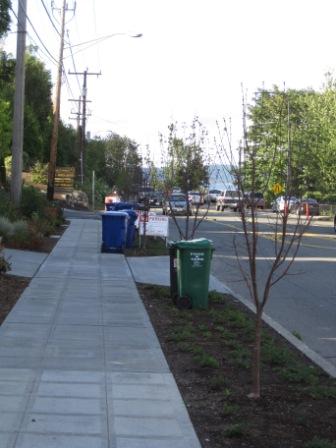
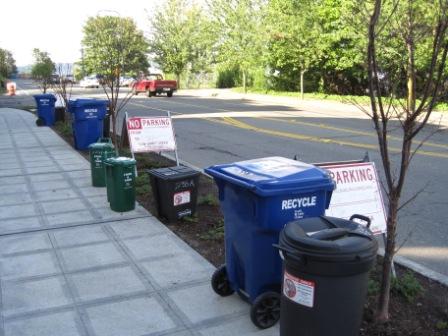
his area is the only access point for service vehicles of any persuasion. And sometimes they DO park on top of the planting strip. … Continue reading this article “Landscape design – fatal flaw”
Down the street a ways from where we live is a relatively new condo complex wedged between a hill and the street. A narrow planting strip separates the sidewalk from the street, as shown below:
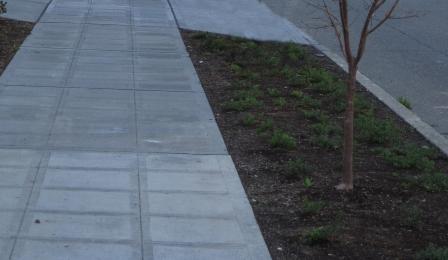
The driveway at the top of the photo bisects the planting strip and dead ends in the parking area for the condos. I have photoshopped this a bit, for reasons you’ll see on Monday. But this is a true representation of the landscape.… Continue reading this article “Friday quiz – landscape design”