A followup on the WOW post of last week

There was considerable interest in my post last week, where I shared a photo from Canadian garden writer David Hobson. I wasn’t impressed with the production method and materials for the petunia that was illustrated, but readers wanted to know a little more about the plant (how did the top of it look?) and the mesh encasing the root ball. So I contacted David, and he graciously shared some more information and photos with me.

Here are David’s comments:

“Attached are three photos.… Continue reading this article “A followup on the WOW post of last week”
Tree research continued

Not to be outdone by Bert’s recent postings, I thought I’d show you what’s going on with MY tree research in Washington State.

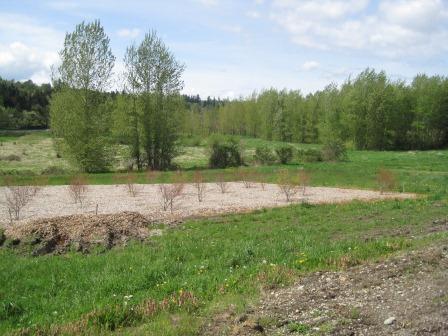
As you might remember, we installed 40 1-gallon mugo pines and 40 B&B Japanese maples at the end of December 2011.  Here’s a photo of the site in April of this year:

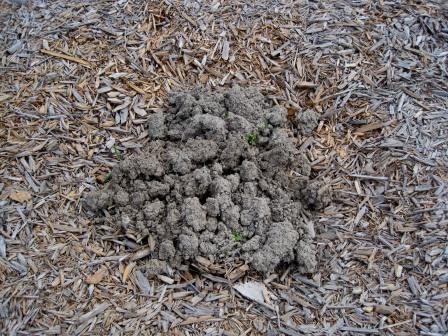
I’ve been collecting data on above-ground growth during this year, but have had an unexpected twist to my research, as shown here:

That’s a pine tree.… Continue reading this article “Tree research continued”

Another WOW (why oh why) – “biodegradable” mesh for plugs

David Hobson, a garden columnist, sent me this great photo of his petunia planted earlier this year. Take a look at the root growth (or lack thereof):

I’m not sure where this particular product came from, but it looks a lot like a FERTISS propagation plug.  Here’s a description from their website of this product.”FERTISS is a ready-to-use, pre-filled propagation tray system. Cuttings are placed in a mixture of peat and perlite wrapped in a non-woven fabric.
Continue reading this article “Another WOW (why oh why) – “biodegradable” mesh for plugs”

New study on pesticide use and GMOs

Some environmental extremists discount agricultural research done by universities, because they receive funding from Big Ag and therefore their researchers can’t be trusted. So this news report of a recent study by one of my Washington State University colleagues is doubly important: it dispells this baseless assertion and it provides some significant – and troubling – information about pesticide use and GMO crops.

Briefly, the article links an increased use of herbicides as a result of increased use of GMOs such as Roundup-ready crops.… Continue reading this article “New study on pesticide use and GMOs”

An unwanted bonus in your urban chickens

Longtime reader Ray Eckhart sent me a NYT story on urban chicken eggs and lead contamination.  As I’ve mentioned before on this blog, urban gardeners should have their soils tested for lead, arsenic, and other commonly found heavy metals before they plant edibles.  Chickens that are allowed to peck and scratch in metal-contaminated soils will pass that unwanted load on to you via their eggs.

So test your soils!  It costs a bit of money, but then you know exactly what’s lurking in there. … Continue reading this article “An unwanted bonus in your urban chickens”

Plant sentience – a slippery slope

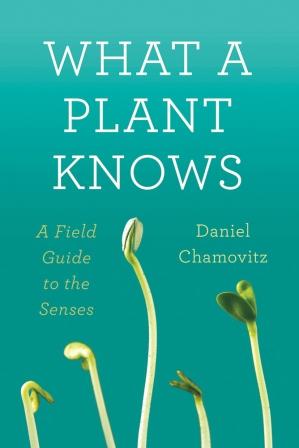
I maintain a “Garden Professors blog” group on Facebook, where people can pose questions and make suggestions. Ellyn Shea asked about the trend towards calling plants sentient, especially given the new book by Daniel Chamovitz – What a Plant Knows: A Field Guide to the Senses

Dr. Chamovitz is a respected scientist, and there is no doubt that plants sense and respond to their environment in ways we are still learning to understand. But couching plant responses in language associated with human sentience is a slippery slope. … Continue reading this article “Plant sentience – a slippery slope”

Why it’s important to prune tree roots before planting

This week I discovered that one of our center’s landscape trees is ready to bite the dust. I was sad – but also happy.  It’s a wonderful teaching moment and if the tree has to give up its life to save others, I guess that’s okay.

As the video will show you, this Japanese maple was planted some years ago with a root circling the trunk.  As both the trunk and root have developed in girth, we’ve reached a point where the trunk is constricted and the weight of the tree is splitting this V-shaped specimen down the middle just like a turkey wishbone. … Continue reading this article “Why it’s important to prune tree roots before planting”

Point of view: tree fouls out

A few weeks ago the Seattle Times ran a story about a tree whose existence is straining a long-term neighborly relationship. The feud’s between former Mariners first baseman John Olerud and his neighbor Bruce Baker, both of whom live in the Clyde Hill area (a bit north of Bill Gates’ place in Medina). Baker owns a Chinese pine (red or white, I’m not sure, but I’m guessing red based on the photos) which interferes with Olerud’s view of Lake Washington and the Seattle skyline.… Continue reading this article “Point of view: tree fouls out”

Deconstructing the cornmeal myth

Back in June of 2010, I wrote about an online column that recommended applying cornmeal as an antifungal soil amendment. (Important note: we are not talking about corn gluten meal. Just cornmeal.) The upshot of the post was while some gardening personalities extol the use of cornmeal to kill soil pathogens like Rhizoctonia and Sclerotinia, no published science supports the practice.  The post was effective in encouraging the author of the referenced online column to update her information, but the controversy didn’t die.… Continue reading this article “Deconstructing the cornmeal myth”

A plant riddle for you

This week Jeff, Bert and I are brainstorming new and exciting ways that The Garden Professors can invade…I mean integrate into…the gardening world. (We’re channeling Holly, who had a conflict with another even this week.)  We’ll leave discussion of the particulars for another day.  But that’s my segue into my text-short but picture-perfect invasive plant story.

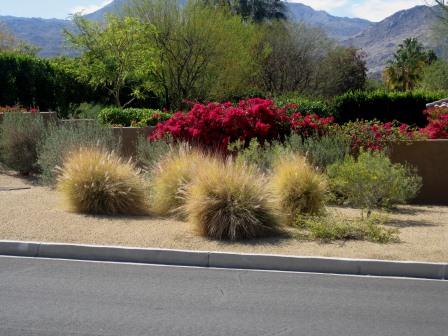
Earlier this spring I was in Palm Desert and spotted a large clumb of purple fountain grass (Pennisetum setaceum) in a landscape:

So here is the riddle: Why did the fountain grass cross the road?… Continue reading this article “A plant riddle for you”