Safety first?

I was driving around town recently and saw a tree service crew clearing up some storm damaged trees. Because of my line of work I usually do a little rubber-necking and try to assess why type of tree came down and what issues may have preceded it’s demise. In this case, however, I was struck not by the trees but by the tree crew. What I saw left me speechless. Well, here, see for yourself…
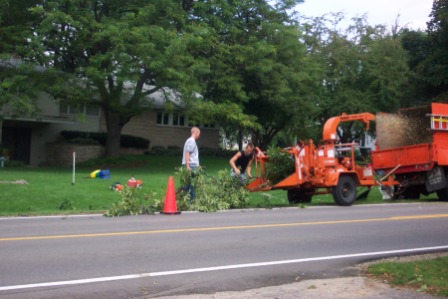
 

No eye protection. … Continue reading this article “Safety first?”
Trees: Dead or Alive

In light of the comments on Dr. Jeff’s latest post (When Trees Don’t Know They’re Dead), especially those by Shawn, Ed, and Dr. Linda, I absolutely have to post this.

To the best of my knowledge, the number of stand-up comedian bits related to tree health can be counted on one finger. Here it is, transcribed, as close as I can without having Linda ban me from the blog/WSU server.

Ron White is a big, bawdy, laid-back Texan, permanently armed with a cigar, glass of scotch, and high-beam smile. … Continue reading this article “Trees: Dead or Alive”

Science Education and Lichens

Seemingly once a week we see a report in the news about how Science and Math education in the US lags behind many developed countries around the world.  http://articles.cnn.com/2011-05-15/us/education.obrien.response_1_math-and-science-national-robotics-competition-education?_s=PM:US

While we typically think of Chemistry and Physics when discussing science education, biology is in there too.


I bring this up because I am continually amazed at how little many people know about basic biology.  Some of this funnels its way into extension calls and e-mails. … Continue reading this article “Science Education and Lichens”

When Trees Don’t Know They’re Dead.

Last week a neighbor of mine called me up to ask how likely it was that their 4 year old (or so) crab apple tree was dead.  Sometime over the course of the winter cute fuzzy bunnies had decided that the tree’s bark was tasty and decided to eat it.  Naturally they ate it all the way around the circumference of the tree with the exception of a strip about an inch wide.  At this point you’re probably asking yourself why the neighbors suspected the tree might be alive. … Continue reading this article “When Trees Don’t Know They’re Dead.”

Harvesting an Experiment

This has been an exciting week for me.  On Monday we started cleaning off 72 rootballs of various tree species that had been planted 5 years ago for a study.  These trees had been planted in containers and become potbound at the nursery from which we received them.  We treated them in one of three ways.  Either we did nothing (in other words we just dropped the pot bound tree in a hole), we used the standard methods that Universities recommend for slicing potbound roots (Four deep slits down the sides and a deeply cut X across the bottom), or we cut off all of the circling roots by cutting the pot bound root system into a box shape.… Continue reading this article “Harvesting an Experiment”

Guest inquisitor reveals all

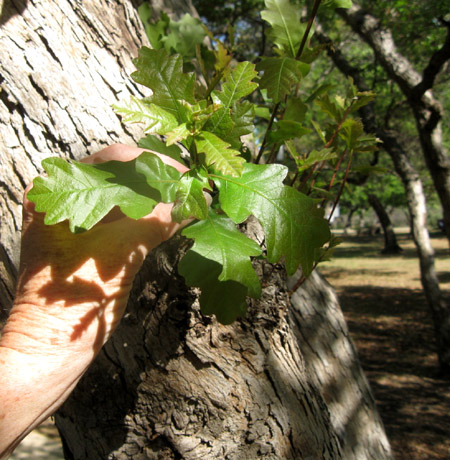
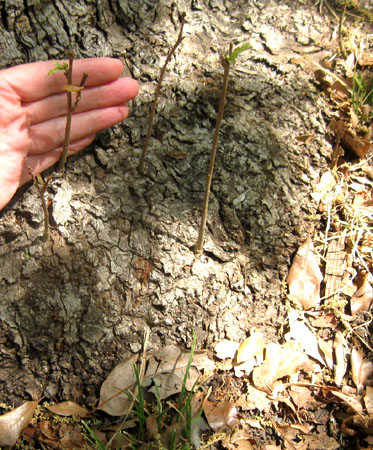
The odd oak in Friday’s photos is shin oak, or Quercus sinuata var. breviloba:


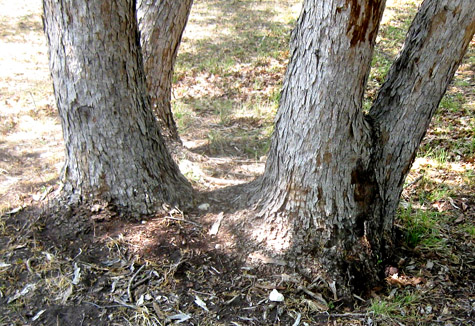
This trunk “puddle” is a really cool adaptation called a lignotuber (good job Matilija!) or burl.  These are common in woody plants found in wildfire zones.  New sprouts can arise after fires have roared through, or perhaps after heavy browsing by deer, as the park ranger suggested to Ginny, our guest inquisitor.

Thanks, Ginny, for sharing the photos and question.  If you have an interesting plant quiz topic, preferrably with pictures, feel free to pass it on for our Friday Question!

Friday quiz – guest inquisitor!

Reader Ginny Stibolt passed this one on to mull over the weekend:

“We stayed at the Llano River State Park in Texas where I spotted this weird growth pattern of a gnarly oak–it’s like a puddle of trunk from which the main trunk arises. The camp host, who seemed to be well informed, said that these were Spanish oaks in the white oak division and that a root disease causes the expansion of the base of the trees.… Continue reading this article “Friday quiz – guest inquisitor!”

Looking for the lowdown on tree rings

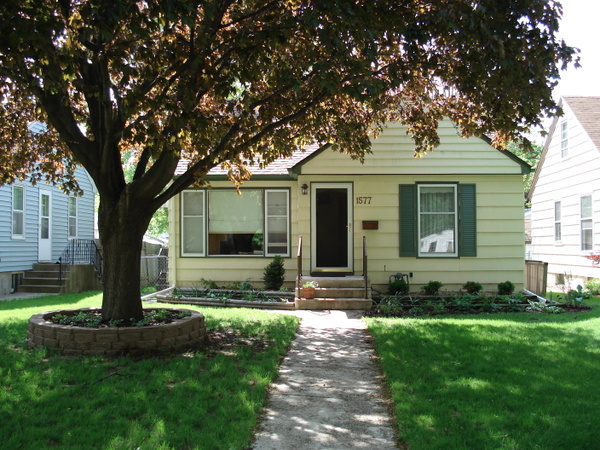
Often we use our blog space as a soapbox from which to pontificate, but today I’m looking for some input from our loyal readers.  Last week I received a note from an editor looking for some words about tree rings.  We’re talking about landscape tree rings for planting annuals or perennials, not dendrochronology.


The editor was interested in specifics on tree rings for large existing trees such as what type of materials to use, what types of flowers or plants worked best, which trees can or can’t have tree rings, etc.  … Continue reading this article “Looking for the lowdown on tree rings”

Wet trunk – the whole story

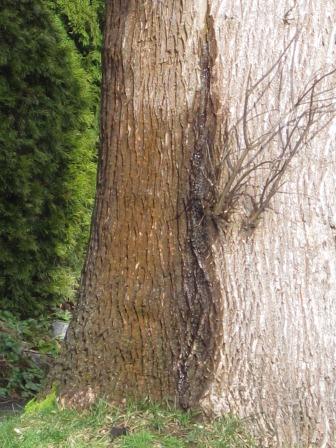
We had a flurry of discussion on this over the weekend. The diversity of possible answers shows you how difficult it is to do diagnosis with only some of the information available. That being said, several of you (Gail, Tom, Dave and Jimbo) all had portions of the problem identified. Here’s the whole picture:

As both trunks of this double-leadered tree have continued to expand in girth, they’ve created the perfect conditions for disease to occur in the narrow constriction between the trunks.… Continue reading this article “Wet trunk – the whole story”

Friday puzzle: wet trunk

Another diagnostic question today.  Below you can see the lower portion of a tree trunk whose left half is obviously wet:

What is directly causing the wetness (in other words, what environmental factor), and can you guess what led to this problem indirectly?

I’ll eliminate some of the obvious possibilities:  it’s not from dog pee, nor is it from a directional sprinkler.  And the answer to the second question is not in this close up photo, but will be revealed on Monday.… Continue reading this article “Friday puzzle: wet trunk”