North Creek Nurseries in Landenberg, PA is a marvelous, native-centric (but not exclusively native) nursery. North Creek is a wholesale propagator (sells liners
to other nurseries for finishing). But if you can meet the $300 minimum, they’d probably be happy to fill your order. They have, among the usual liner sizes, a very neat product – "Landscape Plugs." I’ve been wanting to try them for a while – our work with the backhoe this past summer cleared some nice large swathes of the cursed autumn olive, and made room for perennials. … Continue reading this article “A great way to plant perennials “en masse””
The new American chestnut tree: resistant survivor or Frankentree?
Recently ScienceDaily.com posted an article about American chestnut trees due to be planted in New York City. Researchers hope that these trees will be resistant to chestnut blight, an introduced fungal disease that pretty much wiped out mature specimens over the last 100 years.
When I lived in Buffalo, I was a member of the American Chestnut Foundation and every spring I helped with efforts to replant chestnuts in the hopes that resistant individuals might be found. … Continue reading this article “The new American chestnut tree: resistant survivor or Frankentree?”
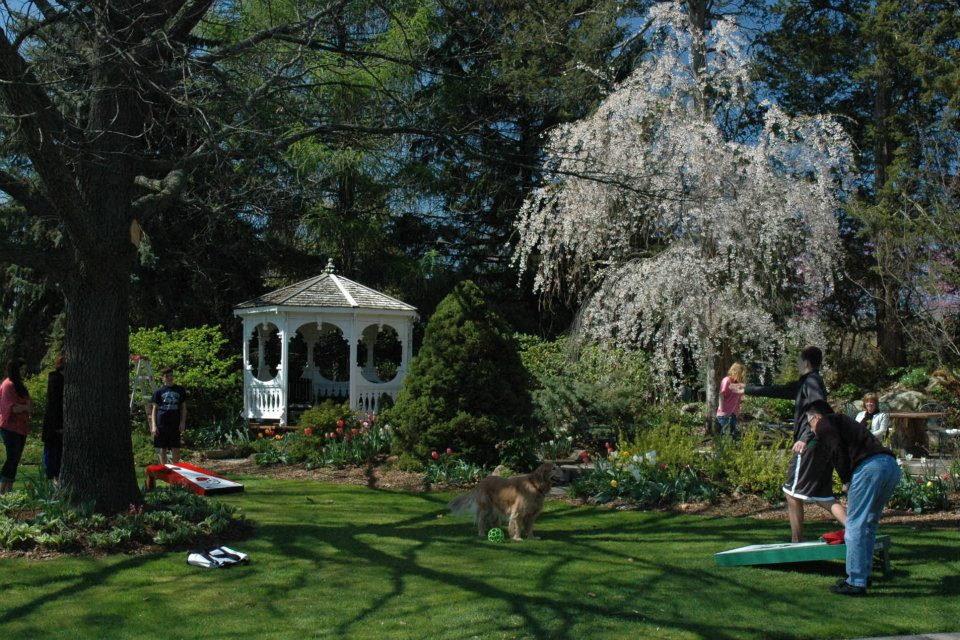
Opening day of Cornhole season 2012
Well, things continue to run fast and furious as we get rolling for a new round of field research projects. But we did find a little time to break out the Cornhole set and initiate a new season at Daisy Hill farm. Life is good!
Cypress mulch re-visited
After Jeff’s recent eclectic musical selection of Rasputina’s 1816, I thought I’d go a little more mainstream with Lynard Skynard’s ‘Swamp music’. Turn it up and remember; if it’s too loud, you’re too old. http://www.youtube.com/watch?v=_wJWBcj7lsY

So, what got me thinking about the swampy backwoods down South and the late, great Ronnie Van Zant? The arrival of pallet after pallet of bagged cypress mulch at every gas station/convenience store in the area. Like the first robin, the annual appearance of bagged cypress mulch is another harbinger of spring. … Continue reading this article “Cypress mulch re-visited”
Quiz answer – difference between spores and pollen
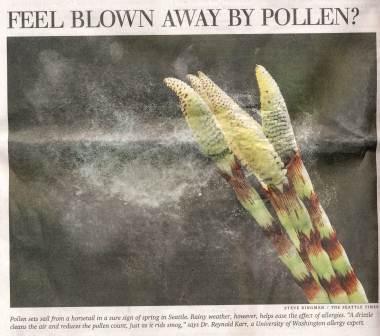
You got it! Horsetails don’t produce pollen, and those airborne particles are spores. Primitive plants such as mosses, ferns, and horsetails don’t have the same reproductive structures as flowering plants and conifers. Instead of producing seeds, they form tiny, windborne spores that can be mistaken for pollen.
(To its credit, the Seattle Times corrected this error the next day.)
Friday quiz – what’s wrong with this picture?
My sharp-eyed husband spotted this on the front page of yesterday’s paper:
Answer Monday!
Rotenone in Dog Medication
Rotenone is an organic insecticide that has been voluntarily withdrawn by its manufacturer because it’s quite toxic, it’s dangerous to the environment, and there is some evidence that it causes Parkinson’s disease. And there are safer choices. For my post today I was thinking of posting about all of the places I could still buy rotenone, but after doing a web search I couldn’t find many – and most of the places I found to purchase it don’t really have it (I don’t think) – they’re just old pages that weren’t taken down.… Continue reading this article “Rotenone in Dog Medication”
Bees bees bees!
With 60+ newbies in our local beginner beekeeping class, we can safely say that beekeeping is enjoying a surge of popularity. The president of our area beekeeping association is bringing 150 packages of bees up from Georgia next Thursday; all are pre-sold to members. That’s about 1.8 million honeybees (includes one queen per package). An additional 50 packages will arrive the following week for close to 3 million bees. Wow.
I’ve planned to take the afternoon off (Beefest!)… Continue reading this article “Bees bees bees!”
WOW returns! (Why oh why?)
It’s spring, and everyone is itching to buy stuff at the nursery. I’m there too, with my camera as well as my wallet. I thought you might enjoy some of my “Things to avoid when you are plant shopping” collection:
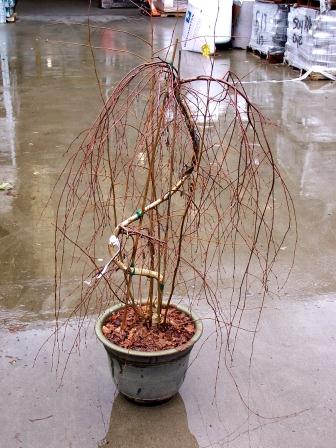
These are called “Serpentine.” I call them unnatural. Like foot-binding.
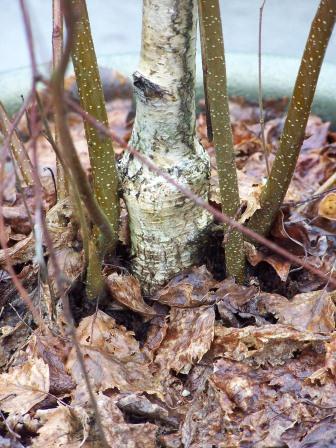 Rootstock revolt. The surest way to kill off your grafted scion.
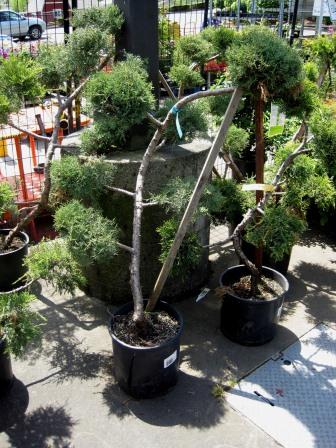 A botanical bow? Or a horticultural harp?
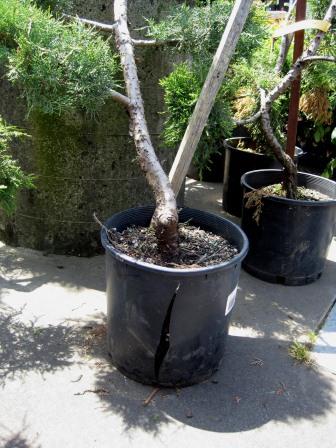 And check out the pot! If there’s enough root mass in there to crack the pot, you can bet it’s long past its potting up date.… Continue reading this article “WOW returns! (Why oh why?)”
Here we go again…
Despite Linda’s assertion to the contrary, I was not cow-tipping nor was I sampling micro-brews last week when I missed my regular post. As usual, the beginning of spring is a busy time on the research side of my appointment. This past week we began setting up for a major new project. The goal of our newest study is to look at physiological traits of street trees that may enable them to better withstand future climate change. … Continue reading this article “Here we go again…”