More fodder for the great root debate

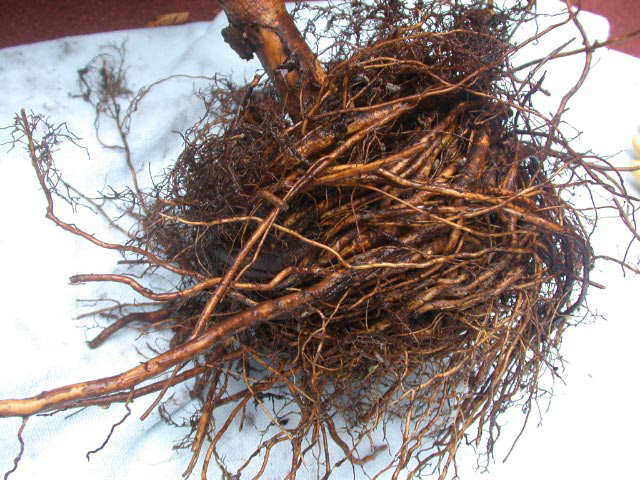
Unfortunately I can’t put this into the comment thread for Jeff’s post since it involves a link.  Bonnie Appleton sent her 2007 American Nurseryman article on root washing that readers might find interesting.  Thanks, Bonnie!

Can’t resist…must add photo…

Another look at TreeGators

Following up on Linda’s earlier comments about potential problems with TreeGators, my summer interns and I did a random spot check of about 150 TreeGators currently in use on the MSU campus.  As background, MSU Landscape Services plants about 1,200 trees and shrubs each year.  All newly-planted trees which are not on an automatic irrigation system are fitted with one or two TreeGators, which are filled from a water wagon every week or every two weeks, depending on weather.  … Continue reading this article “Another look at TreeGators”

Bare Root Trees

For the past 11 years I’ve been running a nursery at the University of Minnesota called the TRE (for Teaching, Research, and Extension) nursery where we research all kinds of fun stuff like Dutch elm disease, the dangers of mulching, and what happens when you plant a tree too deeply.  One of the most interesting things we’ve done recently, though, is to install Missouri gravel beds into the nursery.  Missouri gravel beds are called Missouri gravel beds because they were invented by Chris Starbuck, a professor at Missouri State. … Continue reading this article “Bare Root Trees”

Mmmmm…mulch!

It’s a nice sunny September day in Seattle and I’m in my happy place.  What better topic to match my mood than mulch?

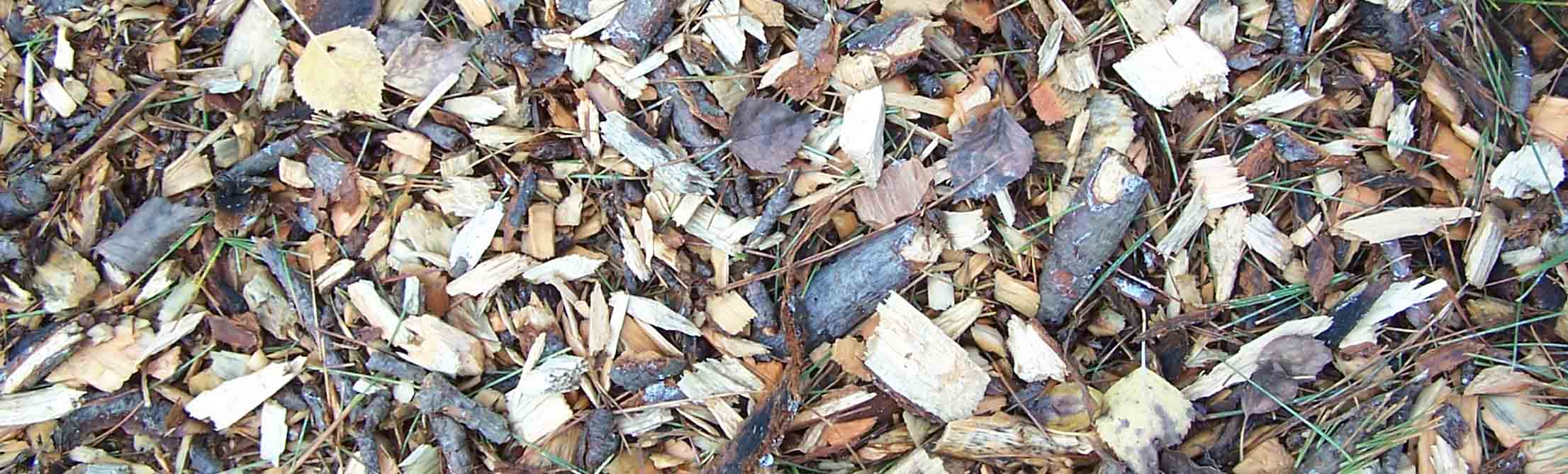
For those of you not familiar with my fixation on woody mulches, I’ll refer you to an article in MasterGardener Magazine here.  Briefly, I am a fan of coarse, chunky organic mulch, particularly arborist wood chips or other chipped material from trees and shrubs.

Rather than send this material off to the landfill, it’s so much better to use it as a protective layer on top of your landscape soil. … Continue reading this article “Mmmmm…mulch!”

A Brief Discussion on the Wisdom of Barberry as Median Plant

We never know who to blame (or, rarely, thank) for roadside or median plantings. State D.O.T.? Local municipality? Subcontractor to either of the previous?

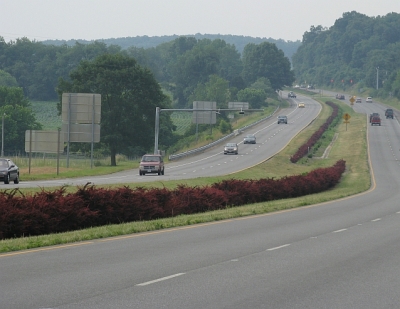
A few years ago, this appeared in the median of the Highway 460 bypass – the main road leading to Virginia Tech:

I am somehow reminded of Sideshow Bob from The Simpsons…

Two hedge rows. One of  green Japanese barberry (Berberis thunbergii, cultivar unknown); the other of the purple form (Berberis thunbergii var.… Continue reading this article “A Brief Discussion on the Wisdom of Barberry as Median Plant”

No Way! Something that actually works?

Sometimes I feel guilty because I always seem to be putting down the products that people sell to make their living.  But not today!  Today I’ve got something that actually works!  No, it isn’t pretty, and it does have some irritating problems, but I can honestly say that it does what the company that manufactures it says it does.  And that product is the Aqua Globe.

This is a very simple contraption (which is part of the reason that it works). … Continue reading this article “No Way! Something that actually works?”

Modern day torture stakes

Torture stakes were used centuries ago as a slow means of executing prisoners.  Unfortunately, the practice lives on every time someone incorrectly stakes a newly planted tree.  Though I’ve written about tree staking before (click here to read more), I’ll use today’s blog to demonstrate another unintended result of improper staking – decapitation. A normal tree develops taper as it grows.   At eye level, a tree trunk is narrower than it is at ground level:  that’s taper. … Continue reading this article “Modern day torture stakes”

Fabulous Sporobolus!

“Where have you been all my life?!!”

Every once and a while, I come across a plant and simply fall in love.

I  am not alone on this particular species, and the bandwagon is getting mighty crowded.  Sporobolus heterolepis is the object of my affections…it even has an intriguing common name – Prairie Dropseed. It’s native to much of North America, short of the West Coast.  Though most widespread in the Midwest, there are isolated populations in Virginia, North Carolina, and Pennsylvania.… Continue reading this article “Fabulous Sporobolus!”

Global Warming, Carbon Dioxide, and Plants

There was an article published recently that traced the melting of glaciers in the US over the last 50 years.  This study showed, pretty convincingly, that the glaciers are, indeed, melting, and melting rapidly.  Meanwhile, in our atmosphere, levels of carbon dioxide from humans burning fossil fuel are increasing in a manner roughly correlated to the increase in temperature that’s melting the glaciers.  But is the carbon dioxide actually causing the warming?  Believe it or not this is still an area of discussion among scientist, and the answer isn’t as simple as many newspapers make it out to be. … Continue reading this article “Global Warming, Carbon Dioxide, and Plants”

The other side of nurseries

As some of you know, my background is somewhat different from most faculty members in Horticulture in that my roots (no pun intended) are deepest in forestry.  I’m sometimes asked to compare and contrast various aspects of horticulture and forestry.  There are certainly differences – some of which I’ll get into in later posts – but there are also a lot of similarities.  One of the truisms that seems to pervade both fields goes something like this: “When all else fails, blame the nursery”. … Continue reading this article “The other side of nurseries”