I’m running a bit ragged between travel and getting ready for my grad student, Amanda, to defend her thesis in the morning.
Here’s something a little lightter from our friends at Utah State Extension…
I’m running a bit ragged between travel and getting ready for my grad student, Amanda, to defend her thesis in the morning.
Here’s something a little lightter from our friends at Utah State Extension…
My not-fan Justin has emailed me again with some more substantial comments of my criticisms of compost tea. I’ve posted his email here, along with my responses in a point-counterpoint format:
1. “Compost teas do vary from batch to batch, the same way galaxies vary. Without the complexity and biodiversity present in the tea, you might as well just be using water.”
Yes, they do vary, and this is why it is so difficult to conduct replicated and repeatable studies on the efficacy of compost tea. … Continue reading this article “Compost tea…again”
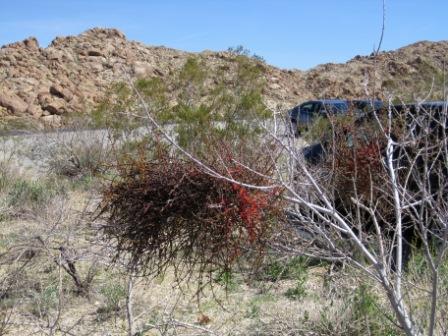
While looking over photos from my California desert trip this spring, I came upon this curious plant:

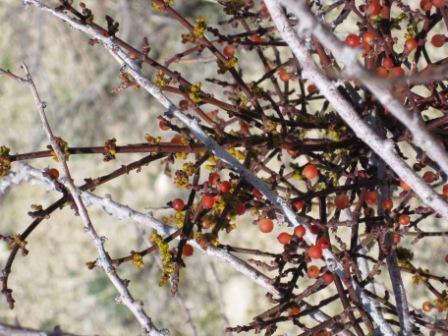
You can see most of the plant is dead (white branches), though there are two clumps of vigorous growth, shown up close here:

What’s going on here?
Answer Monday!
Below is an email I received this morning. I’ve apparently made Justin really angry. So as he’s requested, I’m giving him the chance to debate me.
"LISTEN HERE DR. FACE
Who owns you Dr. Linda Chalker-Scott?
You are a cheap mouthpiece and I don’t believe a word that you say. I’d debate you right under the table.
Any day, Lady.
Why don’t you just bring it on sister girl and first describe how vegetation thrived on this planet for millions of years before the phony baloney chemical crap that you use.… Continue reading this article “Fan mail…NOT!”
Apparently I don’t talk to the right people; I’d never heard of this product until newbie gardener and longtime skeptic John emailed me about Eleanor’s VF-11 plant food.

Upon visiting the website, this is what I learned about VF-11 and roses (the rose aficionado market is apparently a lucrative one for snake oil salesmen):
Point: “VF-11 Plant Food is not a ‘push’ like other fertilizers…think of it as a strength and health builder.”
Counterpoint: It certainly is not a fertilizer.… Continue reading this article “Here’s the plant food everyone is talking about!”
Castor Bean – Ricinis communis. Folks who make their living creating fabulous color displays for public gardens, municipalities, and commercial parks love ‘em. Civilian gardeners/plant geeks love ‘em. People who get their knickers in a twist about poisonous plants do not.
Pros: ridiculously rapid growth, huge leaves for that tropical look, tolerant of less-than-ideal conditions, cheap and easy to grow from seed, weird wild flowers and seed pods.
Cons: pretty darn poisonous. A few seeds (have seen figures from four to 20), chewed up to release the toxic protein ricin, will allegedly kill you.… Continue reading this article “Beantroversy”
This past weekend marked our first real bout with severe thunderstorms here in Mid-Michigan. Several lines of storms moved through the mid and southern part of the state and northern Ohio. The storms in southern Michigan and Ohio also spawned some tornadoes. Around here, storm damage was confined mainly to downed trees causing power outrages and some damage to homes and buildings.
Severe weather outbreaks provide some opportunities to observe tree failures and gain insights into how they can be prevented. … Continue reading this article “Riding the storm out”
As Jason rightly guessed, this is a Schlumbergera species, specifically S. truncata, also known as the Thanksgiving cactus (which has toothed edges as shown). It’s related to the Christmas cactus (S. bridgesii – scalloped edges) and the Easter cactus (S. gaertneri, whose segments are three-sided rather than flattened). [Disclaimer: the nomenclature of this genus and its species is a mess. Even the university websites disagree on whether it’s Schlumbergera, Hatiora, or Rhipsalidopsis.… Continue reading this article “Morphology quiz answers”
Take a look at this photo:

This is a two part quiz: on what plant would you find these hairs, and what are these hairs called?
Answers on Monday!
Nobody in their right mind considers pesticides safe. They are, after all, poisons which we have created to kill things, be those things plants, insects, fungi, rats, or whatever. The idea that we could have foods with no pesticides on them is attractive. Now I’ve got to admit that, as a general rule, I don’t think that the levels at which most pesticides are found on foods is concerning. Our methods of detecting poisons are just too sensitive today and so we end up saying that a poison is “present” on a tomato or whatever even if it’s there at a harmless parts-per-trillion level. … Continue reading this article “Dirty Dozen?”