Soil compaction–the urban stress of death for shade trees

I was taught in horticulture school that the ideal soil is composed of 50% solids and 50% voids or spaces which are themselves composed of a variable amount of water from small amounts to as much as 25% water when the soil is at field capacity or the amount of water left in soil after gravity has pulled all the free water down in the profile. So the “ideal” soil always has 25% pore spaces or more depending on how much water is present.… Continue reading this article “Soil compaction–the urban stress of death for shade trees”

Professional Credentials and Gardening Expertise: Entomologists

This is an installment of our series on professional credentials and gardening expertise. To read the introduction to this series, see Professional Credentials and Gardening Expertise.

Entomologists, Professional Credentials, and Designating Body

Entomology is the study of insects, and is a field within zoology, the study of animals. In the US, the primary professional and scientific society of entomologists is the Ecological Society of America (ESA), which formed in 1889 (ESA, 2019a). The ESA developed the Board Certified Entomologist (BCE) professional certification for professional entomologists with a bachelor’s degree or higher in entomology or a closely related discipline (ESA Certification Corporation, 2019a).… Continue reading this article “Professional Credentials and Gardening Expertise: Entomologists”

Testing, testing, 1-2-3: Trialing new plants for the home garden

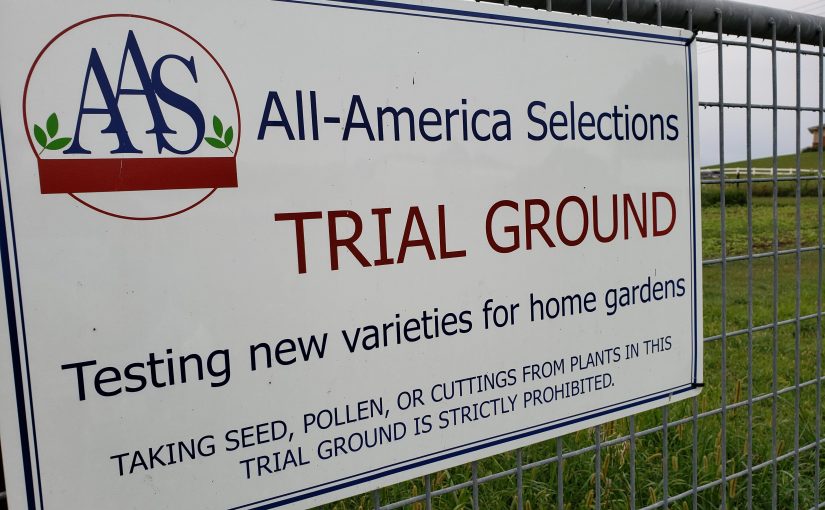
How do you know that plants will do well in your garden?  Do you research the types of plants for your region, study different cultivars, and select only things that have been proven to do well for your conditions?  Or do you buy what catches your eye at the garden center, plant it, and then see what happens?  I used to joke that my home garden was a horticulture experiment station, since I’d try all kinds of random plants or techniques and see what works for me. … Continue reading this article “Testing, testing, 1-2-3: Trialing new plants for the home garden”

Professional Credentials and Gardening Expertise

This is the first post in a series in which we will explore the world of professional credentials and designations, highlight disciplines related to gardening with certification or licensing programs, and outline potential services professionals from each of those disciplines can provide to gardeners.

Professional designations are designed to help clients identify experts within specific disciplines. In upcoming posts I will highlight professional designations relevant to various aspects of gardening. Professional certifications, licensures, and credentials related to gardening include:

  • Board Certified Entomologist (BSE)
  • ISA Certified Arborist
  • Certified Crop Advisor (CCA) and Certified Professional Agronomist (CPAg)
  • Certified Horticulturalist (CH)
  • Certified Professional Forester (CPF)
  • Certified Professional Soil Scientist (CPSS)
  • Professional Landscape Architect (PLA)
  • Registered Consulting Arborist (RCA)

Before I highlight each of those professions and credentials in future posts, I want to first provide context and explain the purpose of professional certification and licensing.… Continue reading this article “Professional Credentials and Gardening Expertise”

Is there a “Deathstar” in your garden?

If you follow national news, you may have noticed that Sudden Oak Death disease caused by Phytophthora ramorum has been found again in a new state and has escaped into retail commerce and thus into gardens. This is news because the disease is a killer of rhododendron, oak, camellia and many other ornamental plants. Yesterday I was measuring trees in a research plot here in California and I found that one of my subjects had turned brown and lost all its leaves.… Continue reading this article “Is there a “Deathstar” in your garden?”

Give me your huddled root masses yearning to breathe free

About this time last year I posted photos of the installation of my new pollinator gardens (all perennials). As you can tell from the photos below, all of these plants have not only survived but thrived with their midsummer rootwashing.


The only ones that didn’t make it were the six Lavandula stoechas ‘Bandera Purple’ (see above). They did fine through the summer and well into winter. But with our surprise snowstorm in February (along with a 20-degree temperature drop in one night – from 33 to 14F), all but one of these marginally hardy plants (USDA zones 7-10) gave up the ghost.… Continue reading this article “Give me your huddled root masses yearning to breathe free”

Urban Gardening Considerations

Along with the trends of buying local food, buying organic, etc., there seems to be an increasing interest in the ultimate local food source – a garden. This includes in urban areas. Urban gardening is a great way to save money on food, a great source for fresh vegetables – especially in “food deserts”, and an easy way to introduce kids to where the food on their plate comes from. However, there are a couple potential obstacles you should consider first before starting your urban garden.… Continue reading this article “Urban Gardening Considerations”

The Dog Days are here

The dog days of summer are here and as we approach the longest day of the year (summer solstice is June 21st), we are also feeling the advance of high summer temperatures. Long days mean more evapotranspiration and water withdrawal from the soil. During these long days, plants photosynthesize more, grow more, and use the most water during the month of June.  In fact evapotranspiration looks generally looks like a bell shaped curve when plotted by month (figure 1). … Continue reading this article “The Dog Days are here”

Cornmeal magic – the myth that will not die

Way back in 2010 (and then again in 2012) I wrote about a bizarre belief that cornmeal could be used to treat fungal diseases, from lawn spot to athlete’s foot. Rather than rehash what’s already been written, I’ll invite readers to read those posts for background. And of course look at the comments, which are…interesting.The weird thing is that this post from 2010 is the single most popular post on the blog. (Our stats are only for the last two years since we migrated the web site – who knows how many there were before May 2017?)… Continue reading this article “Cornmeal magic – the myth that will not die”

Bare Rooting – a guest post from a commercial landscaper

Today’s blog post is courtesy of Mary Blockberger of Sechelt, BC. As you’ll see, Mary and I go way back.  I thought it was important to our ongoing discussion to see how the industry can use the root-washing technique effectively and economically. Here’s Mary:

“Before I began managing the Sunshine Coast Botanical Garden in Sechelt, BC I had a small residential landscaping company.  By small, I mean that I was the employee of the month every month of the year! … Continue reading this article “Bare Rooting – a guest post from a commercial landscaper”