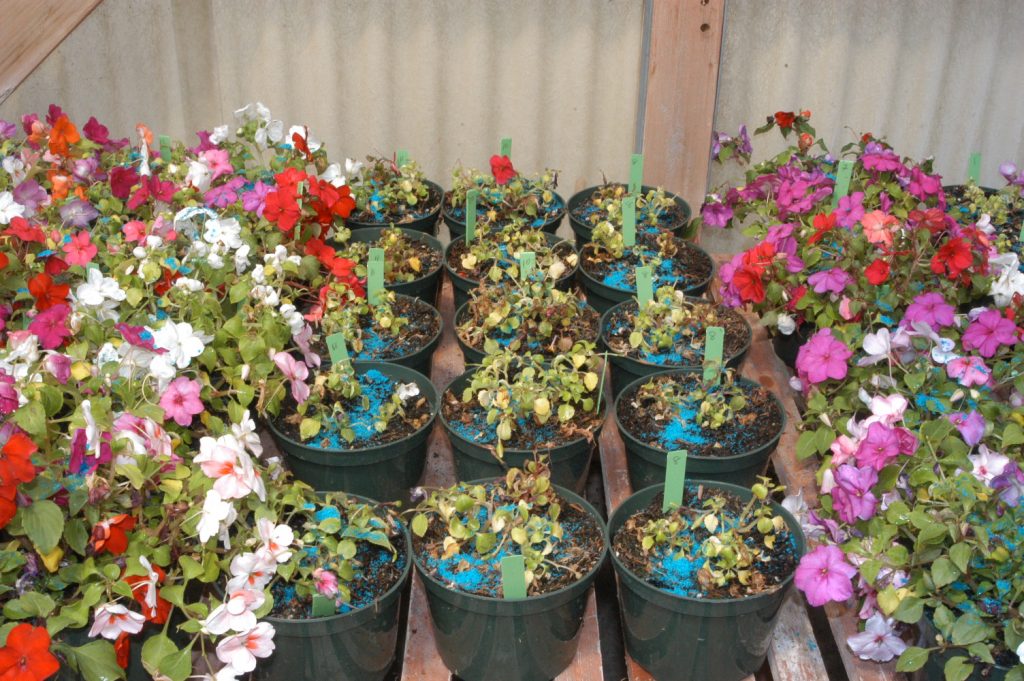
Gardeners often struggle to grow plants in containers. You may feel that you have a really black thumb at times when newly planted seedlings fall over dead or fail to thrive. The problem may not be disease or poor gardening acumen but rather your container media otherwise sold as “Potting Soil”. A trip to one of the big box stores or a larger retail nursery will offer gardeners many choices of bagged potting soils.… Continue reading this article “Potting Soil Poison”
Category: Uncategorized
Standing up for (and lying down on) the environmentally sustainable lawn
If you’ve been reading this blog for a while, you might remember that I got rid of our lawn (getting rid of your lawn post) at our Seattle house . It took too much water to keep it green in the summer, and the resulting ornamental landscape was more ecologically diverse and aesthetically pleasing for such a small site.


Fruit Tree Pruning Basics
Last week I helped to train Master Gardeners about pruning fruit trees. January and February are the months that we recommend fruit tree pruning in Southern California. In colder climates, pruning may not occur until later when freezing temperatures are minimized and there is less chance of damage to new growth. While trees don’t “need” pruning to bear fruit, pruning practices can enhance fruit production, promote earlier fruiting bearing buds, and increase fruit quality if done in an informed way.… Continue reading this article “Fruit Tree Pruning Basics”
Woodpeckers: Friends or Foes?
[This blog post has been provided by Bec Wolfe-Thomas, an administrator for the Garden Professors blog group on Facebook.]
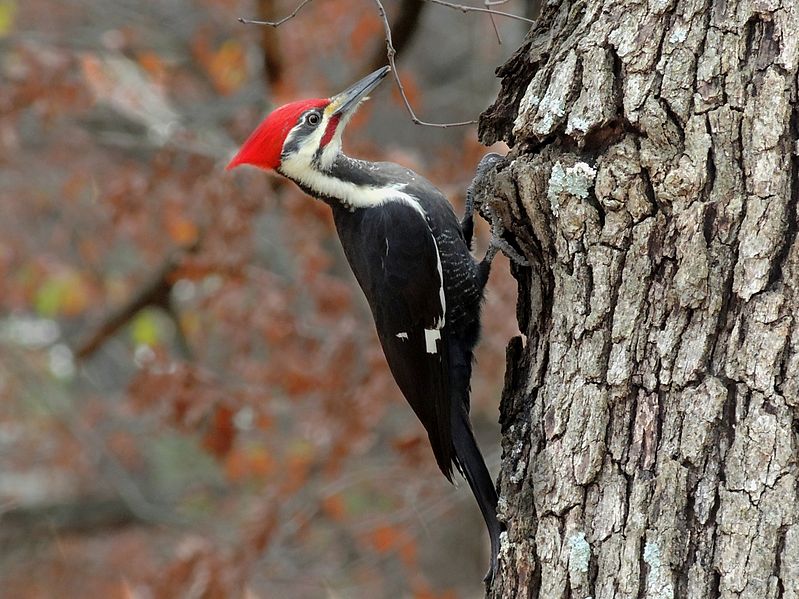
Woodpeckers (Picidae) frequently get a bad rap from gardeners. It’s often their impression that the birds irreparably damage trees, but this is untrue. Most woodpeckers are insect eaters; they can hear insects under the bark and in the wood of trees. They then target their drilling with uncanny precision to get their meal.… Continue reading this article “Woodpeckers: Friends or Foes?”
Flammability of Landscape Plants–Why the lists are BAD!
California had the worst fires in the last two years of its existence as a state. Hundreds of thousands of acres of brush and forest burned. More importantly thousands lost their homes as fires moved across urban/rural interfaces to destroy communities. The entire town of Paradise, California was burned to the ground. Here in Ventura County, the Thomas Fire was the state’s largest fire by the time it was done, and hundreds lost homes. No other time in history have we been so focused on what will burn, why it will burn, and what we can do to have a “firewise” landscape.… Continue reading this article “Flammability of Landscape Plants–Why the lists are BAD!”
Soil or dirt? It’s really up to you
Dig up dirt. Treat like dirt. Dirt poor. Replace the word “dirt” with “soil” and you get phrases that make no sense. This is a roundabout way of explaining that “dirt” and “soil” are not the same things, either in idioms or in the garden. Yet many of us effectively turn our soils into dirt through poor garden practices.
For the purposes of this post, we’re going to use a single criterion to distinguish between soil and dirt: one is a living ecosystem and the other is not.… Continue reading this article “Soil or dirt? It’s really up to you”
Fertilizer—Friend or Foe to disease causing organisms?
Gardeners that read this blog understand that minerals are absorbed mostly by plant roots as ions, and are essential for plant growth and development. Some minerals are required in parts per hundred, and are macro-nutrients while others are only required in parts per million or parts per billion, and are considered micronutrients. As long as enough of the 16 most essential minerals are available, plants grow and reproduce in a healthful way. When not enough of one of the essential elements are available, a deficiency occurs, and plants
may present deficiency symptoms.… Continue reading this article “Fertilizer—Friend or Foe to disease causing organisms?”
Hydroponics, Aquaponics, & Aeroponics, Part Deux
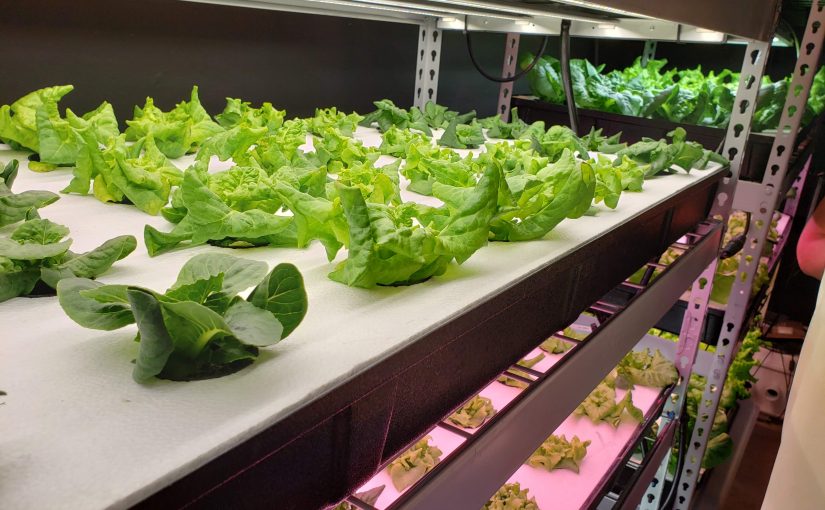
Last month I shared some basic info on the major techniques for growing plants without soil, namely hydroponics, aquaponics, and aeroponics. With such interest in these topics, I thought it would be good to dive a little further into the technologies used. I’ll provide a bit of basic information about each type of system used for production and provide some resources for further technical reading if you’re interested in learning more. For some simple diagrams of the systems, check out this link (we don’t know if we can “borrow” the images, so we didn’t copy them over).… Continue reading this article “Hydroponics, Aquaponics, & Aeroponics, Part Deux”
Trees and Turf a NO GO
It seems so simple to plant a tree. But to grow a tree is more difficult! In many parts of the United States there is enough water for trees and turfgrass, but it is often a bad idea to mix the two. You may have observed that sometimes young trees do not grow as well when planted in turfgrass. Certainly this is a generalized view and tree/turfgrass genetics are very different between their respective species. So it is natural to expect different outcomes when planting different species of trees in any landscape setting, turfgrass notwithstanding. … Continue reading this article “Trees and Turf a NO GO”
DIY Hydroponics: Going soil-less at home and abroad
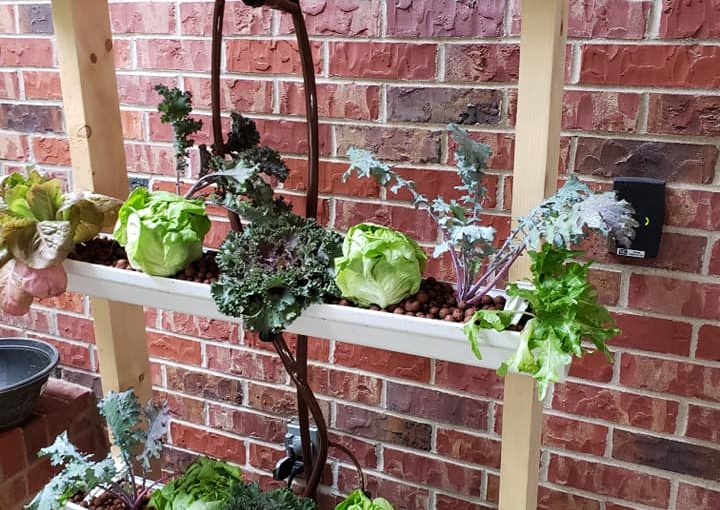
It seems that as interest in gardening grows, especially among younger generations, interest in different techniques that home gardeners use and different plants they grow are also on the increase. You see the old standbys like straw bales and containers emerge. Terraria, succulents, and air plants are having their moment. And all kinds of technology driven indoor growing systems are all over the web, mostly hydroponic, but some aeroponic and aquaponic as well (we’ll talk about the difference in a bit – if you’re just here for that, skip the first 2/3 of the article).… Continue reading this article “DIY Hydroponics: Going soil-less at home and abroad”