Friday Physiology Fun Followup

Astute readers pointed out several morphological adaptations found in drought-tolerant turf weeds:  fleshy taproots, reflective leaf surfaces, etc.  What we can’t see is what many of these plants do physiologically – and that’s photosynthesize using a biochemical pathway that temperate turfgrasses don’t possess. 

This pathway, called C4 photosynthesis, contains some extra preliminary steps not found in plants using traditional (C3) photosynthesis.  The downside:  it takes more solar energy for the plant to photosynthesize.  The upside:  these extra steps allow the plant to "fix" carbon (transforming it from gas to solid) faster, especially when it’s sunny, warm, and droughty. … Continue reading this article “Friday Physiology Fun Followup”
Friday physiology fun

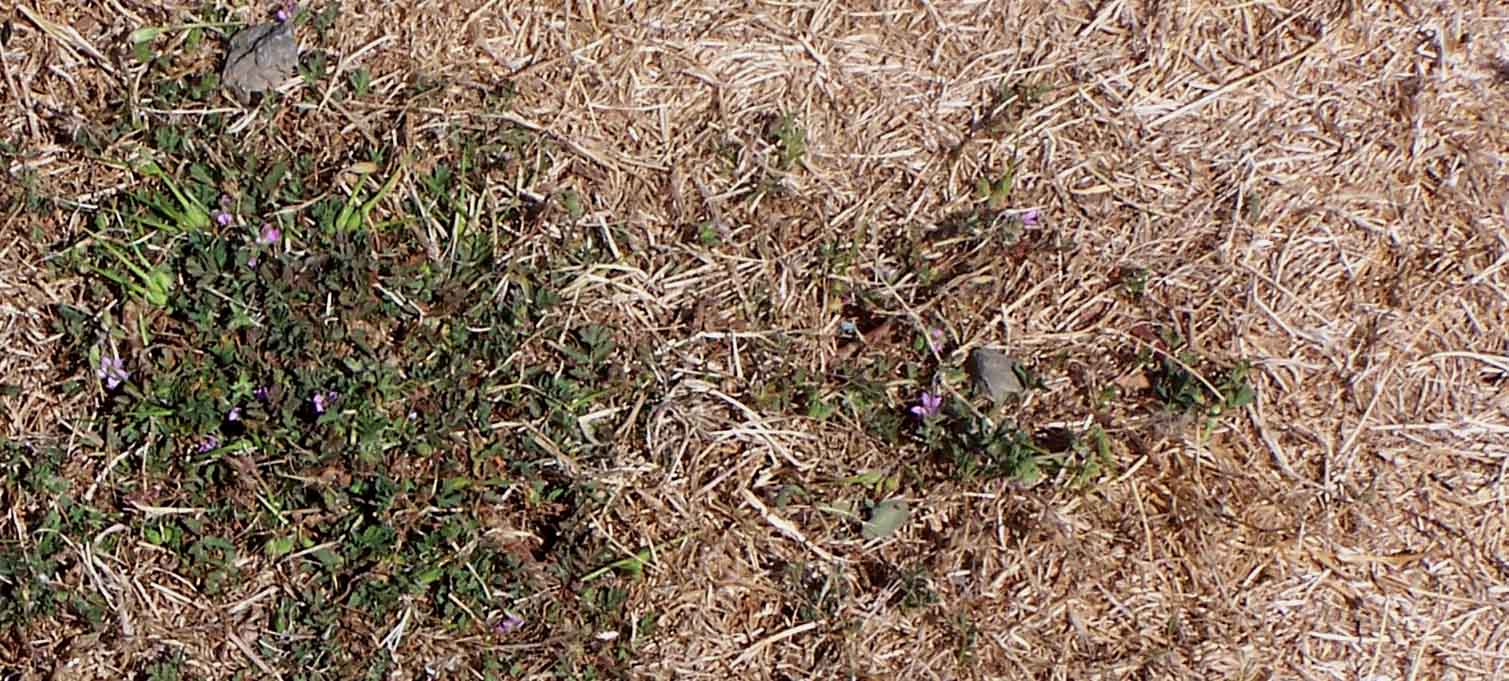
It’s still cold and wintery, so let’s imagine ourselves in a happy place…warm, sunny, dry…with dead lawns.

As the photo shows, the turfgrass is dead; this happens every summer during the Pacific Northwest’s droughty summers.  Yet many of the weedy species are obviously thriving.  Why?

Remember, this is a physiology quiz.  You can discount herbicides, fertilizers, etc.  This is a cool (no pun intended) adaptation that many species native to dry, subtropical to temperate environments possess.  … Continue reading this article “Friday physiology fun”

Friday fun, part 1

This posting is for Holly, who I am sure is desperately trying to finish her annual review.  I feel your pain!  And I’m going to add to it today.


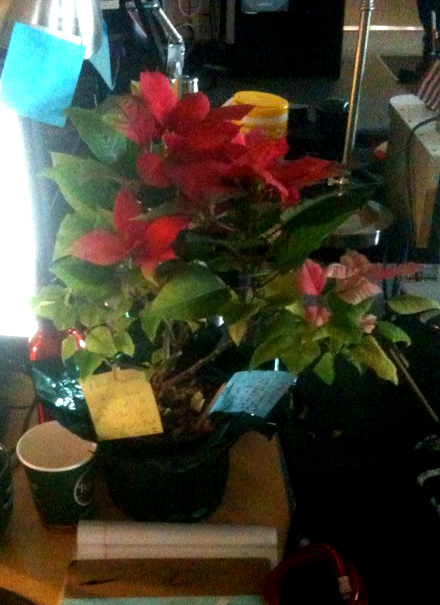
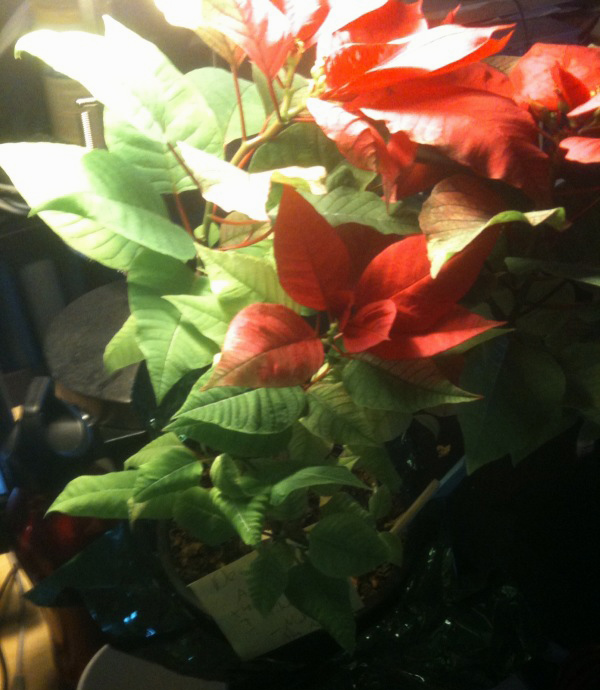
The poinsettia in these photos is not from this Christmas, but from 2008.  You can see it thriving happily in its office environment.  I’m told by its caretaker Nick (a nongardener) that it has no bugs or other problems, and seems very happy.  And it’s blooming, without the benefit of the extended night period. … Continue reading this article “Friday fun, part 1”

Baptisia: Beyond the Blue

The Perennial Plant Association recently released the identity of the PPA Plant of the Year – for 2010 it is Baptisia australis (False Blue Indigo).  Various blogs have noted this (including Garden Professor fave Garden Rant) and I’ve read some interesting comments, both pro and con.

True story: I asked for Baptisia at a small rural garden center years ago; the owner said “Don’t have any; but I think I have a Methodist running around here somewheres…”  Badda-bump.Continue reading this article “Baptisia: Beyond the Blue”

Better Red than Dead!!!

David, one of our newer readers, asked why his red-stemmed roses seem to be more cold hardy than the green-stemmed cultivars.  So today’s blog will be dedicated to a brief discussion of why it’s better to be red than dead.

The brilliant red, blue, and purple colors seen in flowers and fruits are due to anthocyanins (and the closely related betacyanins).  These water-soluble, non-photosynthetic pigments are also commonly found in stems, leaves and other vegetative tissues.  … Continue reading this article “Better Red than Dead!!!”

I think about these things as I peer into my coffee cup…

This winter, we’re working on renovating part of the campus Hort Garden. We’re tossing around lots of ideas/themes, but I’m leaning towards a garden full of “Plants with a Purpose”. Edible, fiber-producing, medicinal…you get my drift.  Which brings me to today’s bloggerific topic: beverages.

Mankind has, throughout history, infused or fermented just about every species of flora in an effort to get either perked up or calmed down.  These plant potions are often classified anthropologically as, ahem, “ceremonial beverages”.… Continue reading this article “I think about these things as I peer into my coffee cup…”

Carrot-top syndrome in white pine

I know a few folks out there are starting to believe that I’m just an apologist for the nursery industry.  While it’s true most of the nursery people with whom I work are hard-working folks trying to do their best to run a successful business and produce a quality crop, there are certainly some issues out there and I’ve got my share of pet peeves.  One of the things really that chafes my heiney is what I refer to as “Carrot-top” syndrome in eastern white pine (Pinus strobus). … Continue reading this article “Carrot-top syndrome in white pine”

How on Earth Did I Land This Gig?!

Linda referred to my recent absence from the blog – but it was in the name of education, I swear!

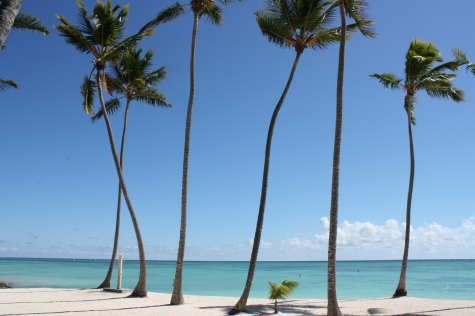
Cocos nucifera, the iconic coconut palm.  My office for the past two weeks. Or a Corona advertisement. You pick.

This study abroad to the Dominican Republic sent Virginia Tech students (mostly biology and natural resources majors) to the Punta Cana Ecological Foundation for the entire semester, with faculty rotating in for two-week stints on topics from ornithology to geography.… Continue reading this article “How on Earth Did I Land This Gig?!”

Something Scary!

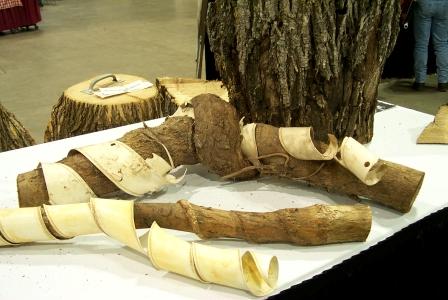
It’s almost Halloween!  How about a scary picture….I think I’ll call this one revenge of the mummies (Thanks to Dave Hansen for this picture).

Graft and corruption

It’s election season – but that’s not why I’m doing a blog on “graft and corruption.”  Instead, let me back up and explain that today I gave a seminar on diagnosing urban tree death.  One of my points to the group was the importance of knowing the history of a site – what species were selected, how trees were planted, whether there had been any major construction activity, etc.  I thought I’d continue the importance of site history into today’s posting.… Continue reading this article “Graft and corruption”