Autumn leaf? Or is it?

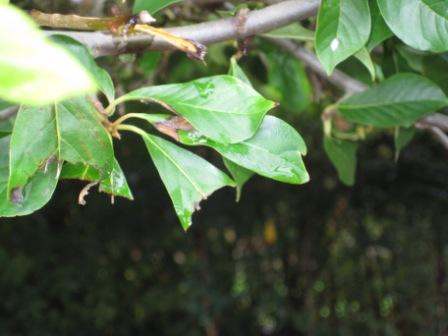
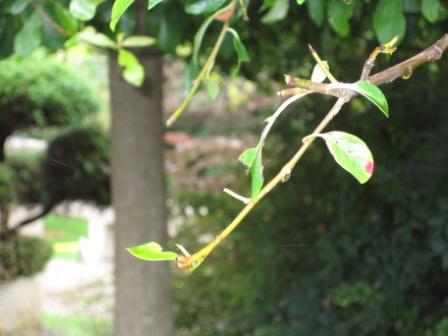
It’s that time of year – leaves are turning all shades of yellow, orange, and red – so I thought I’d use this leaf for today’s puzzle:

I had to photoshop this extensively so it’s a little rough looking.  But it does have a toothed margin.

So – is this an example of autumnal coloration?  Or something else?  Extra bonus points if you can identify the genus of this plant.

Answers and another photo on Monday!

Time for another WOW (Why oh why)!

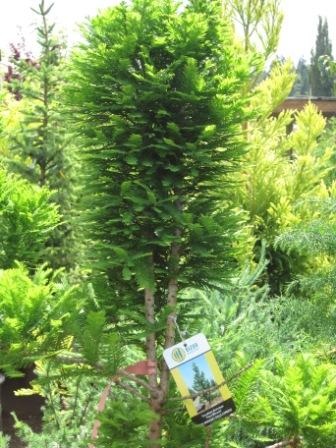
During my nursery visits this summer I came across Taxodium distichum ‘Peve Minaret’, a dwarf cultivar of bald cypress.  I hate it:

Why? Because it’s a crummy specimen. If it’s not quite clear, here is a close up of the double leader:

I’ve ranted a couple of times about the production nursery practice of topping young trees to create fuller crowns (you can see those posts here and here). I’m constantly taken to task for this, with comments along these lines:

1) There’s nothing wrong with it.… Continue reading this article “Time for another WOW (Why oh why)!”

Dig it up and give it another chance!

Too often I’ve come across relatively young trees, shrubs, and vines that are surviving, but not thriving.  Every year they struggle gamely to put on a few new leaves, grow a few more inches, but something’s fishy and it’s not fertilizer.   Today I’m going to try to convince you to give these languishing woody species a second lease on life.

Long-time readers of this blog will remember some of the root horrors I’ve (literally) uncovered in containerized and balled-and-burlapped plants. … Continue reading this article “Dig it up and give it another chance!”

Mystery shoot identified (no big surprise, apparently)

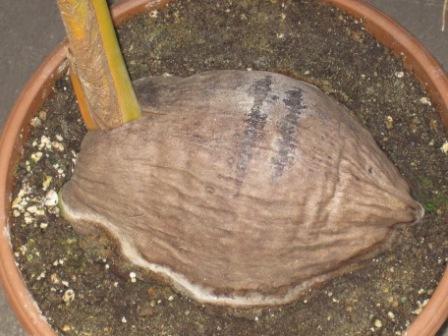
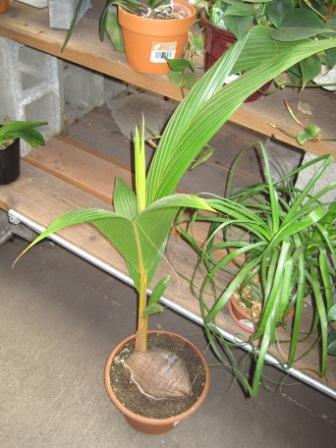
Readers were too smart this week!  Yes indeed, this is a coconut, improbably found at a Home Depot in Seattle:

Unfortunately, in our climate this can only be an indoors plant, and even a McMansion won’t be able to contain it for long.

Gold stars to Ed, Deb, John, Jess, Jimbo and Ginny!

Bee studies, blogs, and biases

My original posting last Wednesday (“Ignorance and the so-called “bogus” bee study“) has generated some vigorous discussion, which is exactly what I hoped it would do. At some point, one of our readers posted the link on the original blog site, where it generated the following response:

“The issue on CCD and these studies that point to “causes” other than pesticides comes down to a question: What came first? The pesticides or the problem.… Continue reading this article “Bee studies, blogs, and biases”

Mystery shoot

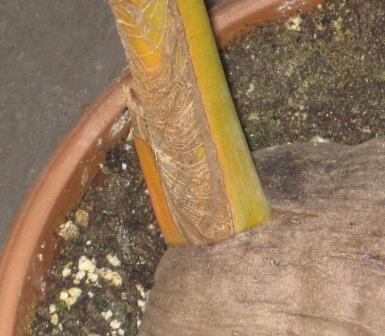
Today’s photo is part of the ongoing "what the heck is it?" series.  As you can see, there’s a shoot emerging from a brown mass:

What’s the brown mass?  And what is the shoot emerging from it?  Answers and more photos Monday!

Ignorance and the so-called “bogus” bee study

I’m angry.  Really, really angry.  And it’s all Kenny’s fault.

Kenny S., one of our long-time blog followers, alerted me to a blog posting dismissing a new study on colony collapse disorder (CCD). The post was devoid of any evidence of bogusness, other than a link to “great reporting” by New York Magazine. Aside from the general snarkiness of this article, we’re breathlessly informed that Fortune magazine (a hotbed of scientific inquiry) uncovered an unholy connection between the lead author (Dr.… Continue reading this article “Ignorance and the so-called “bogus” bee study”

Pruning perpetrators

Just when I thought I had you all fooled, Judy slipped in at the last minute with the correct answer – the “pruners” in question are deer:

The pruning ends when the deer can’t stretch any further, giving the tree its odd bell-shaped crown:

This is also a great demonstration of how pruning stimulates new growth – you can see the dense healthy growth at the base of the “bell,” even though this part of the crown normally would be much sparser.… Continue reading this article “Pruning perpetrators”

Puzzling pruning

In an otherwise nicely maintained Japanese Garden (at Tacoma’s Point Defiance Park), this black tupelo (Nyssa sylvatica) stands out, and not in a good way:

Why would someone prune a tree in this manner?  Answer and more photos on Monday!</d

When history and good stewardship collide

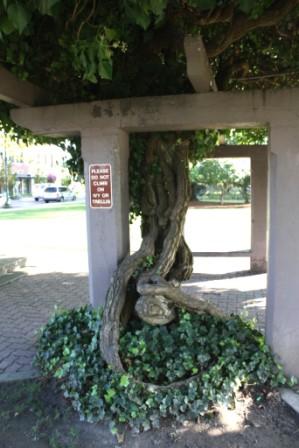
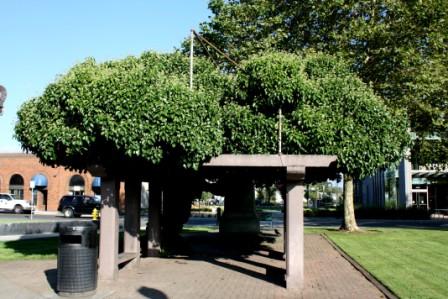
One of my colleagues emailed me a couple of pictures last week taken in Puyallup, WA.  As you can see, there’s a trellis supporting a massive old trunk…

…and crown…

of an ancient Hedera helix ‘Baltica,’ a cultivar of English ivy.

For those of you not in Washington or Oregon state, English ivy is a designated noxious weed.  Thousands of dollars and hours of labor are spent on removing this species from forested areas in Washington state, where it crowds out native species and increases tree failure simply through the weight of vegetation. … Continue reading this article “When history and good stewardship collide”