Questions on sustainability

Linda’s recent post on the sustainability of topiaries got me to thinking, is any horticultural practice sustainable?  And, does it matter?
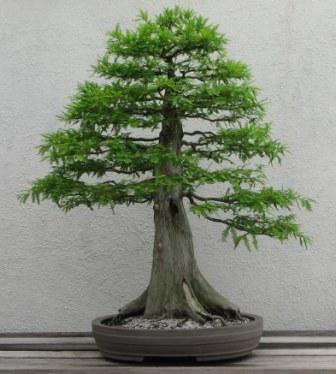
 

Picking up on the topiary theme I thought of the ultimate form of tree manipulation, bonsai.  I few years ago I visited the National Arboretum in Washington DC, which includes an incredible bonsai display.  Some of the bonsai specimens in the collection originated in Japan and are over 300 years old.  Is 300 years long enough to consider this a sustainable practice? … Continue reading this article “Questions on sustainability”
What’s old is new again

While the Emerald Ash Borer (EAB) continues to expand in the upper Midwest (see http://www.emeraldashborer.info/files/MultiState_EABpos.pdf  for a current infestation map), EAB is old news here in Michigan, especially in the southeastern part of the state.  Efforts to restore urban and community forest canopy lost to EAB will continue, however, for the foreseeable future. In 2003 we established an Ash Alternative Arboretum MSU Tollgate Education Center in Novi, MI – which is near ‘Ground Zero’ for the EAB infestation in North America.… Continue reading this article “What’s old is new again”

Plastic grass and organic gardens

One of the best cures for writers’ block for a Garden Professors is to spend a little time in front of the tube watching home gardening shows.  Now, to be sure, there are useful nuggets of information that can be gleamed from an hour or so of gardening or landscaping on HGTV or PBS Create.  But there are moments when I just stare at the TV in disbelief and go, ‘Have these people lost their frickin’ minds?’… Continue reading this article “Plastic grass and organic gardens”

Garden invaders

I’m running a bit ragged between travel and getting ready for my grad student, Amanda, to defend her thesis in the morning.

Here’s something a little lightter from our friends at Utah State Extension…

http://www.youtube.com/watch?v=D0foMKAxCww

Riding the storm out

This past weekend marked our first real bout with severe thunderstorms here in Mid-Michigan.  Several lines of storms moved through the mid and southern part of the state and northern Ohio.  The storms in southern Michigan and Ohio also spawned some tornadoes.  Around here, storm damage was confined mainly to downed trees causing power outrages and some damage to homes and buildings.

Severe weather outbreaks provide some opportunities to observe tree failures and gain insights into how they can be prevented. … Continue reading this article “Riding the storm out”

Good to the last drop

As part of our discussion of the relative merits of fall planting, Linda mentioned an article in Arboriculture and Urban Forestry that suggests that frequent, light irrigation might be better for landscape trees then the usual recommendation of infrequent soakings.  While I will withhold final judgment until I see the article (I did a scan of the last two year’s table of contents for A&UF but missed the article in question), here’s my rational for following the standard recommendation.… Continue reading this article “Good to the last drop”

Is Fall Really a Great Time to Plant Trees?

One of the joys of working on a university campus is that construction never seems to end.  As near as I can tell there are about 3,000 orange construction barrels that permanently reside on the MSU campus that simply get shuffled from one end of campus to the other every few months.  Along with all the construction comes a never ending series of new landscape projects.  Driving by one of the most recent projects the other day got me to thinking about the myth of Fall planting. … Continue reading this article “Is Fall Really a Great Time to Plant Trees?”

Every survivor has a story

It’s been suggested, not unfairly, that the Garden Professors are sometimes a little ‘Tree-Centric’.  As a forester and tree physiologist by training, I’m probably the guiltiest among my co-conspirators on that count.  But occasionally I do notice things less than 10’ tall and lacking a single, woody trunk.


When weather permits I like to take my lunch down to the MSU annual trial gardens behind my office here at the Plant and Soil Science Building.  Every summer the annual gardens are awash with the color of impatiens, geraniums, petunias, and other annuals. … Continue reading this article “Every survivor has a story”

Everything is obvious once somebody shows you…

It’s amazing how many things in life seem complex when we try to figure them out for ourselves but then we end up smacking ourselves on the forehead when someone shows us how simple it really is.  The infield fly rule comes to mind.  Some colleagues of mine here at Michigan State may be on their way to such a solution for the problem of white grubs in lawns.  Drs. Dave Smitley (Entomology), Kurt Steinke, and Trey Rogers (Crop and Soil Science) are investigating the effect of mower height on turf damage from grubs.… Continue reading this article “Everything is obvious once somebody shows you…”

Spruce brown-out solved

Gall adelgids are certainly a problem in these parts, especially on blue spruce.  But the ‘problem’ in this case is not a pest.  This year, as in several recent years, spruces are developing copious amounts of pollen cones.  Once the pollen is shed, the cones dry up and turn brown.  Many homeowners mistake these for insect galls or sign of some other pest activity.
In many conifers, pollen cones occur on the lower portion of the crown while seed cones occur in the upper third as an evolutionary adaptation to reduce selfing.
Continue reading this article “Spruce brown-out solved”