We’ve been beating up nurseries over Why-Oh-Why (W.O.W) do they sell things like Scot broom. Here’s one of my favorite W.O.W’s from the landscape side (Homeowner division).
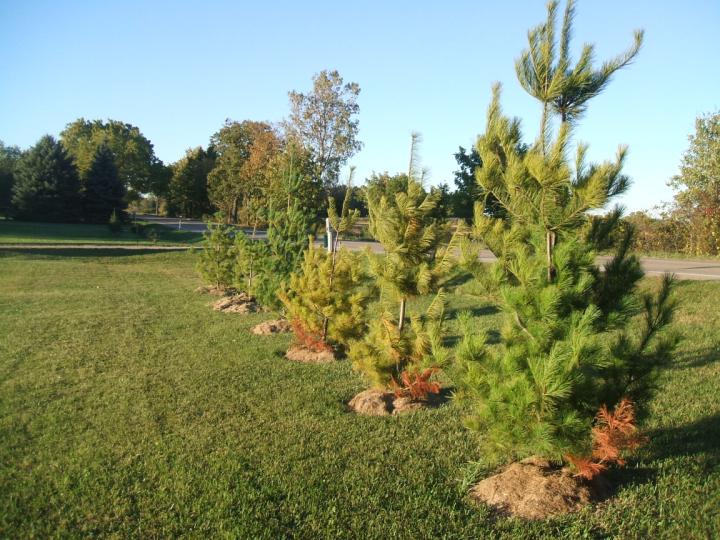
We’ve been beating up nurseries over Why-Oh-Why (W.O.W) do they sell things like Scot broom. Here’s one of my favorite W.O.W’s from the landscape side (Homeowner division).

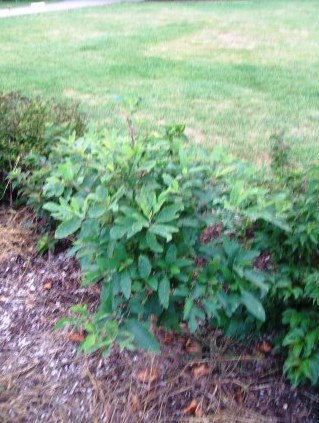
One of the advantages of having a couple acres (and not being especially fastidious about weeding) is that sometimes you get your landscape plants for free. I always keep an eye out for interesting plants that may turn up on their own – or a least get left behind by our bird friends. Here are some volunteers that have shown up recently at Daisy Hill farm that I’ll work into the landscape.

Sassafras (Sassafras albidum) are notoriously difficult to transplant. … Continue reading this article “Volunteering for duty”
One of the potential environmental benefits that came up in our discussion of the pro’s and con’s of turfgrass was carbon sequestration. The basic premise of carbon sequestration is to take CO2 out of the atmosphere and ‘lock it up’ in a form that won’t contribute to further global warming. One of the fallacies floating around these days is that any plant that photosynthesizes, takes up CO2 and thereby sequesters carbon. What we need to realize is that leaves give off CO2 at night via respiration and all non-photosynthetic (non-green) plant parts such as roots and stems give off CO2 virtually all the time. … Continue reading this article “Confessions of a carbon sequestration skeptic”
An acquaintance of mine (not coincidentally, an irrigation supplier) brought to my attention a recent editorial from USA today by Laura Vanderkam, entitled ‘’Out of Fashion: Green Lawns.” http://www.usatoday.com/news/opinion/forum/2010-08-17-column17_ST_N.htm?loc=interstitialskip#uslPageReturn The basic premise of the editorial is that we Americans are ruining the environment by maintaining lawns. Now, to be sure, there is plenty of room for improvement in lawn and landscape maintenance, particularly in terms of water management and pesticide use. But, for better or worse, Americans love their lawns. … Continue reading this article “Is brown the new green?”
One of the topic groupings for our posts is titled ‘Cool research’. The subject of today’s post has actually been around for a few years but I still think it’s pretty cool.
When we think of interactions between plants we usual think of negative interactions such as competition for water and nutrients or maybe allelopathy. But there are cases where plants can benefit each other. One of these is a phenomenon known as hydraulic lift. … Continue reading this article “Need a lift?”
Last month Linda posted on the need for horticultural knowledge for those trying to restore native habitats or at least establish native plants. There seems to be a pervasive notion that if we plant natives all we have to do is stick them in the ground and walk away. They’re native, right? Don’t need irrigation; don’t need fertilizer; all that good jazz. Well, often there is lot more to it than that.

A case in point. … Continue reading this article “Restoration ecologists – you need us! Part 2.”

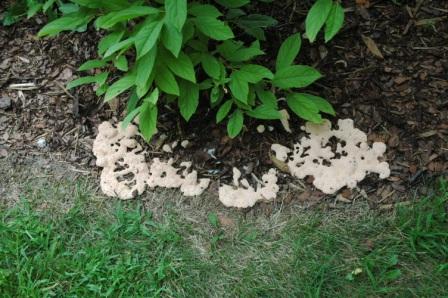
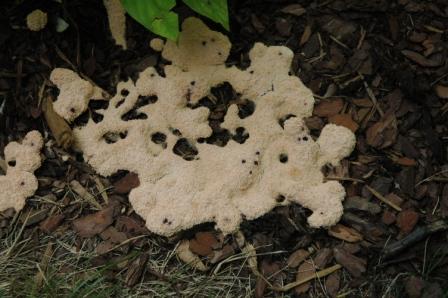
OK, now we know why we usually leave the puzzles to Linda: mine are too easy! As several folks correctly noted the photo in my yard was an example of the "dog vomit fungus" or, more correctly "dog vomit slime mold" Fuligo septica. Either way, it’s fairly disgusting and fairly common. My expereince has been it that it often shows up shortly after I lay dowm some fresh mulch (ground pine bark in this case) and then we get rain and warm temps. … Continue reading this article “Icky Friday puzzle solved”
Was on the road earlier this week and missed my regular post. Thought I would slide in here with a Friday puzzler. This one is from my very own yard last week. Know what it is?

OK, this Friday’s quiz is the real deal: everyone gets to play “Extension Specialist for a Day”. I am stumped on this and so are my colleagues here at MSU. I used to work for a guy who liked to say, “None of us is as smart as all of us”. Let’s put it to the test.
The photos below come from a nursery here in Michigan. The trees are container-grown Red sunset maples. Pretty routine crop around here. … Continue reading this article “Friday quiz: The case of the bumpy maples”
One of the first courses a horticulture student takes is plant materials, or, in the case of a forestry student, dendrology. Why? Pretty simple; it’s hard to select plants if you don’t know what they are and what they’ll do in the landscape. Of course, the classic example is a large tree or shrub planted in a tight spot that eventually devours an entire house. But we usually don’t have to look too far to find situations where a homeowner or landscaper clearly had no idea what plant he or she was dealing with. … Continue reading this article “The importance of knowing your plants”