Baffling Daffs

It is daffodil season in the Northern Hemisphere, hurrah!  May their blooms shoo away the gray of winter! It is also the season where everybody and their mother writes something about the wonders of the genus Narcissus, so figured I’d join the fray, but with a bit of a chip on my shoulder…


Miss ‘Barrett Browning’ in the Hahn Horticulture Garden at Virginia Tech

I recently read YET ANOTHER article warning against mixing daffodil stems in with other cut flowers due to “harmful effects from the sap”.… Continue reading this article “Baffling Daffs”

Love in Broom

Recently, Rebecca Finneran, an MSU Extension Educator from the Grand Rapids area sent me a cool photo.  The tree is a large Norway spruce near the Kent country Extension office.


This is a great example of witch’s broom.  Witch’s brooms are growth anomalies that occur on various trees, most commonly conifers,   Brooms can be caused be a variety of factors including diseases, aphids, environmental stress and random mutations.  In some cases the growth defect is only present when the casual agent, say, a pathogen is present.  … Continue reading this article “Love in Broom”

Friday puzzle answer

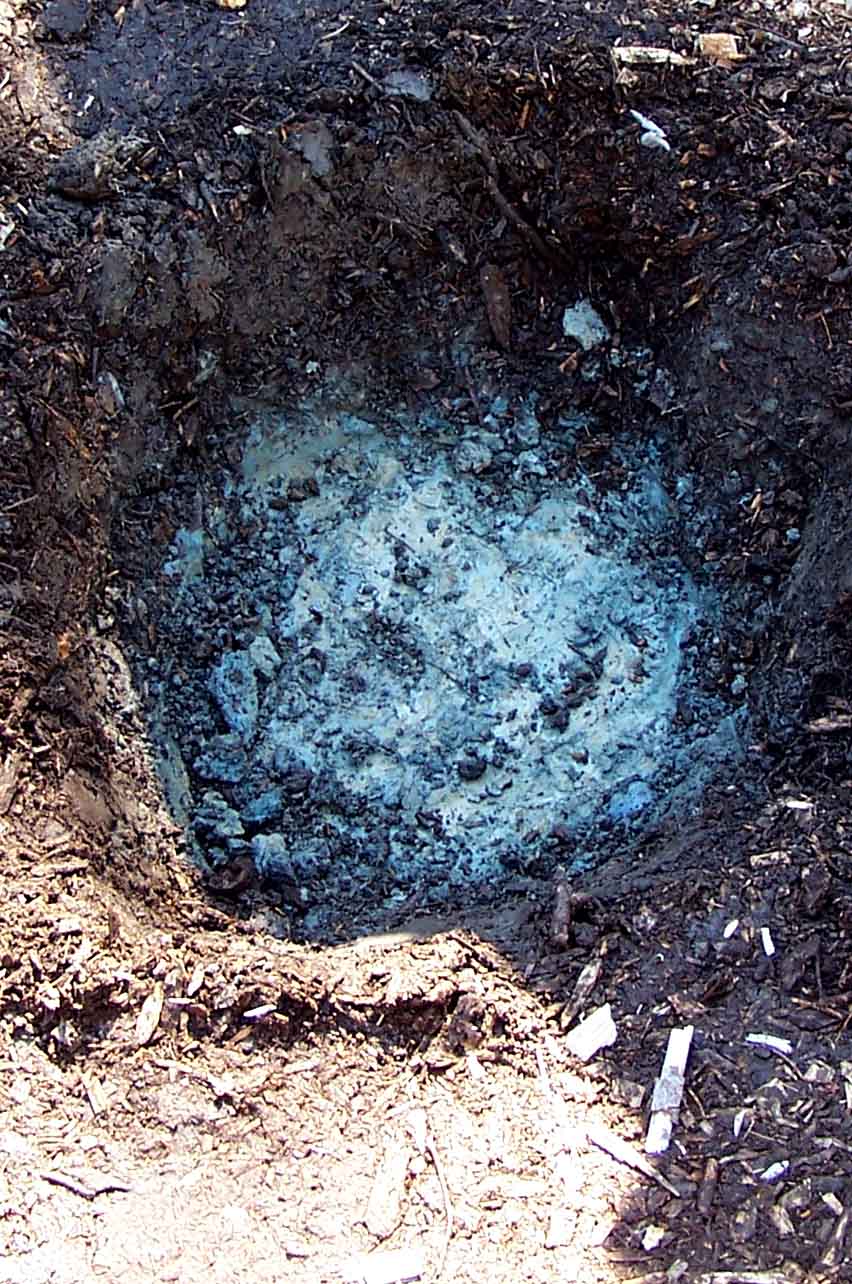
So many interesting answers to Friday’s puzzle – thanks to all of you for putting out the effort!  It most certainly is an abiotic problem – but was it temperature, suggested by Deb?  Water, suggested by Foy, Gayle and Ed?  Light, suggested by Nancy?  My plan was to have an extensive soil test run to address the possibility of pollution (suggested by Jim, Heather and Paul), except we discovered the source of the problem last summer when we finished digging our pond:


As you can see in this photo, we have solid clay about 12″ below the surface. … Continue reading this article “Friday puzzle answer”

Friday quiz time!

Now I could have sworn I’d posted this puzzle before, but after searching through all the previous postings I can’t find it.  Here it is.

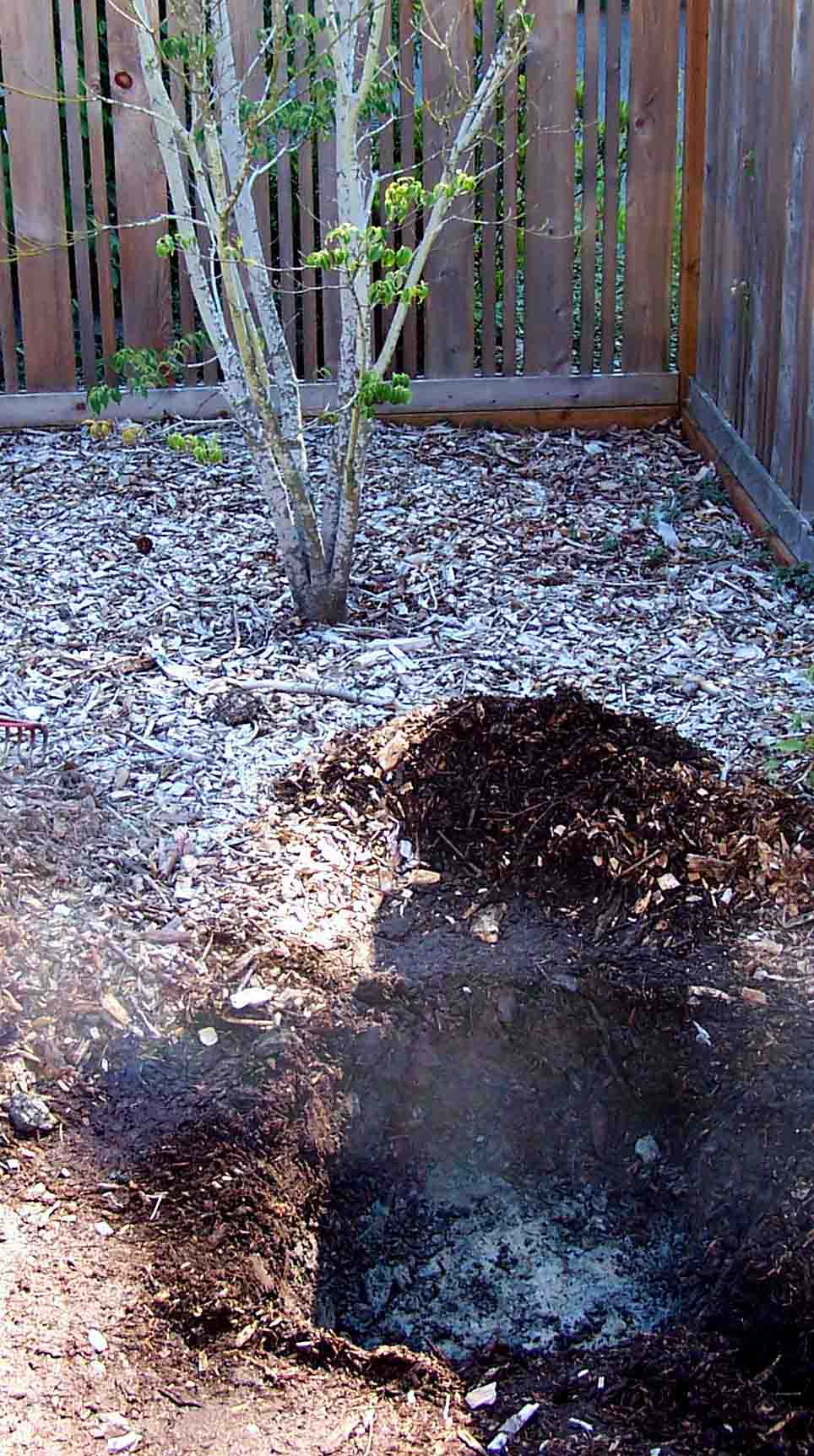
I planted this Cornus kousa in 1999 (removing the burlap, clay, etc. prior to installing).  We removed the turf (still attached to the $(%&$ plastic mesh) and planted the tree in the existing soil.  The first photo was taken in 2004, and the second was taken in 2007:


Here are some specifics about what was done to the landscape during this period: we replaced all the turf with wood chips and put in the fence as shown.  … Continue reading this article “Friday quiz time!”

Edgeworthia!

Some of my favorite plants are those that “do something” when little else is.
Do we really need more June-flowering perennials? No!
Well, yes. Never mind.

Edgeworthia chrysantha – “Paperbush” is the common name – is a deciduous suckering shrub , native to China. It usually maxes out around 4′ to 5′ tall and as wide.  The large, matte bluish-green leaves resemble those of Magnolia virginia in shape and are also a bit silvery on the underside. … Continue reading this article “Edgeworthia!”

Protecting existing trees – what a concept!

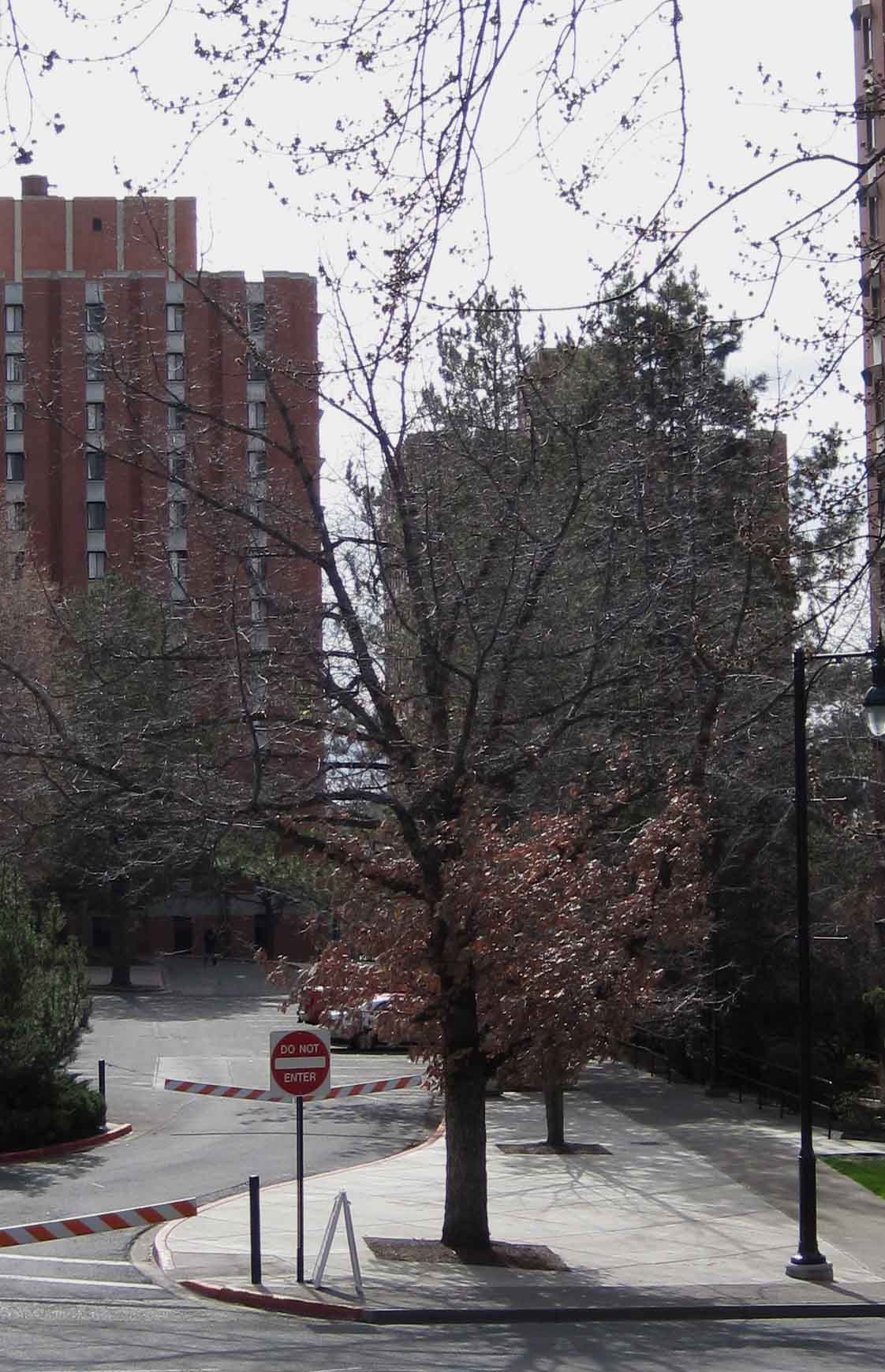
I just got back from a trip to Pullman where I guest lecture once a year for the Landscape Plant Management class.  It’s also a chance to get some new photos for my Wall-O-Shame.  Here’s my latest:

Pin oak (Quercus palustris) doesn’t drop its leaves in the winter – instead, they hang on until the following spring.  So it’s really easy to see which part of this tree is alive (i.e., has last year’s leaves). … Continue reading this article “Protecting existing trees – what a concept!”

Friday mystery revealed!

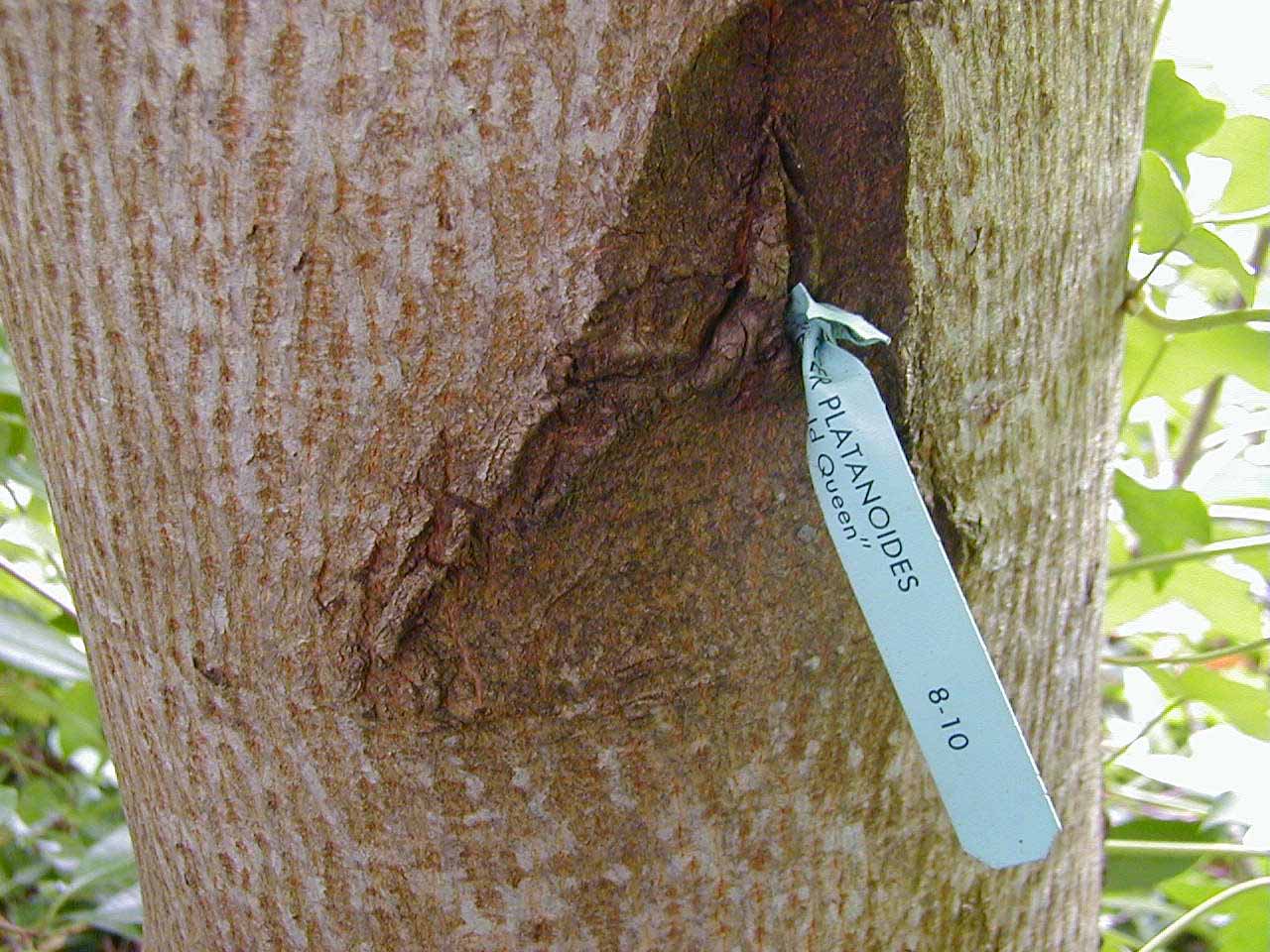
Good sleuthing over the weekend!  As John, Karen, Jimbo and Al suggested, there is something stuck on the side of this Norway maple (Acer platanoides, which is Latin for “maple that takes over the planet”).  In fact, the reason that I, with my pathetic ID skills, know that it’s a Norway maple is because it’s a nursery tag stuck in the tree:

This type of injury really bugs me, because it’s entirely preventable.  One of the cardinal rules of transplanting trees and shrubs is to remove all foreign material. … Continue reading this article “Friday mystery revealed!”

An evolving view of plant nutrition

One of the hallmarks of science is that our view of the world evolves and changes as new evidence comes to light.  When I was a grade-schooler following the Apollo missions, for example, I knew all the planets in order from Mercury to Pluto and how many moons each one had; Jupiter was the champ with 12.  Today, Jupiter has as many as 63 moons depending on who’s counting.  And Pluto, let’s not even go there.  Continue reading this article “An evolving view of plant nutrition”

Friday mystery photo

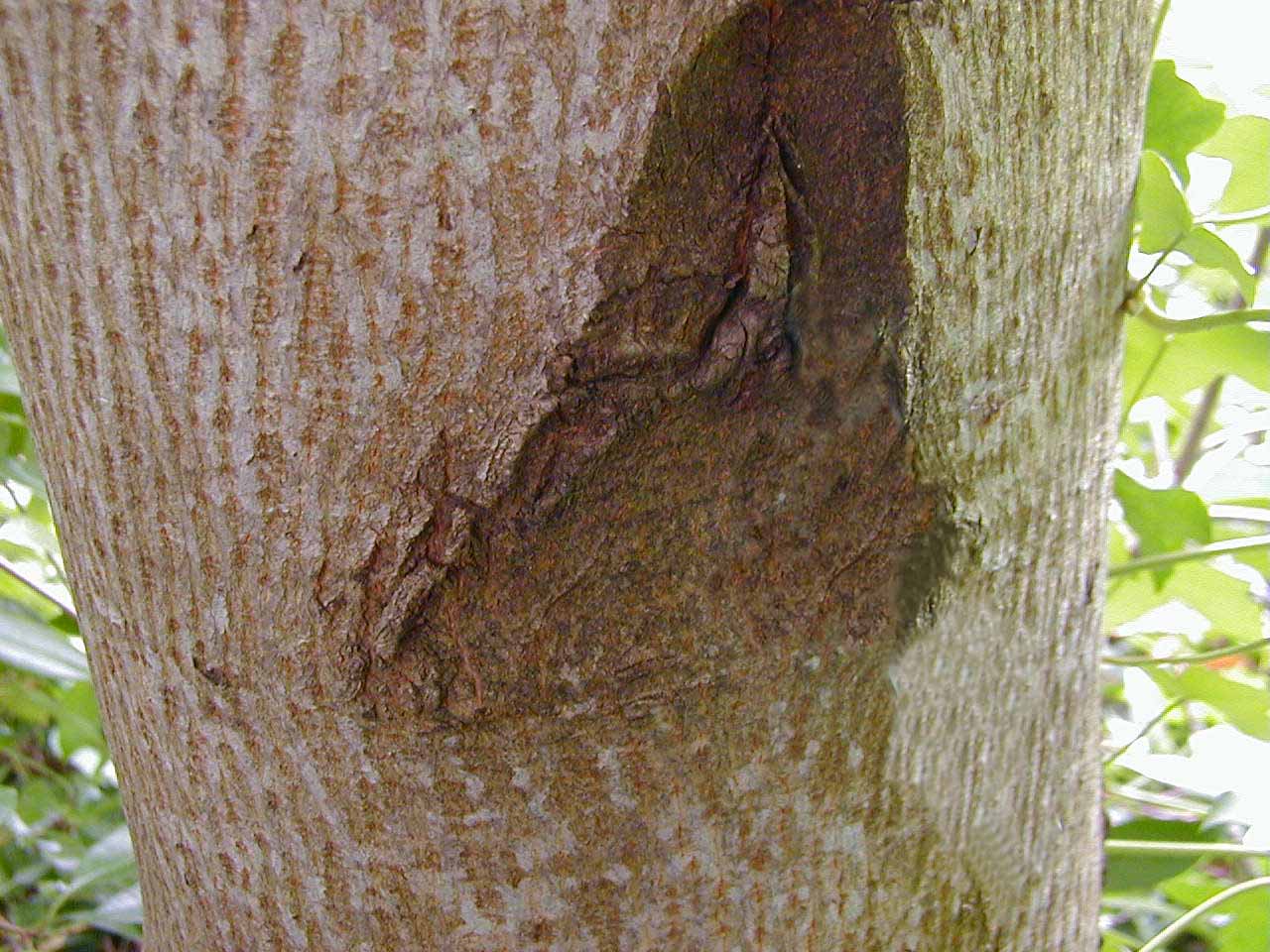
Today’s photo is courtesy of Photoshop technology.  I’ve edited the damaged area so you can’t see what caused, or at least contributed to, the damage:

Now before you complain that I’m cheating (which I am!) keep in mind that what I edited out could have been removed before you were asked to diagnose this injury.  I will tell you that it’s not due to pests or disease.  As is so often true in real life, there could easily be multiple correct answers. … Continue reading this article “Friday mystery photo”

Atrazine, The news, And the reality

A paper was recently published in the Proceedings of the National Academy of Sciences which discussed the dangers of one of the most commonly used weed killers in the United States, atrazine.  This paper was written by Tyrone Hayes and colleagues and was immediately embraced by the media because it showed something scary (which the media loves — in case you were wondering).  In a nutshell this study showed that frogs were changed from males to females when they were exposed to relatively small amounts of the herbicide atrazine. … Continue reading this article “Atrazine, The news, And the reality”