Microclimate follow-up

Last year I talked about using cheap min-max thermometers to get a handle on the specifics of the micro climates in my garden, and I was reminded recently that I never followed up on what I actually found out, so that’s what I’m doing today.

Remember that these results are just ONE data point, specific information about conditions in my particular garden. Your conditions will probably be different, so don’t try and extrapolate from these to your garden.… Continue reading this article “Microclimate follow-up”

Another good reason to mulch

Posted by Bert Cregg

Researchers often get accused of concluding the obvious.  At some point we’ve all scoffed at headlines like, “Study finds cell phones and driving don’t mix” or “Researchers discover high heels make your feet hurt.”* But even when a study demonstrates something we already know, sometimes there is still value in being able to put hard numbers on the scope of the problem – and hopefully spur some action.

A case in point is a recent study by Justin Morgenroth, Bernardo Santos, and Brad Cadwallader at the New Zealand School of Forestry, “Conflicts between landscape trees and lawn maintenance equipment – The first look at an urban epidemic” Urban Forestry and Urban Greening 14:1054-1058. … Continue reading this article “Another good reason to mulch”

Just post some pretty pictures or something

Posted by Bert Cregg

A little over six years ago Jeff Gilman called me out of the blue and asked me to be part of a new blog about the science of horticulture that he was embarking on along with Linda Chalker-Scott.  I was reluctant – I didn’t know much about social media at the time and was plenty busy already.  Jeff explained that he was recruiting others and how we would rotate posts. I asked Jeff, “What if I don’t have anything to write about?”  … Continue reading this article “Just post some pretty pictures or something”

Native vs Exotic: Not as simple as it seems

Lots of discussion recently over on the Facebook side regarding the recent publication in Ecological Letters by Karin Burghardt and Douglas Tallamy, “Not all non-natives are equally unequal: reductions in herbivore β-diversity depend on phylogenetic similarity to native plant community.” http://onlinelibrary.wiley.com/doi/10.1111/ele.12492/full
While there are certainly some things to nitpick in the paper (see Linda’s comments on the Facebook discussion), I think this paper may go a long ways re-shape, and possibly even begin to end, the debate over native versus exotic.… Continue reading this article “Native vs Exotic: Not as simple as it seems”

Pretty in Pink

It’s October. Fall is such an underrated time in the garden, and much pink can be found. In fact, flashes of pink are everywhere!! Got my ma’ams grammed last week; thanks for the reminder, NFL.

Muhlenbergia ‘Pink Flamingo’.
Aye yi yi. Alleged hybrid between M. capillaris and M. lindheimeri. Five feet tall and as wide, huge plumes of pink. Looks like nothing important the rest of the year, then, blammo!!! Sorry, folks north of Zone 6.… Continue reading this article “Pretty in Pink”

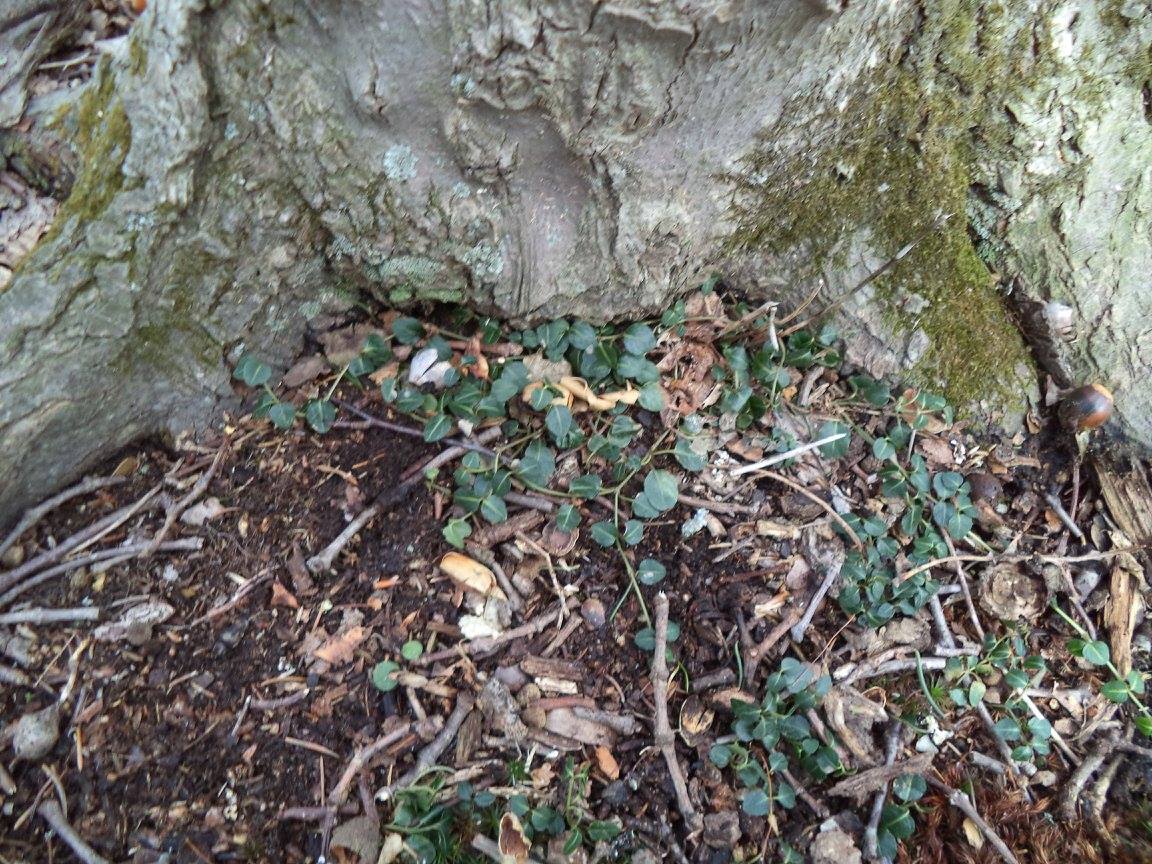
Mitchella repens … Partridge Berry … an Evergreen Native Groundcover for Shade

NaturalSetting1

Partridge Berry in its Natural Setting

One of the questions that came up regularly when I was working the hotline at the local county Extension office, is a recommendation for an evergreen ground cover for shady spots.  I had the same issue when I created my own shade garden … something that would have year round interest, but complement my desire to emphasize native species, although that was only one consideration.

The solution was literally right next to me, as a walk in my woods revealed with the lovely plant Partridge Berry, or Mitchella repens.… Continue reading this article “Mitchella repens … Partridge Berry … an Evergreen Native Groundcover for Shade”

Confessions of a Lazy Gardener

NeglectedBed1

I admit it.  I can’t keep up … I’m not as industrious as most of my gardening friends are when it comes to the effort necessary to manage my 6 acre landscape.

It can get overwhelming, especially when there are previous beds that came with the property that had been neglected for 10 years or more by the elderly lady who owned the property before us, and where perennial weeds are well established.

I make a valiant effort in the Spring, with all the enthusiasm of the new season to clean them up … dig the perennial weeds … plant something new (usually a division, or a naturally layered specimen, from elsewhere, or one shared from friends), but by mid-July or so, I have to redirect my efforts to the places that I’ve created … the shade garden … the rock (mostly sedum) garden … mulching the new trees and shrubs, and of course my tomatoes, so these previous places don’t get the attention they deserve.… Continue reading this article “Confessions of a Lazy Gardener”

Why doesn’t my plant look like it did last year?

I get versions of this question often. You have something in the garden, but this year it looks a bit different than it did before. There are a bunch of different things that could have happened to cause this change, and I’ll attempt here to make a complete list of them.

Rootstock

Trees and shrubs, including things like tree peonies and roses, are often grafted, so the part with the pretty flowers or delicious fruit is stuck onto the roots of a different variety, often not as pretty/useful/tasty but more vigorous and/or easier to propagate.… Continue reading this article “Why doesn’t my plant look like it did last year?”

Don’t just stand there like a statue

Posted by Bert Cregg


Reading through Linda’s recent article in Arboriculture and Urban Forestry “Nonnative, Noninvasive Woody Species Can Enhance Urban Landscape Biodiversity” (Arb. & UF 41:173-186) reminded me of some thoughts I had while I sat through a talk by Doug Tallamy at the New England GROWS conference back in February.  As most GP blog readers are likely aware, Tallamy is the author of Bringing Nature Home.  The basic premise of the book is that native insects only feed on native plants and therefore the use of exotic landscape plants will cause ecological food webs to collapse and the end of the world as we know it.… Continue reading this article “Don’t just stand there like a statue”

Master Gardeners are Great, And They Deserve Better

If you’re looking for cat videos, birthday reminders, and a method for spying on old friends then Facebook is pretty useful, but for cold hard facts?

Not so much.

Well, actually we’re overstepping here. It’s really not Facebook. After all, Facebook is kind of like a blank sheet of paper. The paper doesn’t tell the truth or lies, it’s the person who writes on the paper. On the Garden Professor’s Facebook page we do a pretty good job of offering science based information to people.… Continue reading this article “Master Gardeners are Great, And They Deserve Better”