It’s a Bird! It’s a Plane! It’s a …Butt?

So we last left off discussing the issue regarding the fact that the point is incumbent on us that one can’t refer to a native as "invasive" withou…

Look!

What’s that??!
There! Amongst the Pachysandra!
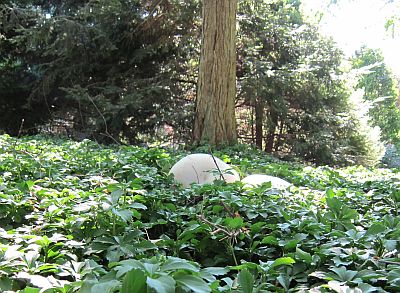
Is it a freshman? Perhaps passed out in our campus garden in despair after yet another stinging defeat of the Hokies?

*
*
*
*
*
*
*
*
*
*
Nay, ’tis a pair of Calvatia gigantia – Giant Puffballs.… Continue reading this article “It’s a Bird! It’s a Plane! It’s a …Butt?”

Propagating in the air

Most gardeners that I know have tried to produce roots on stem cuttings from plants that they like.  Sometimes this turns out well for them, particularly if they are working with what we call an easy-to-root species, and sometimes it turns out poorly.  OK, in all honesty, it often turns out poorly.  The problem is that plants like very particular conditions when they’re growing roots and the typical gardener is going to have a tough time providing these conditions. … Continue reading this article “Propagating in the air”

John Bartram Lives!

Yep, there he is. Showed up at our state Master Gardener College, just last week. I even went to dinner with him. The snake-on-a-stick startled the bartender just a bit.


The elder Bartram (his son William was also a great botanist and explorer) was the Royal Botanist to King George III and a member of the Royal Academy of Sciences, Stockholm. As with many of the Great Plant Explorers, his life combined botany with politics,
adventure, and lust [for plants,anyway].
Continue reading this article “John Bartram Lives!”

Creative Uses For Old Water Breakers

Why, oh why, can’t someone engineer a sturdy, long-lasting, horticulturally-correct water breaker.

We have, at last count, six hoses in use at our very spread-out garden & farm.  I go through a lot of breakers, and am down to two, which I rotate around.  In dire need of some new ones (as well as a huge bale of TP), I perused the garden aisle at our local big box (rhymes with “Target”).  Pistol grip schnozzles abound – these things that propel the water
like a 95 mph fastball. … Continue reading this article “Creative Uses For Old Water Breakers”

How to get rid of your lawn

With increasing interest in reducing monocultural swaths of turf, summer water consumption, and the drudgery of mowing, many people are eliminating part or all of their lawns.  We did this at home some years ago and can attest to the tangible benefit of reduced water bills during our dry summer months.

The question I often get is – how? Do you dig up the turf and throw it out, then fill in with topsoil? Or do you cut it, flip it, and then plant on top of it?… Continue reading this article “How to get rid of your lawn”

End of the Semester Evaluations

It’s that time of the semester to hand out the lovely SPOT evaluation forms (Student Perceptions Of Teaching) here at Virginia Tech. Students fill in the circles (number 2 pencil of course) as to how you rate as teacher, your knowledge of the field, the value of the textbook, etc. A box is available, though seldom used, for students to hand-write comments – to many of us, the most valuable part of the evaluation process.  So as I was distributing the scan forms, I was thinking about feedback. … Continue reading this article “End of the Semester Evaluations”

The Glories of The Winter Greenhouse

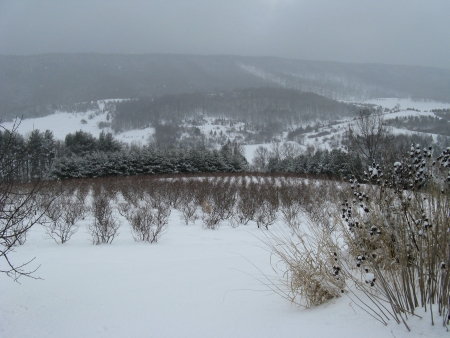
I’m a Southerner. With a capital “S”.  Which is why I am Suffering, with another capital “S”. Here in the Blue Ridge mountains of western Virginia, we have officially surpassed Anchorage and Denver in total snowfall for the season. Today’s batch adds up to 24″ on the ground at our farm.


Blueberries in the snow. If one more person says “Probably good for all the insect problems,” I’m going to get violent.

The chickens are not happy.… Continue reading this article “The Glories of The Winter Greenhouse”

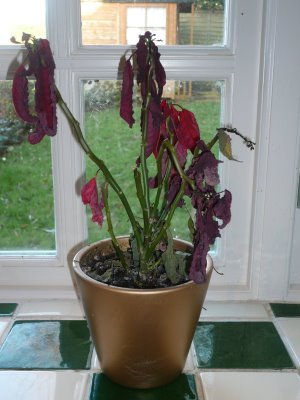
Post-holiday Poinsettia Fatigue

You’ve seen them. The saddest thing ever – a poinsettia, still in its little foil sleeve, tucked into the corner of the doctor’s office/bank/etc. In June. 
Photo courtesy of Beth Bonini http://beedrunken.blogspot.com
So iconic, there’s even a rock band in St. Paul called “Dead Poinsettia.”

Every year about this time, I get asked “how do I care for my poinsettia so it will bloom next year?” by friends, students, random callers, and random newspaper writers. Continue reading this article “Post-holiday Poinsettia Fatigue”

Inspecting nursery plants, part IV

(Note:  this is a really LONG post.  Not in text – but in photos!  Sorry for all the scrolling.)

I don’t know about you, but after spending three weeks on my hands and knees looking for trunk rots, surface roots, and suckers, I’m ready to become bipedal again.  So today let’s look at trunks – and what shouldn’t be missing on them.

Many young trees have numerous short branches along their trunk, as shown in the photo below:

>

Unfortunately, many nurseries and gardeners think this looks scruffy, and respond by pruning these branches off, leaving a tree such as the one in this picture:

Personally, I think these trees look like lollipops, but aesthetics aside, this type of pruning can inadvertently damage young trees. … Continue reading this article “Inspecting nursery plants, part IV”

Inspecting nursery plants, part lll

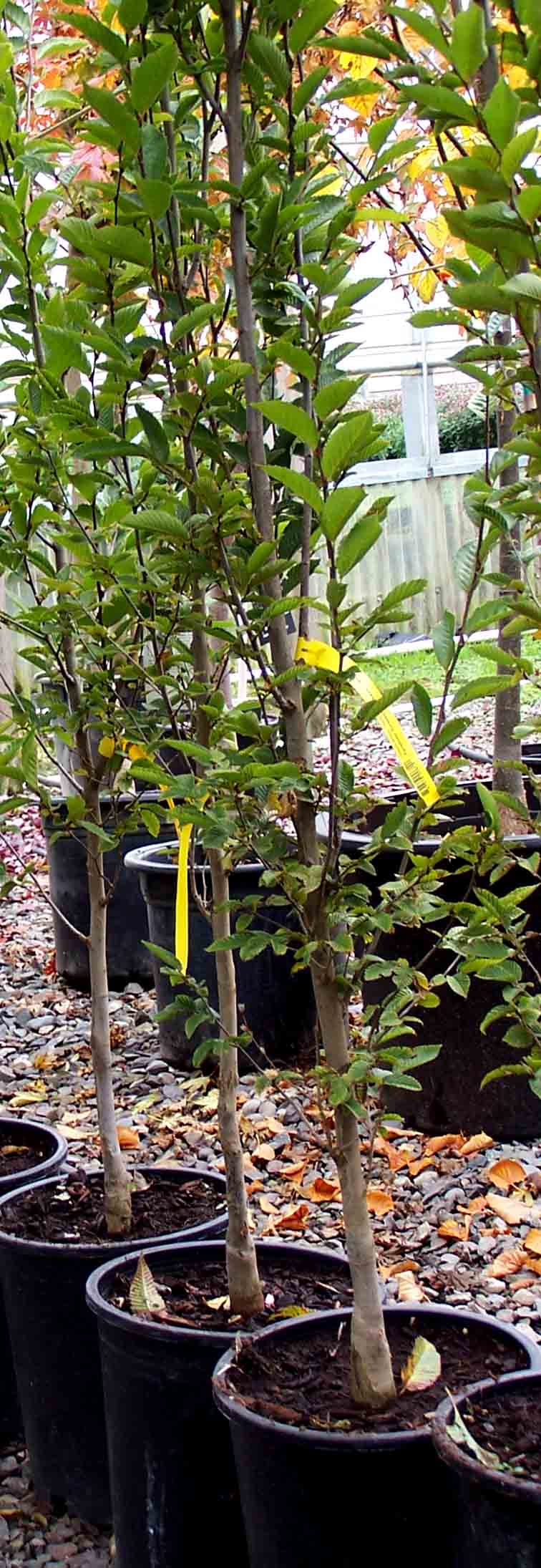
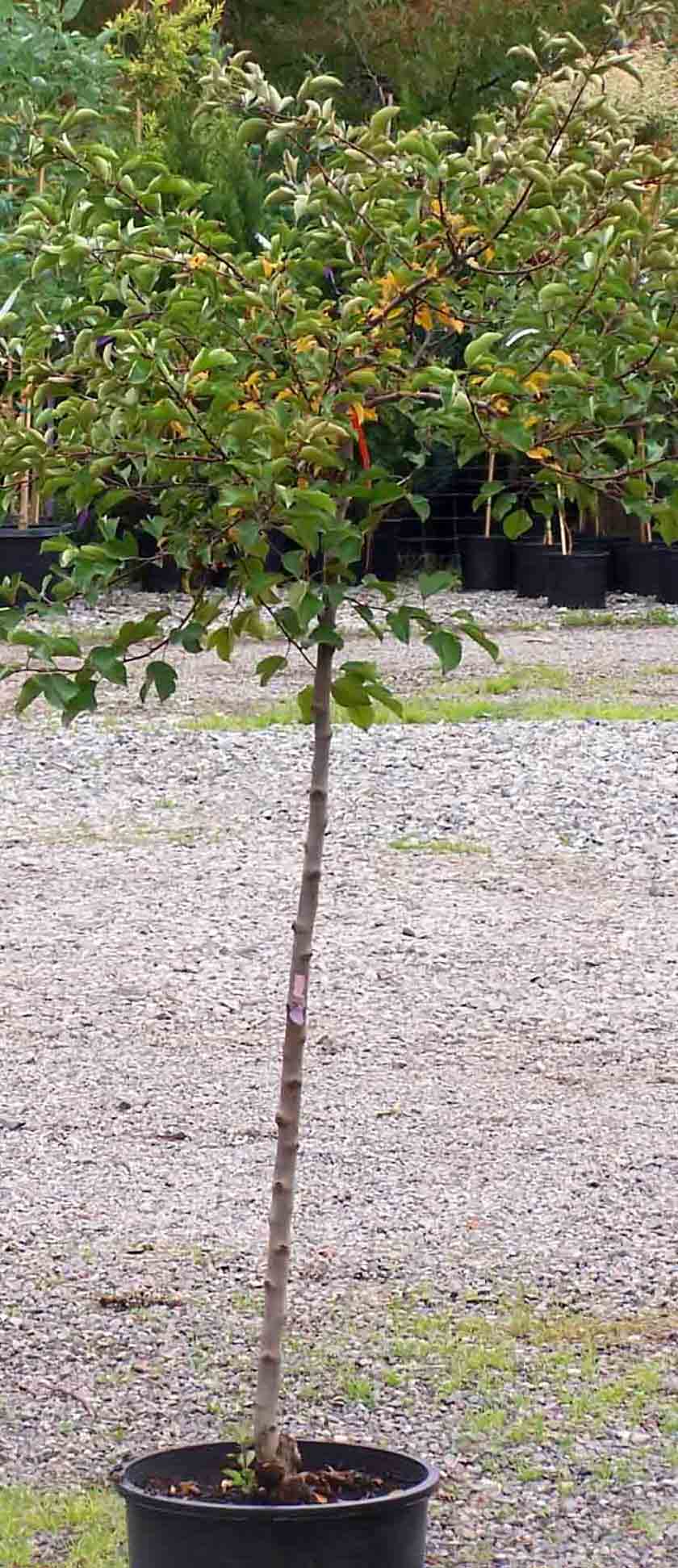
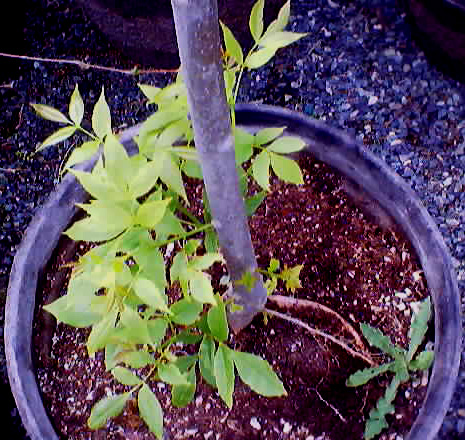
By now you’re probably ready to stand up, brush off your pants, and stretch your back after crawling around looking for surface roots and root crowns.  Not so fast!  There’s one more thing to look for – and to avoid.

Take a look at these two photos:


You can easily see the suckers at the base of these trees.  Whether or not they are actually suckers (coming from the roots) or watersprouts (coming from the base of the trunk) doesn’t matter. … Continue reading this article “Inspecting nursery plants, part lll”