This week I received some photos of some mysterious white tubes emerging from a pile of lawn moss. Do you know what they are?
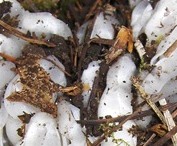
Answer Monday!
This week I received some photos of some mysterious white tubes emerging from a pile of lawn moss. Do you know what they are?
Answer Monday!
Friday’s “evil frog eye” was actually part of a voodoo lily (Dracunculus vulgaris), found growing in a drainage ditch in California (I’ve seen one in a drainage ditch in Seattle as well):
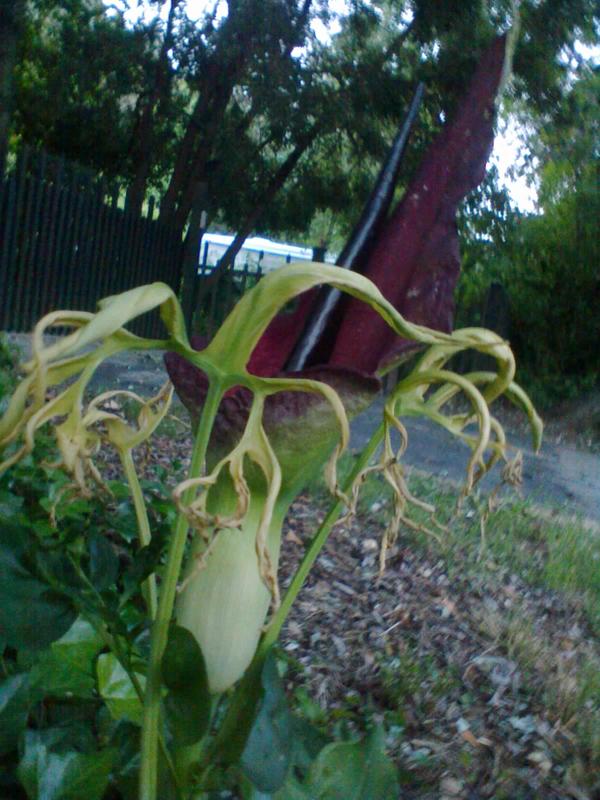
Obviously this introduced garden ornamental has escaped cultivation and is now “going rogue.” Will it become a nuisance weed? Will it displace native species? Should it be banned from sale by nurseries?
Sigh.
Or possibly something else?
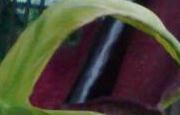
Answer Monday!
Sorry about the long wait in discussing the weekend’s post! (Technical troubles with access here in BlogVille.) In any case, many of you zeroed in on the defunct lime kiln as a possible pH adjuster. It would have been really interesting during those years to see how materials were processed – for instance, was there a lot of lime dust that settled over the area? Where did the limestone come from – was it carted in by train or was it local?… Continue reading this article “Chlorosis mystery uncovered – maybe”
Today my family took our annual 4th of July weekend hike. We ended up on a fairly new trail through the Robe Canyon Historic Park. It was a gorgeous day and we saw all manner of plants and animals. The highlight of this trail is an old lime kiln; bricks and other remnants of early settlers are scattered around the area. The kiln closed in the 1930’s. (The hot link embedded in the park name leads to a 2004 article about the trail and the history of the site.)… Continue reading this article “Interveinal chlorosis mystery”
I know Friday’s puzzle was a bit too easy – but I needed some way to discuss the giant hostas we have in our landscape this year:
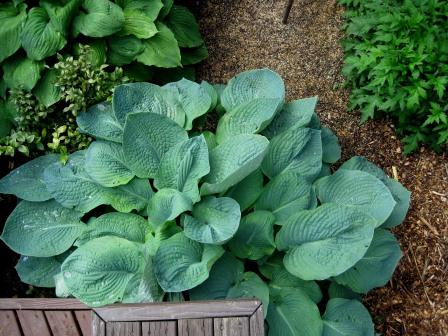
We have had a very wet and cold spring. While it was misery for us above-ground types, the plants absolutely loved the abundant water. When the leaves open and expand on these continually-watered plants, they reach maximum size. The hosta leaves in this photo aren’t the size of dinner plates – they’re more like turkey platters.… Continue reading this article “Gigantic hostas”
What am I?
Answer Monday!
Orchid fanciers Derek and Joseph correctly identified Friday’s mystery plant as a jewel orchid, specifically Macodes petola:
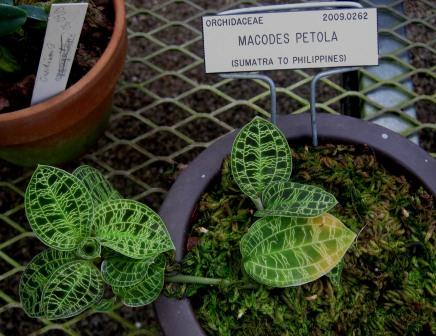
Friday’s sparkly leaf photo shows why “jewel orchid” is the common name used for several genera of orchids with showstopping foliage.
And Ray noted that Goodyera spp. (rattlesnake plantain) is a native US jewel orchid with beautiful variegated foliage. Next time you’re hiking in the woods, keep your eye out for this common yet striking plant.
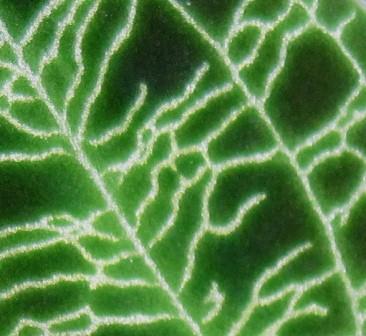
What am I? (There has been no alteration of this photo, other than cropping, nor was it taken under any special lighting.)
Answer on Monday!
I’d turned Friday’s picture on end to try to fool you…but to no avail. Deirdre and Gail both guessed woodpeckers, and yes, this is sapsucker damage:
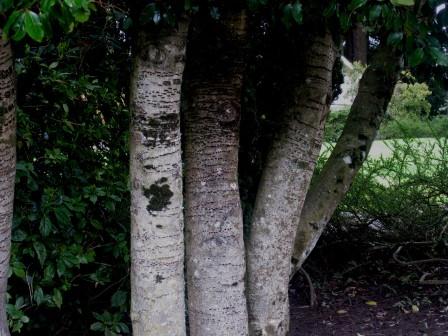
Though some woodpeckers look for insects under the bark, sapsuckers drill neat lines of wells that fill with sap. The birds can then move down the line of wells, lapping up sugar water. (Kind of the avian version of lining up tequilla shots on the bar.) Healthy trees are generally not at risk of dying from drilling injury, though if the tree is completely girdled that would be a problem. … Continue reading this article “Mystery pits revealed”