Floral fuddlement

Gardeners love asters as part of their autumn floral palette.  Yet these native asters are blooming now – in the spring!
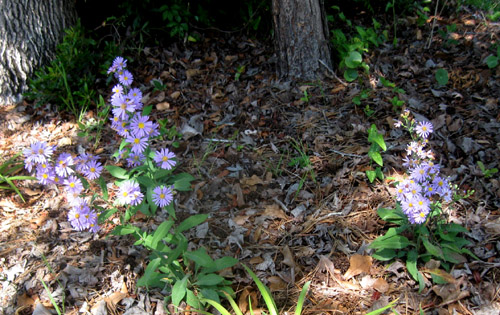
These specimens were purchased last summer and planted in the fall in Florida. Why might they be blooming out of season?

Reader Ginny Stibolt contributed today’s puzzle.  If you’d like to be a guest inquisitor on our blog, send photos and explanatory text to Linda Chalker-Scott.
Mystery sparkler exposed

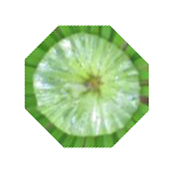
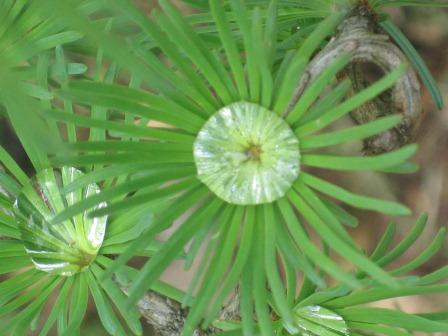
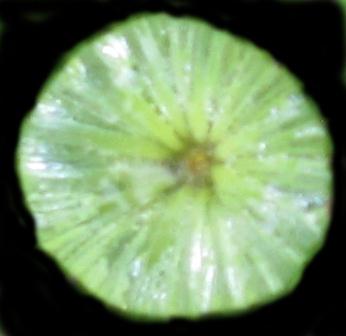
I really liked the answers you brave few came up with for Friday’s photo.  I could absolutely see how each one made sense – but unfortunately none of them were correct.  It’s actually a raindrop sitting on top of an expanding larch bud:

This turned out to be much trickier than I anticipated.  I promise the next one won’t be.

(And no, the raindrops do not magnify sunlight and cause the expanding needles to burn!)

Mystery sparkler

What am I?  (There are two distinct entities.)

Answer and a complete photo on Monday!

Sunday addendum:

No guesses yet…maybe it’s too tough?  Here’s a more revealing photo:

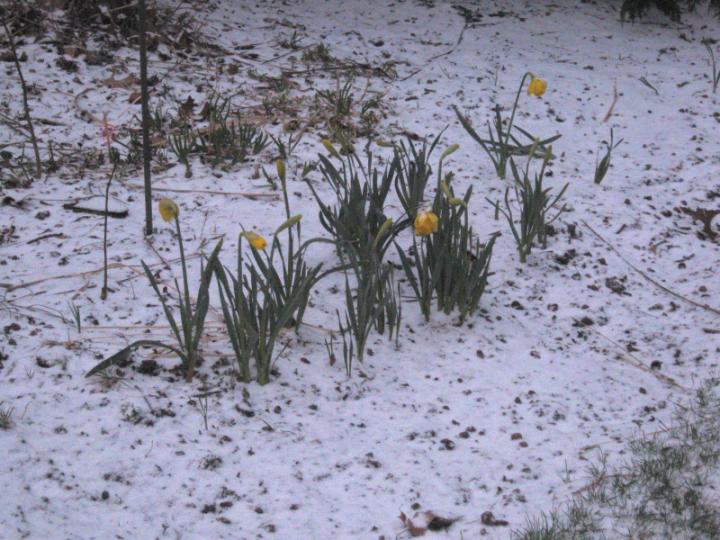
There’s no flowers like snowflowers…

A short post from our ‘a picture is worth a thousand words’ file.  This what we work up to today at Daisy Hill farm

If anyone has seen Spring, please e-mail it some MapQuest directions to Michigan ASAP!

Guest inquisitor reveals all

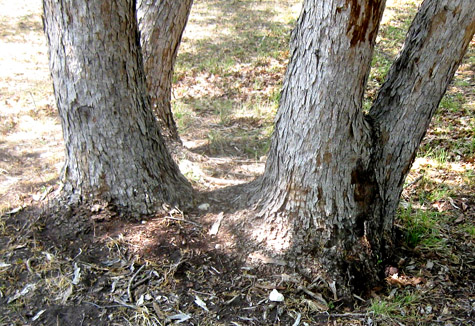
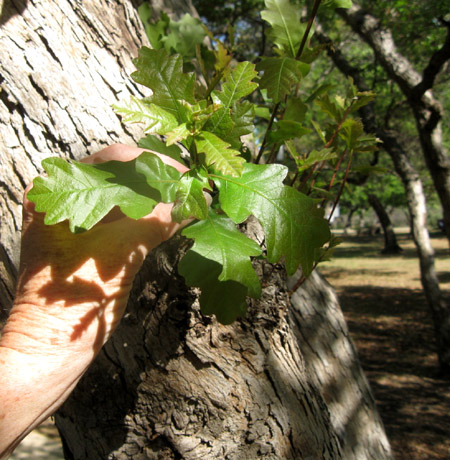
The odd oak in Friday’s photos is shin oak, or Quercus sinuata var. breviloba:


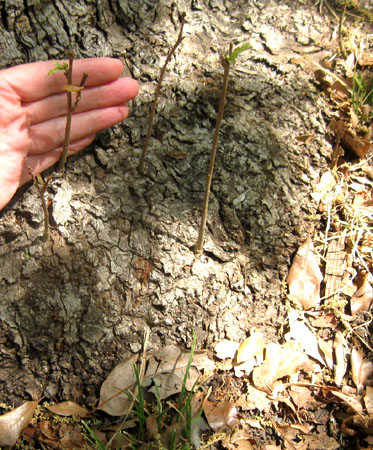
This trunk “puddle” is a really cool adaptation called a lignotuber (good job Matilija!) or burl.  These are common in woody plants found in wildfire zones.  New sprouts can arise after fires have roared through, or perhaps after heavy browsing by deer, as the park ranger suggested to Ginny, our guest inquisitor.

Thanks, Ginny, for sharing the photos and question.  If you have an interesting plant quiz topic, preferrably with pictures, feel free to pass it on for our Friday Question!

Friday quiz – guest inquisitor!

Reader Ginny Stibolt passed this one on to mull over the weekend:

“We stayed at the Llano River State Park in Texas where I spotted this weird growth pattern of a gnarly oak–it’s like a puddle of trunk from which the main trunk arises. The camp host, who seemed to be well informed, said that these were Spanish oaks in the white oak division and that a root disease causes the expansion of the base of the trees.… Continue reading this article “Friday quiz – guest inquisitor!”

Why did the worm cross the road?

…To get to the other side. Of course.

All the rain we’re having is causing the earthworms to crowd the sidewalks and driveways. They fling themselves out of the ground and onto the pavement because they’re drowning, right?  Nope. Urban myth (by the way, why are there no Rural Myths?).  The punchline is not too far off: they can only move about above ground while it’s raining. They use rain events to safely relocate, and can allegedly live for a while in a puddle. … Continue reading this article “Why did the worm cross the road?”

Genetic Engineering, Veal, and Rennin

Today I thought I’d go just a little off topic. Lots of people out there are really upset about the idea of putting genes into plants, like putting genes for Round-Up resistance into soybeans, or genes for caterpillar resistance into corn. And, I do agree, this is a pretty powerful technology that needs to be used carefully – probably more carefully than it’s being used right now with plants.

But the funny thing is, one of the places where transgenic creatures really dominate the market is in a place that is almost never considered.… Continue reading this article “Genetic Engineering, Veal, and Rennin”

Mulch much?

[Try to say post title three times fast. Heh.]

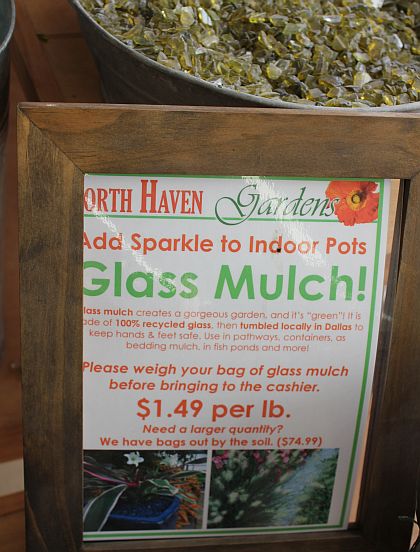
Here on the GP blogski, we’ve discussed both the merits and shortcomings of many non-traditional forms of mulch; rather, stuff that covers the ground that is referred to as mulch. Shredded rubber, marble chips, lava stone, dyed lava stone (ick), etc.

But this is a new one on me:


Naturally, I immediately shoved my hand in the biggest tub of glass (part of the Scientific Method).
Continue reading this article “Mulch much?”

April foolery revisited

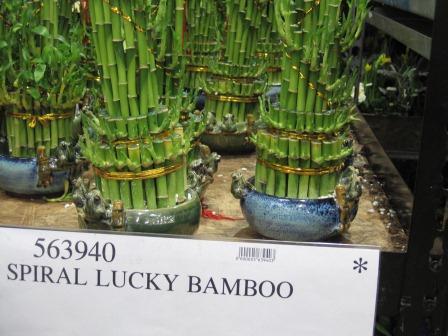
You certainly had fun with this!  Yes, it’s “lucky bamboo,” a name which is completely inappropriate given that it’s not bamboo (but Dracaena sanderiana) and it’s certainly not lucky:

Now “spiral lucky bamboo” is usually dracaena (or as I like to call it “not-bamboo”) that’s been exposed to a unidirectional light source and turned at intervals to create a contorted spiral shape:

These plants, on the other hand, have been cut into straight sections and bound with shiny gold wire in ever increasing lengths so that we have a leaning tower of not-bamboo surrounded by adulating ceramic frogs (good eyes Anne and Jam!). … Continue reading this article “April foolery revisited”