Another lesson from my (eastcoast) garden

When we lived in Buffalo, we became warriors in the gypsy moth battle. One of the things we quickly learned was to check tree trunks for larvae, especially those trees with thick, rough bark where caterpillars could hide. It went without saying that burlap used to insulate tender plants came off as soon as possible in the spring, because that burlap was a great place for larvae to live as well.

Back in Washington state, we don’t have a gypsy moth infestation (yet), but the lesson was retained: we don’t leave materials wrapped around the trunks or branches of trees.… Continue reading this article “Another lesson from my (eastcoast) garden”
Plants aren’t so cooperative after all

One of the underlying tenets of ecology is the principle of competitive exclusion. This principle states that when two species compete for the same vital resource, the better adapted species will ultimately displace its competitor. Simply put, it’s survival of the fittest.

More recently, some ecologists have suggested that nature’s not quite so brutal – that the species composition in an ecosystem is determined more by random fluctuations in population numbers than by direct competition.

But last month, this "neutral theory" was directly challenged by evidence on three continents which compared the abundance of particular tree species, both in the fossil record and in existing forest ecosystems.… Continue reading this article “Plants aren’t so cooperative after all”

Stupid plant tricks

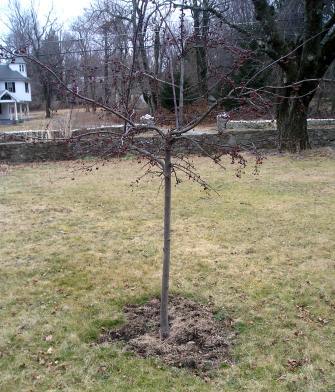
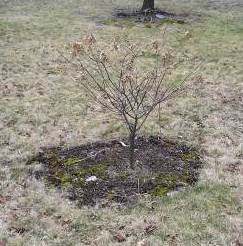
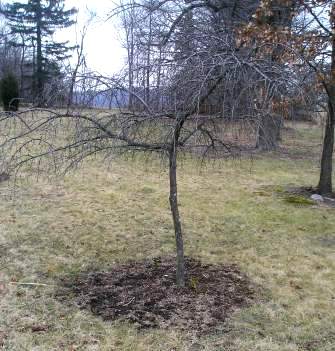
Blog reader Ray sent these photos of his weeping peach, weeping crabapple, and a Hydrangea paniculata, along with this comment:


“When a tomato grower extrapolates his applied knowledge to his landscape, before learning otherwise.”

(Translation for those tomato avoiders like me:  they are all planted too deeply, which tomatoes like.  Trees and shrubs, not so much.)

Bridging research and reality

This summer, I’ll be giving a seminar on “Arboriculture Myths” at the ISA conference in Portland, OR. I’ve been quizzing arborist-types for a few months now to find out what myths they would most like to see debunked during my talk. Intermixed with the suggestions of dubious products and questionable practices there was this question: “How often do the results from research with limited scope get over-extrapolated?”

I like the question a lot, because this is the fine line that we Garden Professors walk in bringing you the newest scientific information we can find. … Continue reading this article “Bridging research and reality”

New weekend feature: “what I learned from my garden”

While in Connecticut a few weeks ago I met Henry Young (a former horticulture extension agent), who did a guest post on the blog this past week about the important of “negative” results.  He also had another interesting idea for the blog that I’m going to initiate this weekend – the “What I learned from my garden” feature.

I did one of these back in July of 2010, when I worked water into a clay loam soil the same way you might work it into potting mix – with disastrous results. … Continue reading this article “New weekend feature: “what I learned from my garden””

A plea for published “negative results”

Last week I was in Connecticut speaking to the Connecticut Tree Protective Assocation.  It was a great chance to meet arborists on the east coast, and especially heartening to meet yet another group of professionals who demand good science-based information to guide their practices.

After this meeting, I had a thoughtful email from one of the attendees regarding the lack of "negative results" publications in the scientific literature.  It’s a message that’s important for academics as well as the gardening public. … Continue reading this article “A plea for published “negative results””

Snow – should it stay or should it go?

It’s snowing here in Seattle – always a fun event, especially when we’re expecting up to 10 or more inches. I know…many of you laugh at our “big” snow, but the hilliness of Seattle makes driving in snow an adventure. (In fact, I’m supposed to be flying out tomorrow for a Connecticut presentation, and my flight’s already been cancelled and rebooked. Sigh.)

But what about the plants? This time of year people often ask whether they should leave the snow on their trees and shrubs.… Continue reading this article “Snow – should it stay or should it go?”

Noxious or not? A continuance of the Canada thistle discussion

Ray Eckhart, Master Gardener and loyal blog reader, wrote a long response to Alan’s request for research for the ongoing debate on Canada thistle started a few weeks ago by Jeff. Because he has a lot of links to research in his response, I thought it should have its own posting. So here’s Ray:

Here is a brief summary of the results of a google search of .edu and .gov or .us sites on the subject of Canada thistle or Cirsium arvense as a noxious weed, examining the “whys” by a mostly volunteer* Master Gardener reliant on published literature by reputable sources and charged with fulfilling the Land Grant University charter to bring science based information to the local level.… Continue reading this article “Noxious or not? A continuance of the Canada thistle discussion”

What I did on my Christmas vacation

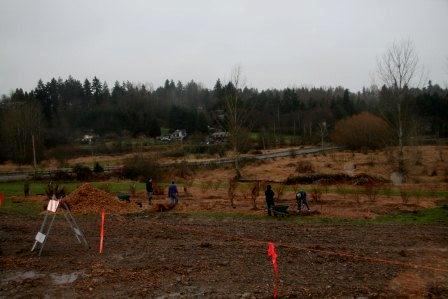
The week between Christmas and New Years’ is usually pretty laid back around here.  But not this time!  Along with 22 volunteers, 3 family members, and 1 graduate student, I spent that week putting in 80 trees for a long-term experiment.


My long-suffering family and I installing the last of the 80 trees on the fourth day of hell.

My intrepid graduate student Cindy Riskin obtained 40 B&B Japanese maple (Acer palmatum) and 40 containerized mugo pine (Pinus mugo). … Continue reading this article “What I did on my Christmas vacation”

Happy New Year…and our request to our readers

It’s that time of the year again…annual reports are due to our respective administrations. One thing all of us need to document is impact on our various audiences. So we’ve created a short (10 question) survey to collect your feedback. The questions are mostly multiple choice and a bare-bones response will take you maybe a minute. Of course we’d love as much detail as you care to provide, so don’t feel obligated to speed through!

We’ll keep the survey open for the month of January, but your responses are more likely to be used if you get them in quickly.… Continue reading this article “Happy New Year…and our request to our readers”