You say tomato, I say phytochrome

Yesterday I got an interesting email about a new product – a Tomato Automator.  Briefly, this square, red plastic disk slips around the stem of a tomato plant to suppress weeds and pests.  Most intriguingly, we’re told that the color “triggers a natural plant protein that makes tomatoes mature faster and product more fruit.”
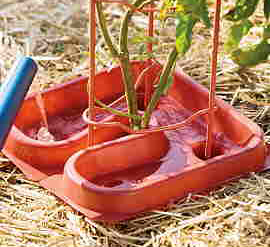
Given this is a red product, it’s likely that the protein referred to is phytochrome (literally, “plant pigment”).  Phytochrome activity is maddeningly complicated to explain, so we’re going to keep this simple and refer (somewhat inaccurately) to “active” and “inactive” forms of phytochrome. … Continue reading this article “You say tomato, I say phytochrome”
I’m Saving Myself for Pollination

Let’s take a very brief respite from the socio-religious implications of science, soil testing, and compost tea to ponder a more lighthearted topic. I need a bit of a morale-boost.

You: “O.K. Holly, Spring’s allegedly coming…how about a closer look at some wildflowers?”

Me: “Done!” (fingers snapping)

For a short time in March, forest floors across Eastern North America can be absolutely littered with a multitude of sparkling white flowers.  This very cool little plant, Sanguinaria canadensis, is one of the first wildflowers to emerge in the spring and colonizes deciduous and mixed woodlands.… Continue reading this article “I’m Saving Myself for Pollination”

Art, Science, and Faith

First of all, who we are and what we do.  All of the Garden Professors are in the business of the science of Horticulture.  What’s Horticulture?  The standard definition of Horticulture is the art and science of tending a garden.  Horticulture is clearly more than science but science is the foundation and underpinning.   For anyone that needs convincing that Horticulture is an art as much as a science I suggest the following exercise.  Go to a major research university and wander through their Botany or Plant Biology greenhouses.… Continue reading this article “Art, Science, and Faith”

Friday puzzle solved!

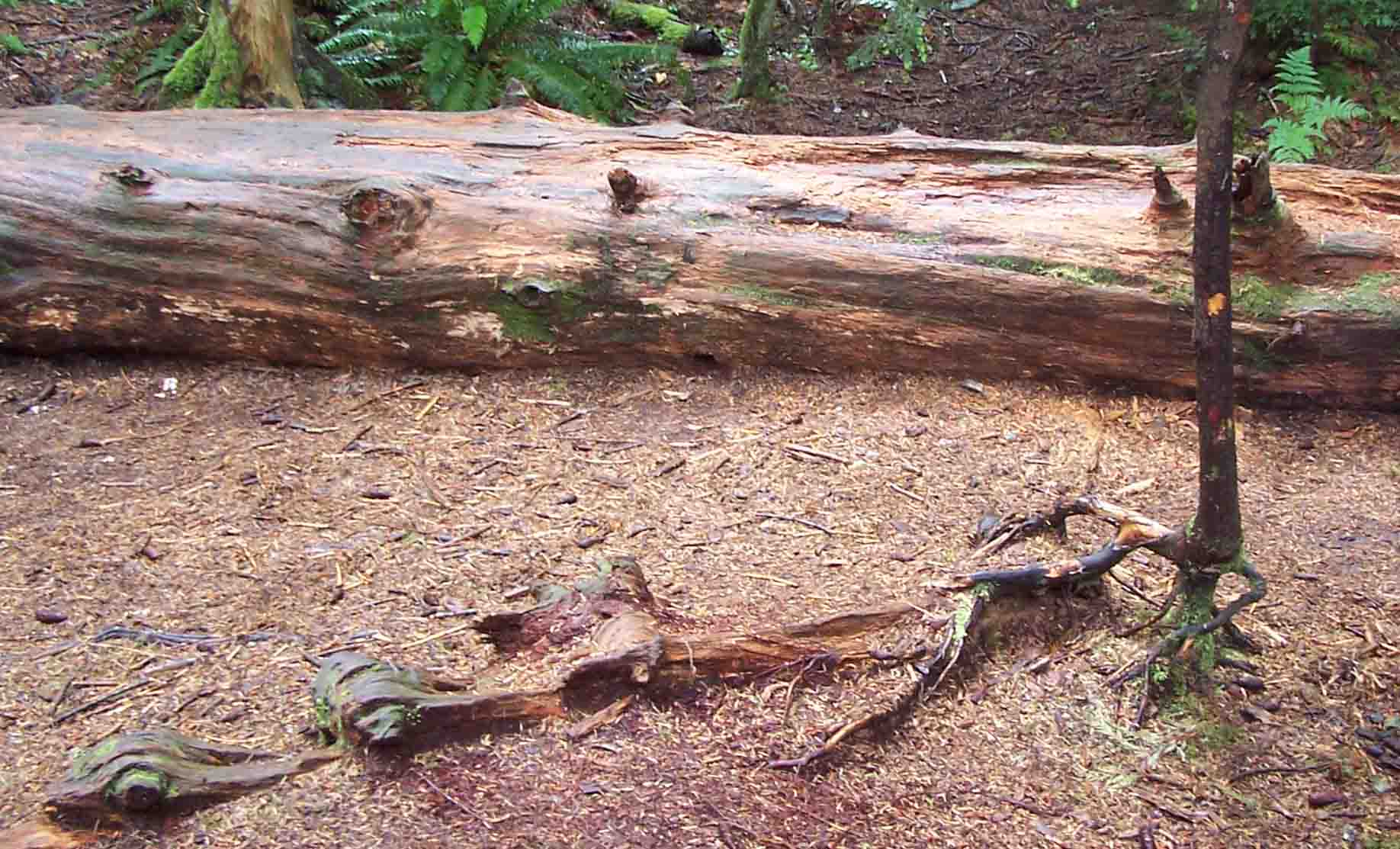
Lots of brainstorming over the weekend, and all the answers were legitimate.  A few people came close with the observation that the roots looked like they had grown over something.  And that’s exactly right:

This is a great example of nurse log decomposition.  When the tree on the right first began growing (and it could have been decades ago), it sent lateral roots out, over, and around the nurse log to reach the soil.  As the nurse log degraded, the tree’s roots were left high and dry, outlining the girth of the original log.… Continue reading this article “Friday puzzle solved!”