Eggplants getting their buzz on

eggplantflower

I was checking my eggplants today, and watching the bumble bees getting busy with the large purple flowers. As they flew in, buzzing away, they landed on the flower and kept buzzing — but the note changed, dropping in pitch. The bumble bee hummed away for a while, then flew off to the next flower.

I was watching buzz pollination at work. Egg plants, and a lot of other flowers, don’t leave their pollen hanging out in the open where any ant or fly that happens by could eat it.… Continue reading this article “Eggplants getting their buzz on”

Are Soaker Hoses Safe?

By Cynthia Lee Riskin

With drought predicted for the west, southwest, and south through June 2015 (National Weather Service March 2015), many conscientious vegetable gardeners will try to conserve water by using soaker-hoses, those bumpy black hoses that weep water onto the soil through tiny pores.

Brussel sprouts and red lettuce
Soaker hoses are made from fine-crumb rubber, usually recycled from vehicle tires. Research strongly establishes that tire particles leach heavy metals, carcinogens, and mutagenics, among other toxins. Yet soaker hoses have not been studied for potentially increasing the toxicity of edible plants.… Continue reading this article “Are Soaker Hoses Safe?”

Building Healthy Soils in Vegetable Gardens: Cover Crops Have Got It Covered Part IV: Planting and Managing Cover Crops in Vegetable Gardens

Megan M. Gregory, Blog Contributor, Cover Crop Nerd, and Graduate Research Assistant, Cornell University
Email: meganmgregory1@gmail.com
Website: http://blogs.cornell.edu/gep/

This article is part of a four-part series about cover cropping in vegetable gardens.  Stay tuned for Part III next week. 

Once you’ve chosen cover crops that fit your vegetable rotation, management goals, and garden site (See Part III: Selecting Cover Crops for Vegetable Gardens), it’s time to plant!… Continue reading this article “Building Healthy Soils in Vegetable Gardens: Cover Crops Have Got It Covered Part IV: Planting and Managing Cover Crops in Vegetable Gardens”

Building Healthy Soils in Vegetable Gardens: Cover Crops Have Got It Covered Part III: Selecting Cover Crops for Vegetable Gardens

Megan M. Gregory, Blog Contributor, Cover Crop Nerd, and Graduate Research Assistant, Cornell University
Email: meganmgregory1@gmail.com
Website: http://blogs.cornell.edu/gep/

This article is part of a four-part series about cover cropping in vegetable gardens.  Stay tuned for Part III next week. 

As I outlined in Part I and II of this series, cover crops can serve many purposes in small-scale vegetable gardens, including soil quality improvement, nitrogen (N) fixation, weed suppression, and habitat for beneficial insects. … Continue reading this article “Building Healthy Soils in Vegetable Gardens: Cover Crops Have Got It Covered Part III: Selecting Cover Crops for Vegetable Gardens”

Building Healthy Soils in Vegetable Gardens: Cover Crops Have Got It Covered Part II: Types of Cover Crops – Non-legumes, Legumes, and Mixtures

Megan M. Gregory, Blog Contributor, Cover Crop Nerd, and Graduate Research Assistant, Cornell University
Email: meganmgregory1@gmail.com
Website: http://blogs.cornell.edu/gep/

This article is part of a four-part series about cover cropping in vegetable gardens.  Stay tuned for Part III next week. 

Vegetable gardeners are turning to cover crops to improve soil quality, add nitrogen (N) to the soil through legume N fixation, suppress weeds, and attract beneficial insects in their gardens. … Continue reading this article “Building Healthy Soils in Vegetable Gardens: Cover Crops Have Got It Covered Part II: Types of Cover Crops – Non-legumes, Legumes, and Mixtures”

Garden Site Selection

Shawn Banks: Extension Blog Contributor
Johnston County Extension Agent/Educator
North Carolina State University
shawn_banks@ncsu.edu

As an extension agent one question I often get asked by new gardeners is, “Where do I put a vegetable garden in my yard?” That leads to a lot more questions, but let’s answer the where question first. There are four basic considerations when selecting a garden site.

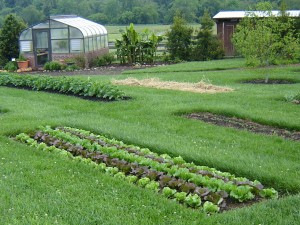
narrow strip of garden vegetables in a backyard area

The first thing to consider is the need for direct or full sunlight. Most vegetables need a minimum of six to eight hours in order to produce a crop.… Continue reading this article “Garden Site Selection”

Building Healthy Soils in Vegetable Gardens: Cover Crops Have Got It Covered Part I: Introduction to Cover Cropping

Megan M. Gregory, Blog Contributor, Cover Crop Nerd, and Graduate Research Assistant, Cornell University
Email: meganmgregory1@gmail.com
Website: http://blogs.cornell.edu/gep/

This article is part of a four-part series about cover cropping in vegetable gardens. Stay tuned next week for Part II

What are cover crops, anyway?

Cover crops are close-growing plants sown in rotation with food crops, or inter-seeded between food crops to cover bare ground. … Continue reading this article “Building Healthy Soils in Vegetable Gardens: Cover Crops Have Got It Covered Part I: Introduction to Cover Cropping”

Prepping Your Garden for The Next Growing Season

William H. McCaleb, Blog Contributor
Program Assistant for Agriculture and Natural Resources, Halifax County, VA. and Master Gardener

For gardeners in the eastern U.S., last year was a better than normal gardening season. Better than normal yield, better than normal precipitation, and in our case in Virginia cooler than normal which yielded excellent spring cool season crops as well as early summer crops.

But all good things must come to an end; that being the result of several heavy frosts.  … Continue reading this article “Prepping Your Garden for The Next Growing Season”

Nanomechanical oscillations…

This week one of our Facebook group members posted a link to a 2013 paper entitled “Love thy neighbour: facilitation through an alternative signalling modality in plants”. The premise in the paper is that plants are capable of acoustic communication and the experiment purported to demonstrate this. (I strongly encourage you to download the article from the link above so you can read it for yourself.)

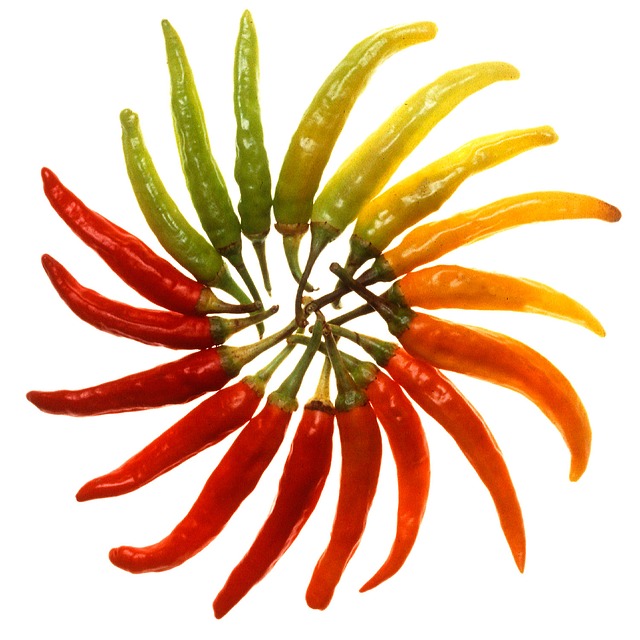
chilisBriefly, chile seeds (Capsicum annuum) were placed into petri dishes, covered to ensure darkness, and then the dishes were placed in a circle.… Continue reading this article “Nanomechanical oscillations…”

Harvesting, Curing and Storing Sweet Potatoes (A Visiting Professor feature)

Submitted by Ray Eckhart

Introduction
Sweet potatoes (Ipomoea batatas) are warm-season plants in the morning glory family (Convulvulaceae). The part we eat is the fleshy storage root of the plant, which is a little different than the regular Irish, or white, potato (Solanum tuberosum), a plant in the family Solanaceae. In that case, the part we eat is a fleshy underground stem of the plant, called a tuber.

Although sweet potato roots continue to grow until frost kills the vines, an extremely hard frost can cause damage to the ones near the surface.… Continue reading this article “Harvesting, Curing and Storing Sweet Potatoes (A Visiting Professor feature)”